
Este sitio también está en español. Leer en español

Topic

Buying a home

From the first savings to the keys: steps, costs, loans and traps to avoid, with official sources. There are guides for buying with your family, buying when you are self-employed and reading every closing document.

  • 36 guides
  • Last verified: October 31, 2026
A family of five poses at the kitchen table of their new home.

The data behind these guides

Today’s official numbers

The guides on Buying a home cite these figures. They update when their sources publish new ones; what you see here is current.

See all the data
Typical home value in the United States
$332,700
FHA base limit 2026, 1 unit
$541,287
30-year fixed rate this week
7.18%

Sources: U.S. Census Bureau (Average 2020–2024) · HUD (2026 data) · Freddie Mac (As of November 5, 2026)

Stage 2 of 3

Buying and closing

From the first paper to the day you get the keys: who is involved, what you sign and what each step costs.

30 guides in this stage

A Hispanic family shares a meal at the dinner table.

Featured guide Essential guide 15 minute read

How to buy a home in the United States, step by step

The nine steps to buying a home: paperwork, credit, budget, assistance, preapproval, offer, inspection, closing and the first year, with official sources.

The most important thing

Order matters: credit and budget before looking at homes; preapproval before making an offer.

Verified on October 17, 2026

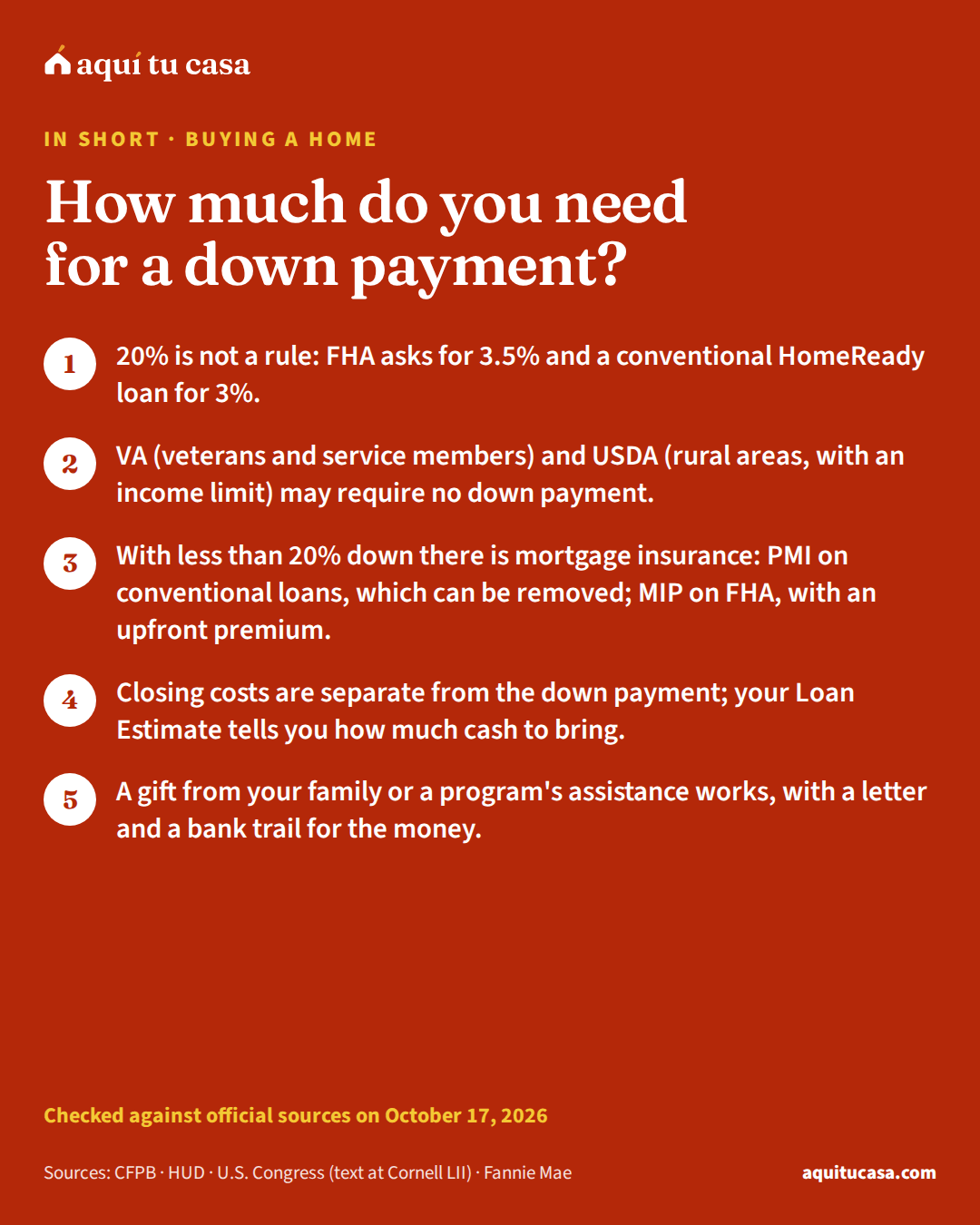
  1. Essential guide How much do you need for a down payment? 20% is not required: what each loan asks for (FHA, conventional, VA, USDA), what changes with less than 20% down, and where the money can come from. 11 min read Verified on October 17, 2026
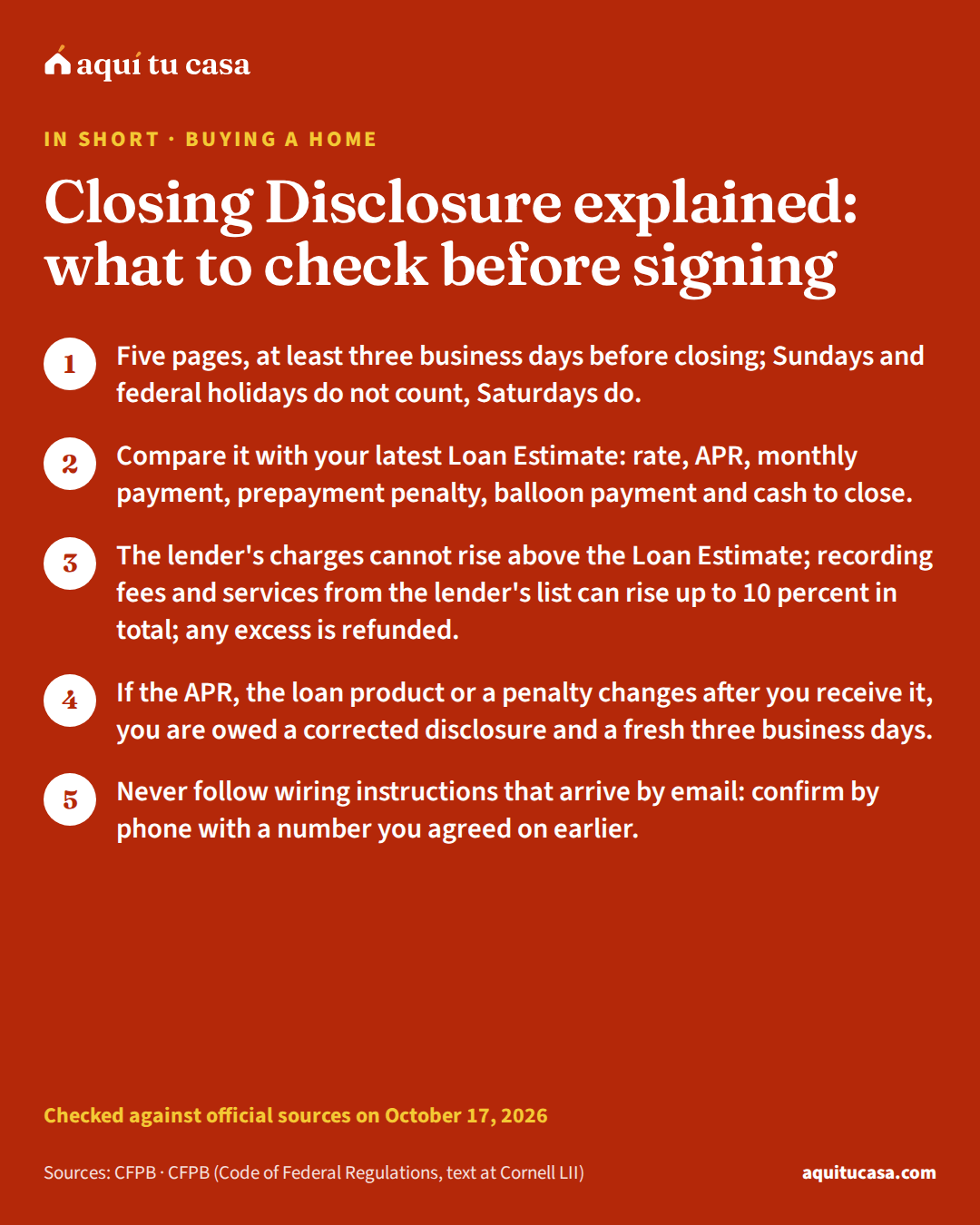
  2. Essential guide Closing Disclosure explained: what to check before signing What the Closing Disclosure is, when it must reach you, what to check on each of its five pages and which closing costs are not allowed to go up. 18 min read Verified on October 17, 2026
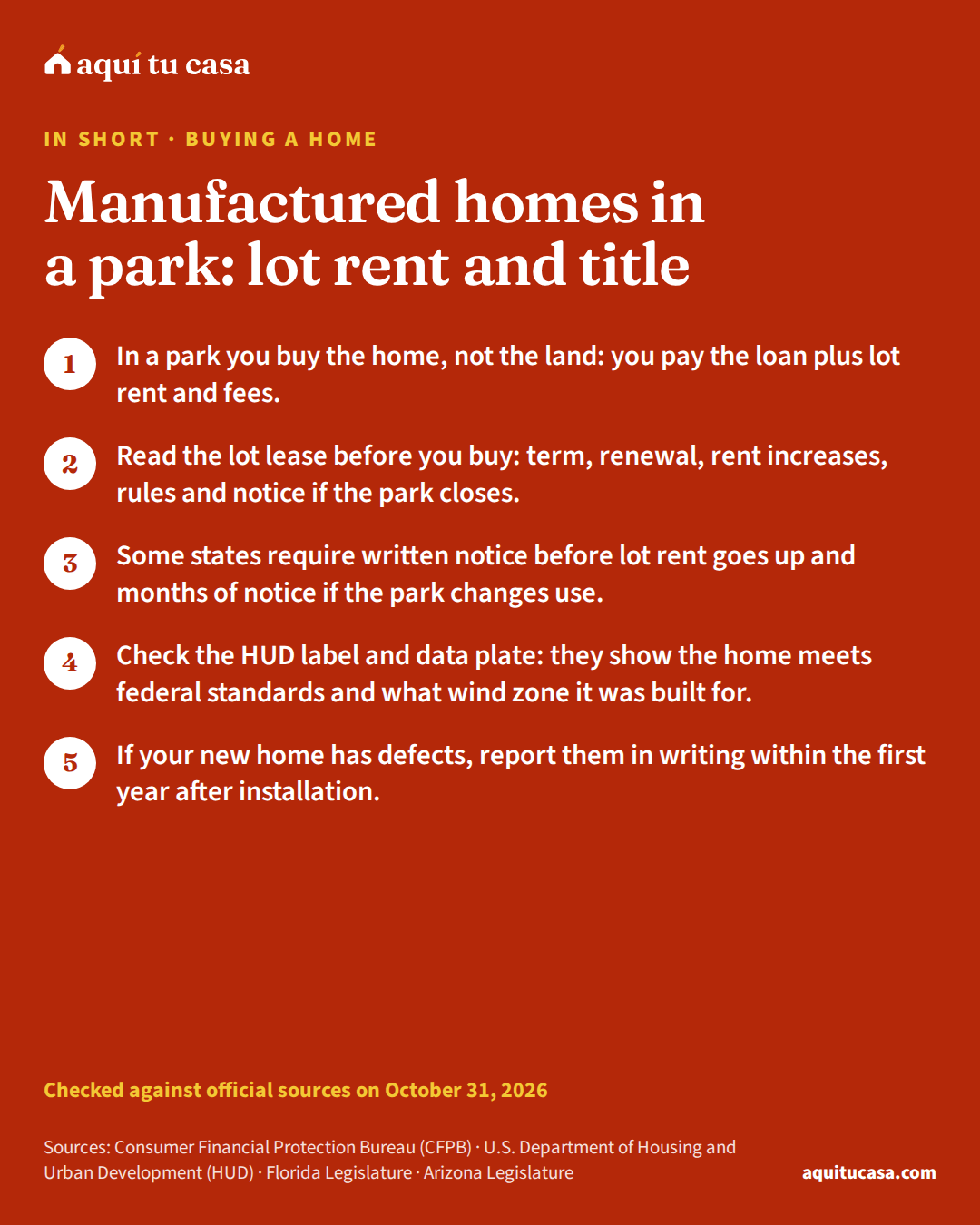
  3. Manufactured homes in a park: lot rent and title What you buy when the home sits on a rented lot, what to check in the lot lease, the HUD label, and what happens if lot rent goes up or the park closes. 12 min read Verified on October 31, 2026
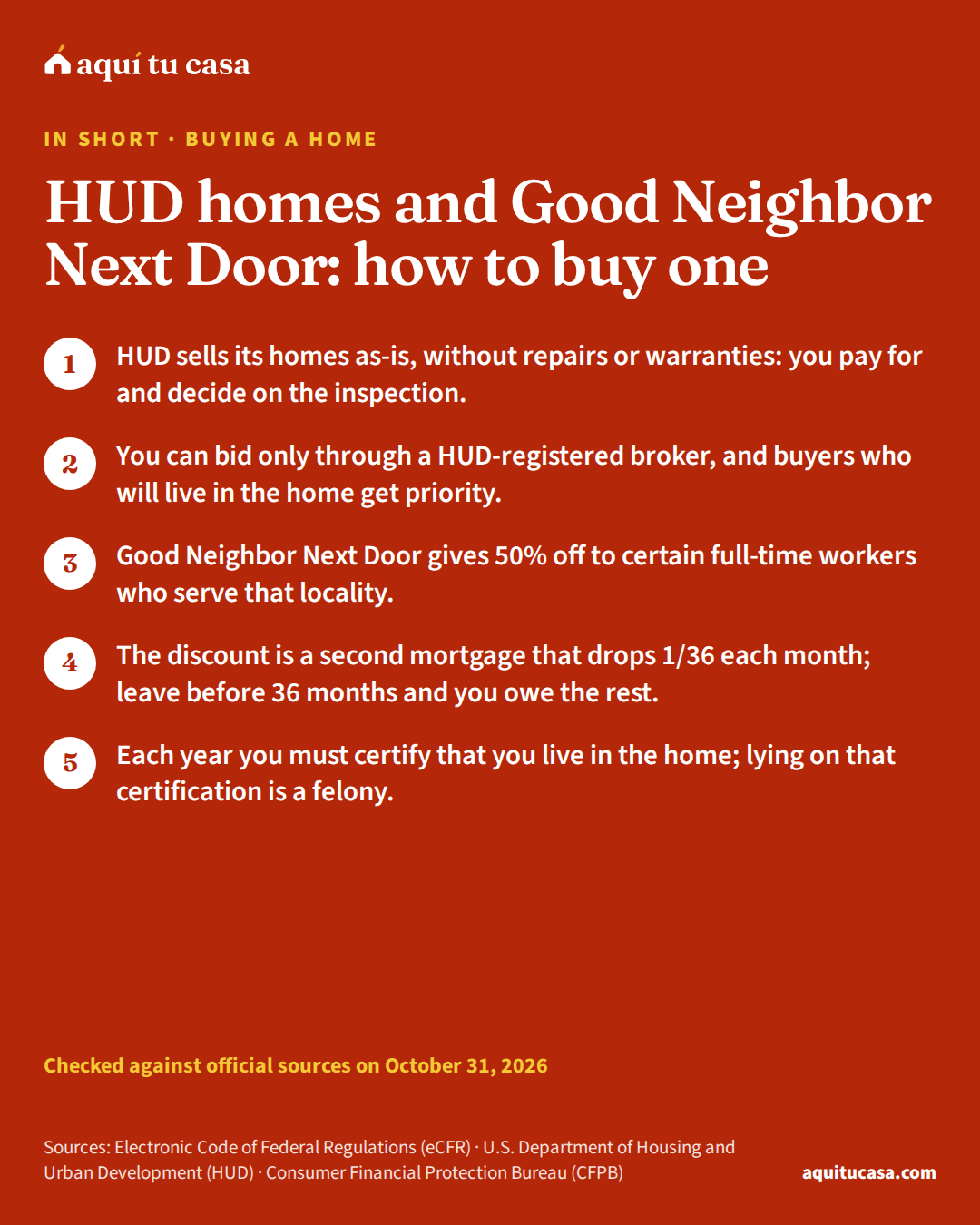
  4. HUD homes and Good Neighbor Next Door: how to buy one How HUD sells its homes on HUD Homestore, the priority period for buyers who will live in the home and the rules of the Good Neighbor Next Door discount. 11 min read Verified on October 31, 2026
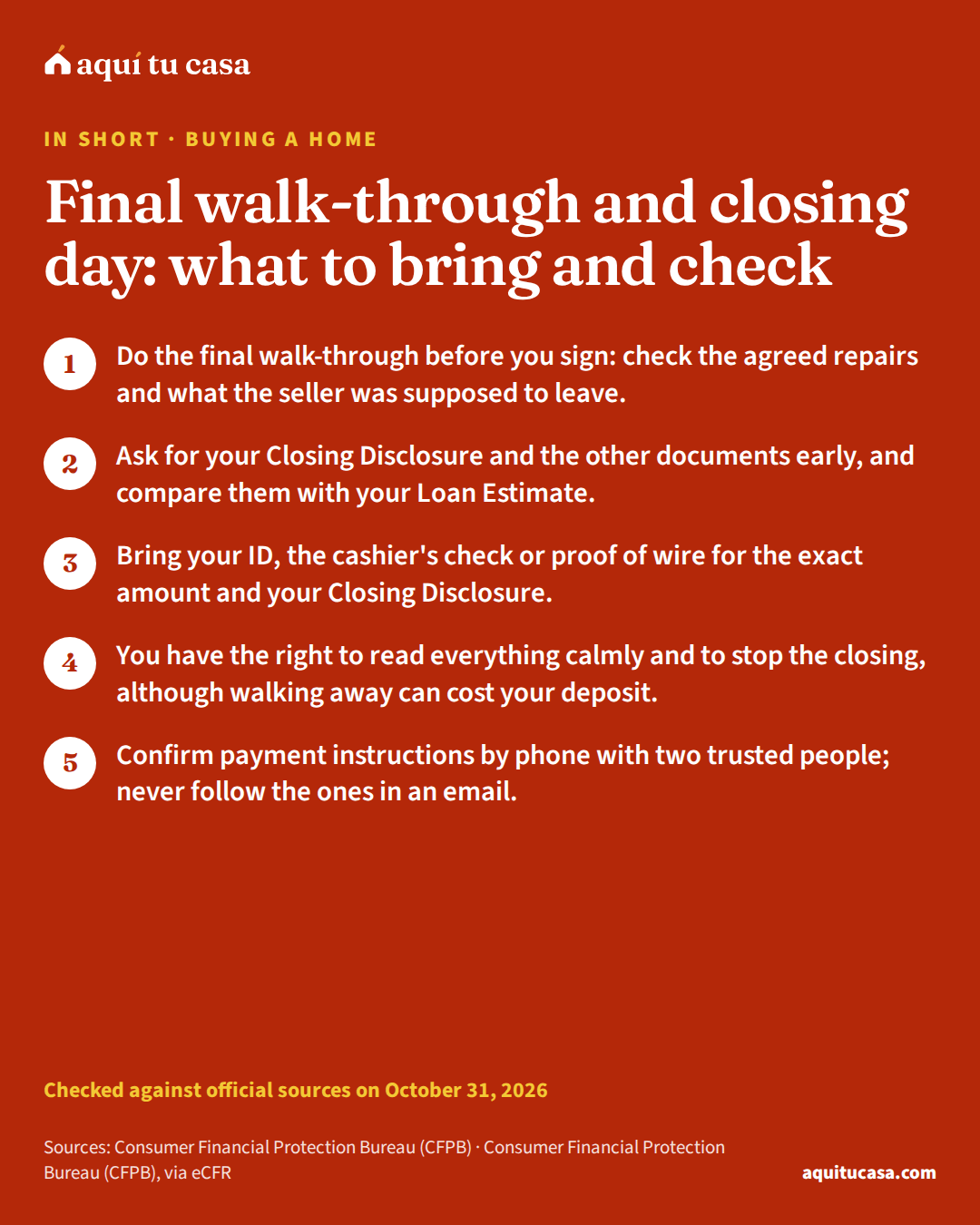
  5. Final walk-through and closing day: what to bring and check How to do the final walk-through, what to bring to closing, what to ask before you sign, when you can stop the closing and what to keep afterward. 11 min read Verified on October 31, 2026

Stage 2 of 3

More guides in this stage

Keep going with the other guides on buying, from the most read to the most specific.

A home kitchen with a tiled island and colorful Mexican tile details.

Featured guide 12 minute read

Earnest money deposit: how it works and how to protect it

What the earnest money deposit is when you make an offer on a home, who holds it, when you get it back, when you can lose it and how to avoid wire fraud.

The most important thing

Earnest money shows you are serious; a third party holds it and it is credited at closing.

Verified on October 31, 2026
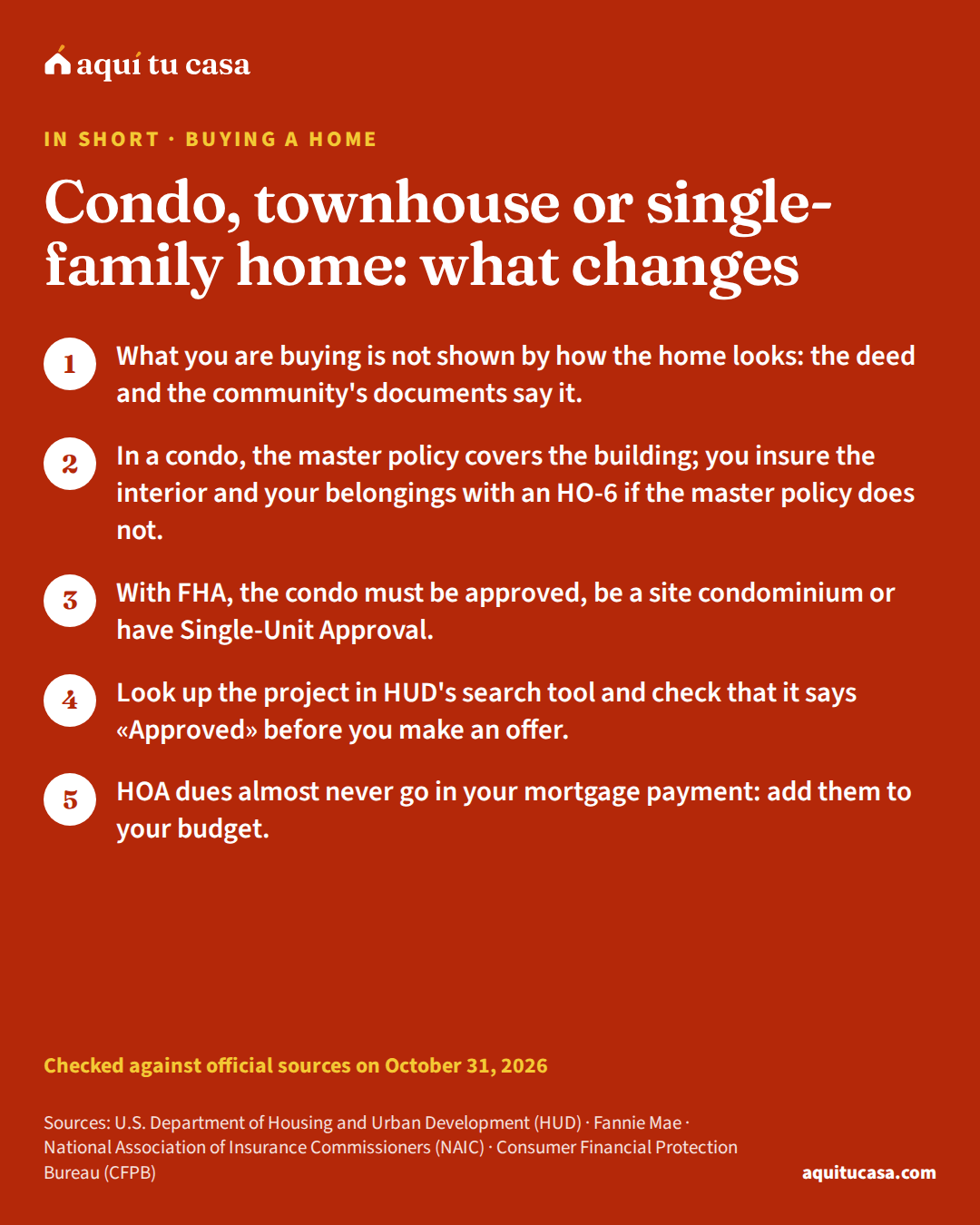
  1. Condo, townhouse or single-family home: what changes What you own in each type of home, how the HOA and insurance (HO-6) change, and how to check whether a condo is FHA-approved before you make an offer. 11 min read Verified on October 31, 2026

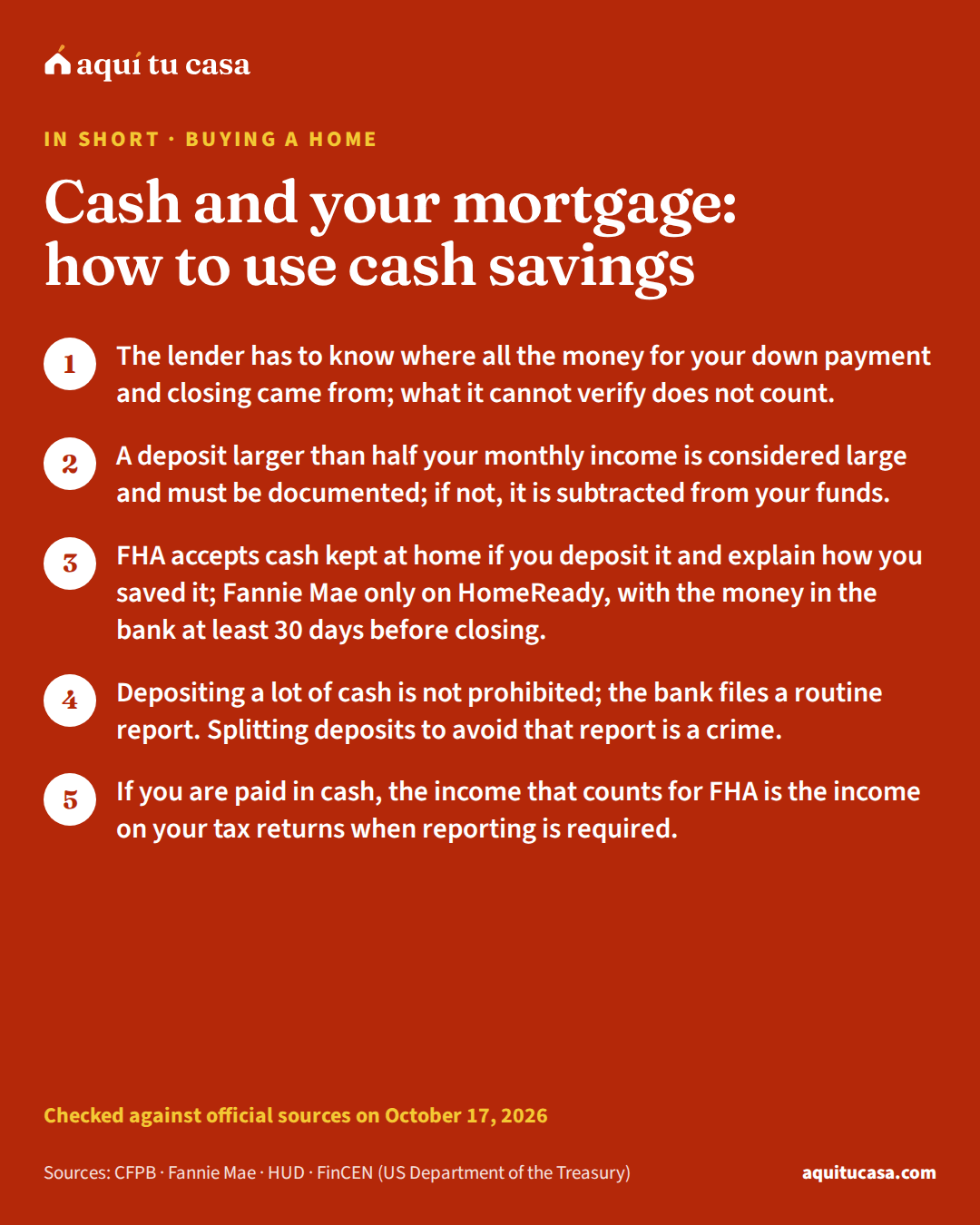
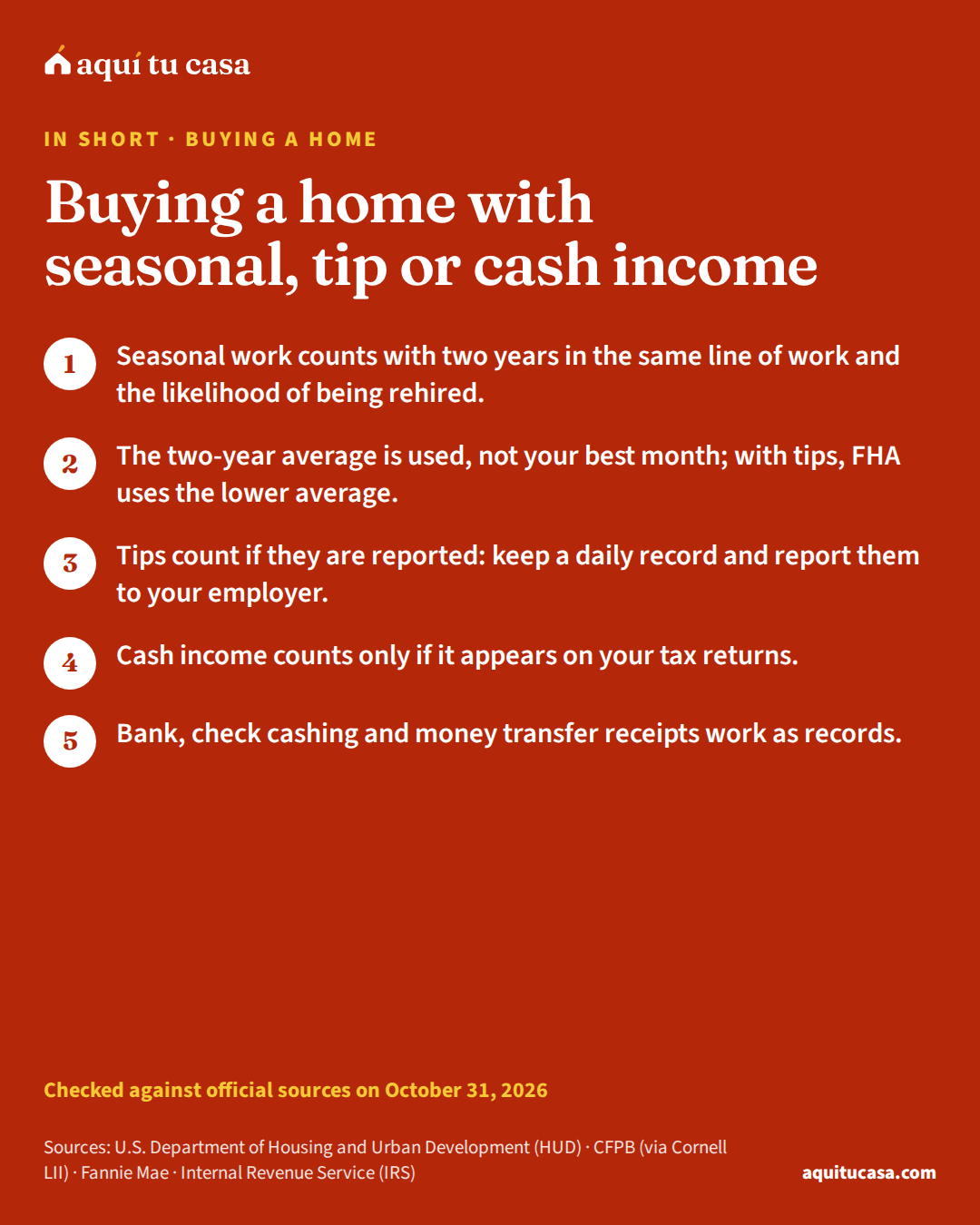
  2. Buying a home with seasonal, tip or cash income How FHA and Fannie Mae count seasonal and farm work, tips and cash income for a mortgage, and which records to start keeping today. 9 min read Verified on October 31, 2026
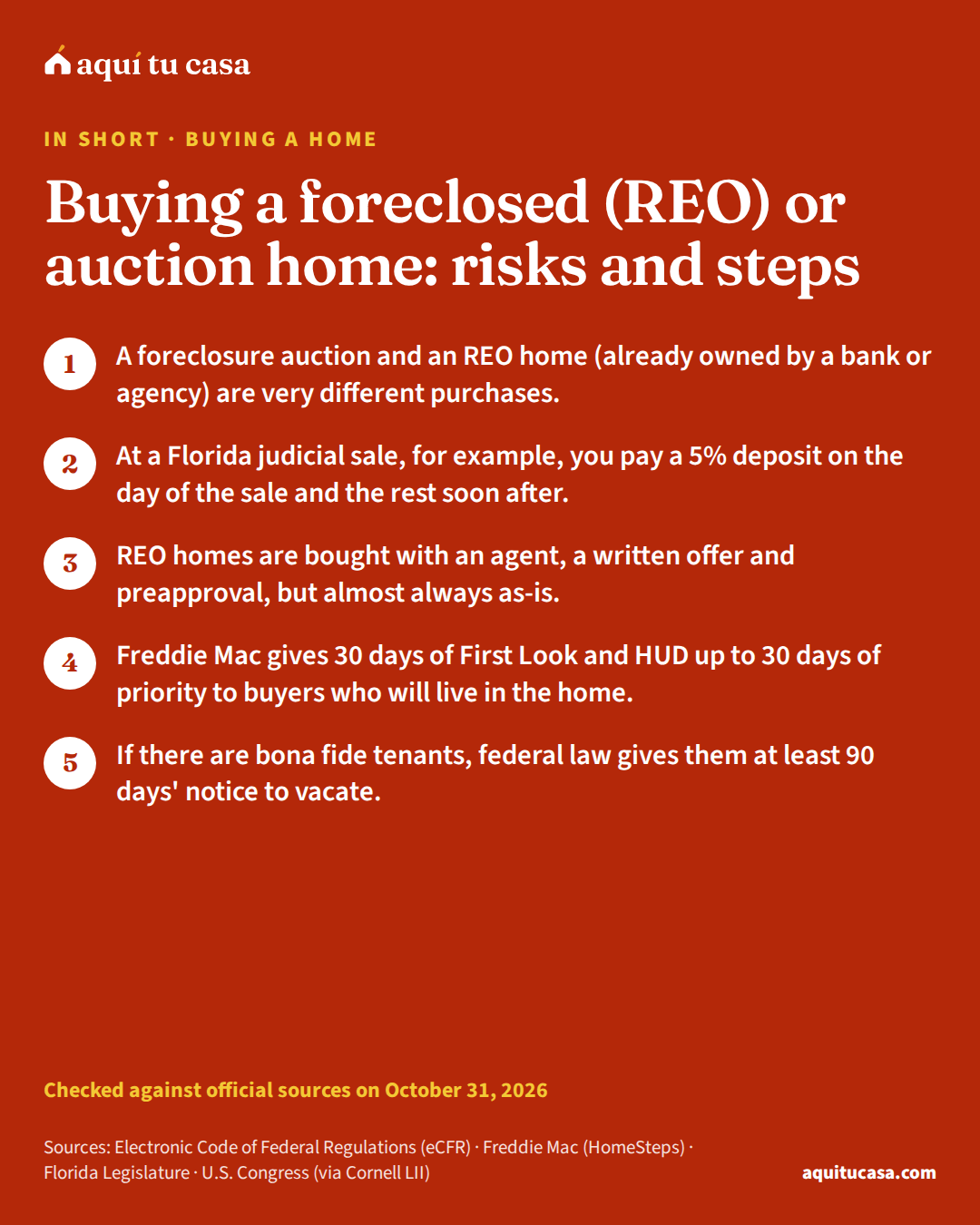
  3. Buying a foreclosed (REO) or auction home: risks and steps Buying a home the bank already owns or at a foreclosure auction: Freddie Mac's First Look period, the offer, tenants in the home and the risks to check. 10 min read Verified on October 31, 2026
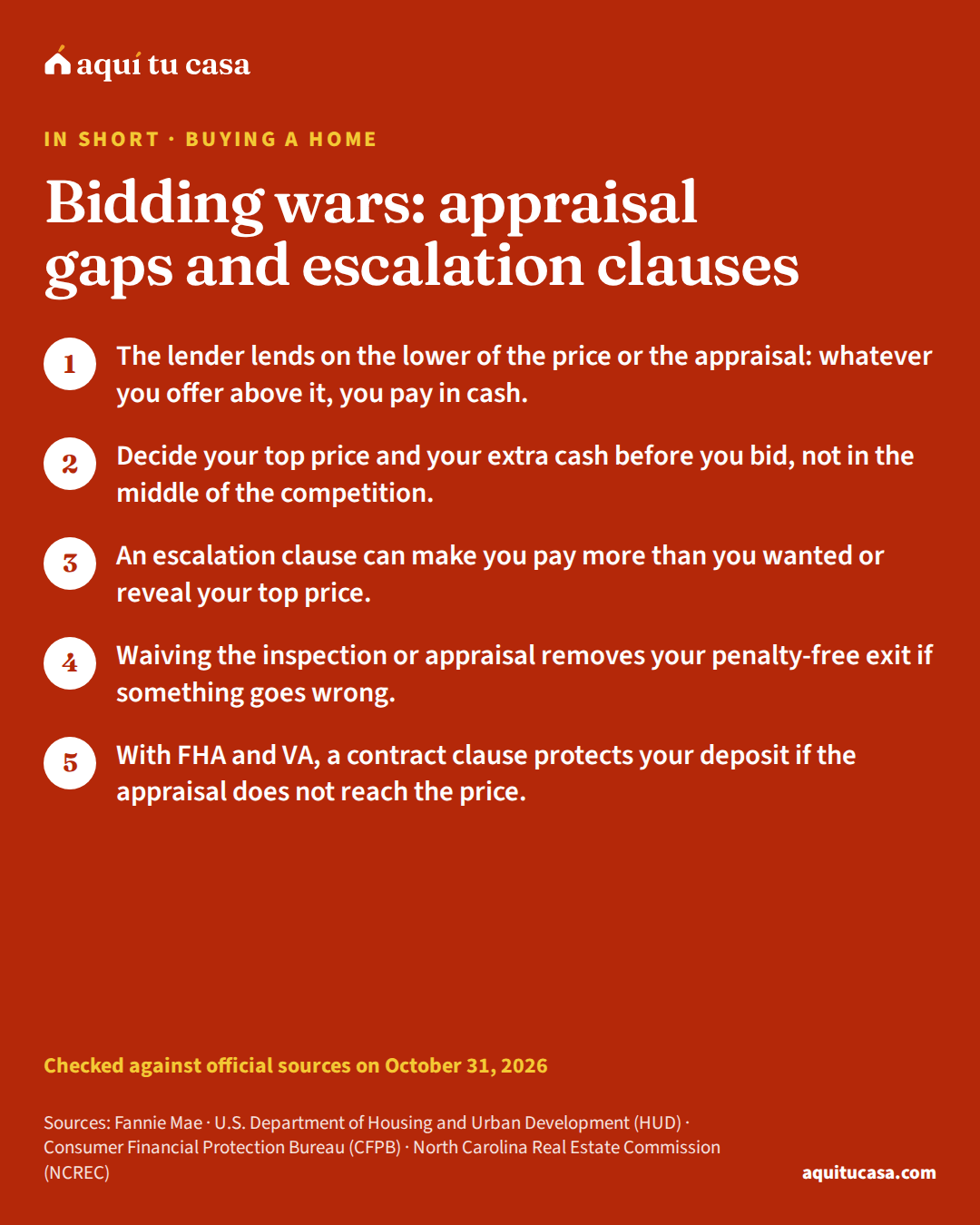
  4. Bidding wars: appraisal gaps and escalation clauses What it costs to offer more than the appraisal, how an escalation clause works and what you risk if you waive the inspection or appraisal to win. 10 min read Verified on October 31, 2026
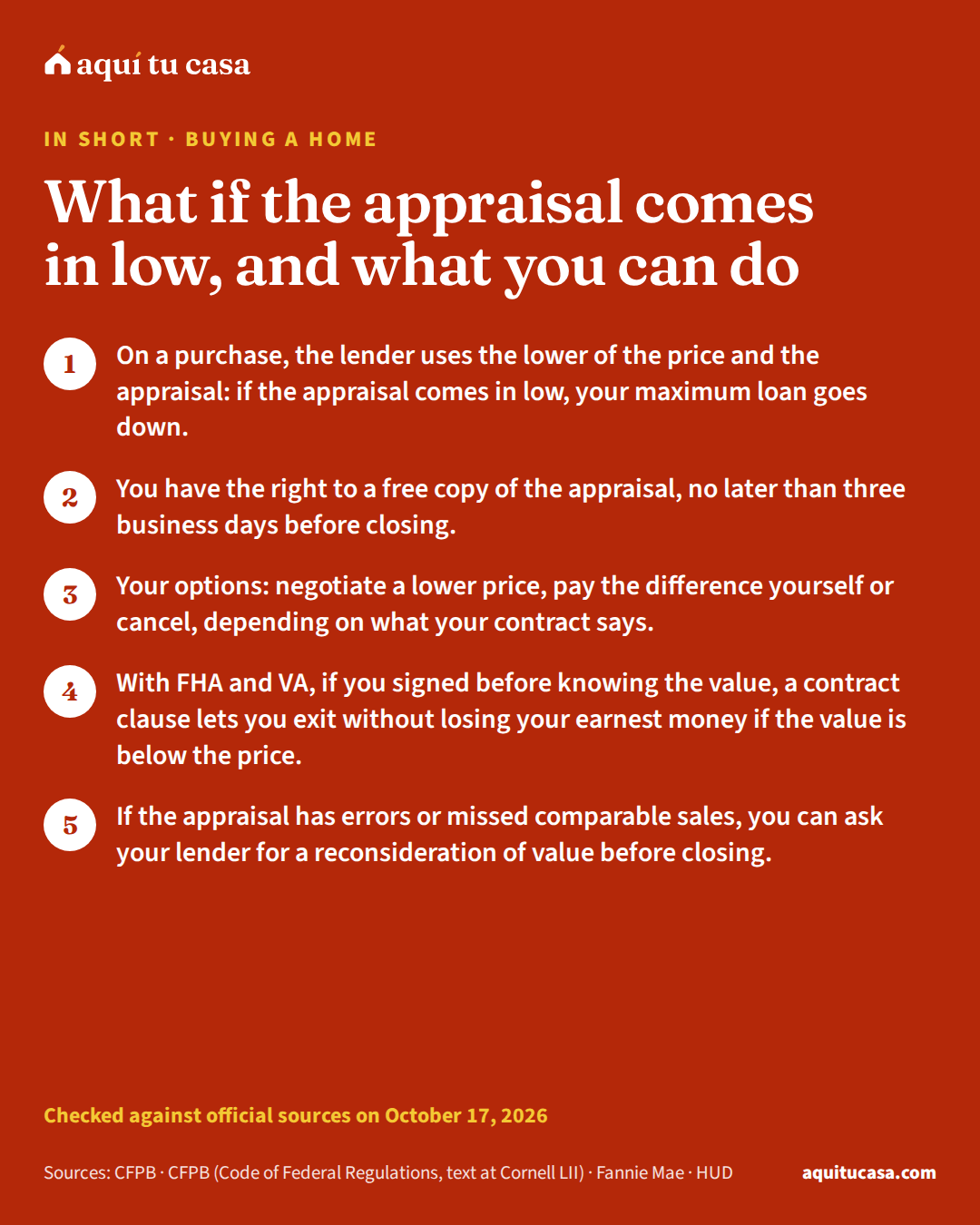
  5. What if the appraisal comes in low, and what you can do Why a low appraisal matters, your right to a copy, how to negotiate, pay the difference or cancel, and how to ask for a reconsideration of value. 11 min read Verified on October 17, 2026
Stage 2 of 3

More guides in this stage

Keep going with the other guides on buying, from the most read to the most specific.

A family hangs a sign on the wall of their new home while unpacking.

Featured guide 10 minute read

Title insurance and your home's title: what they protect

What your home's title is, the difference between the lender's and the owner's title insurance, where they appear on the Loan Estimate and how to compare.

The most important thing

The deed shows the seller transferred the home's title to you; title insurance protects against claims from before your purchase.

Verified on October 17, 2026
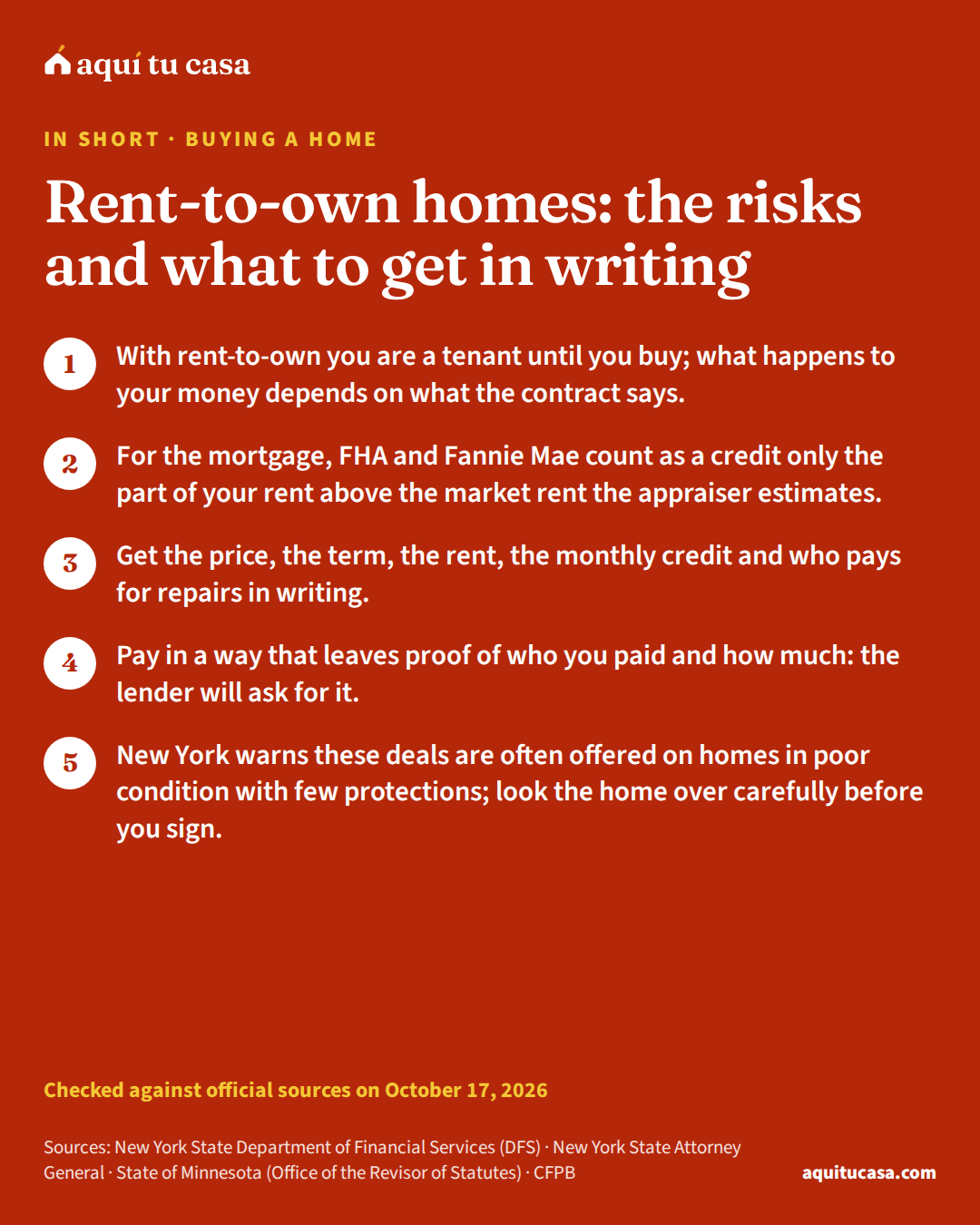
  1. Rent-to-own homes: the risks and what to get in writing How rent-to-own (a lease with an option to buy) works, the risks regulators warn about, what to get in writing and how your rent counts toward a mortgage. 10 min read Verified on October 17, 2026
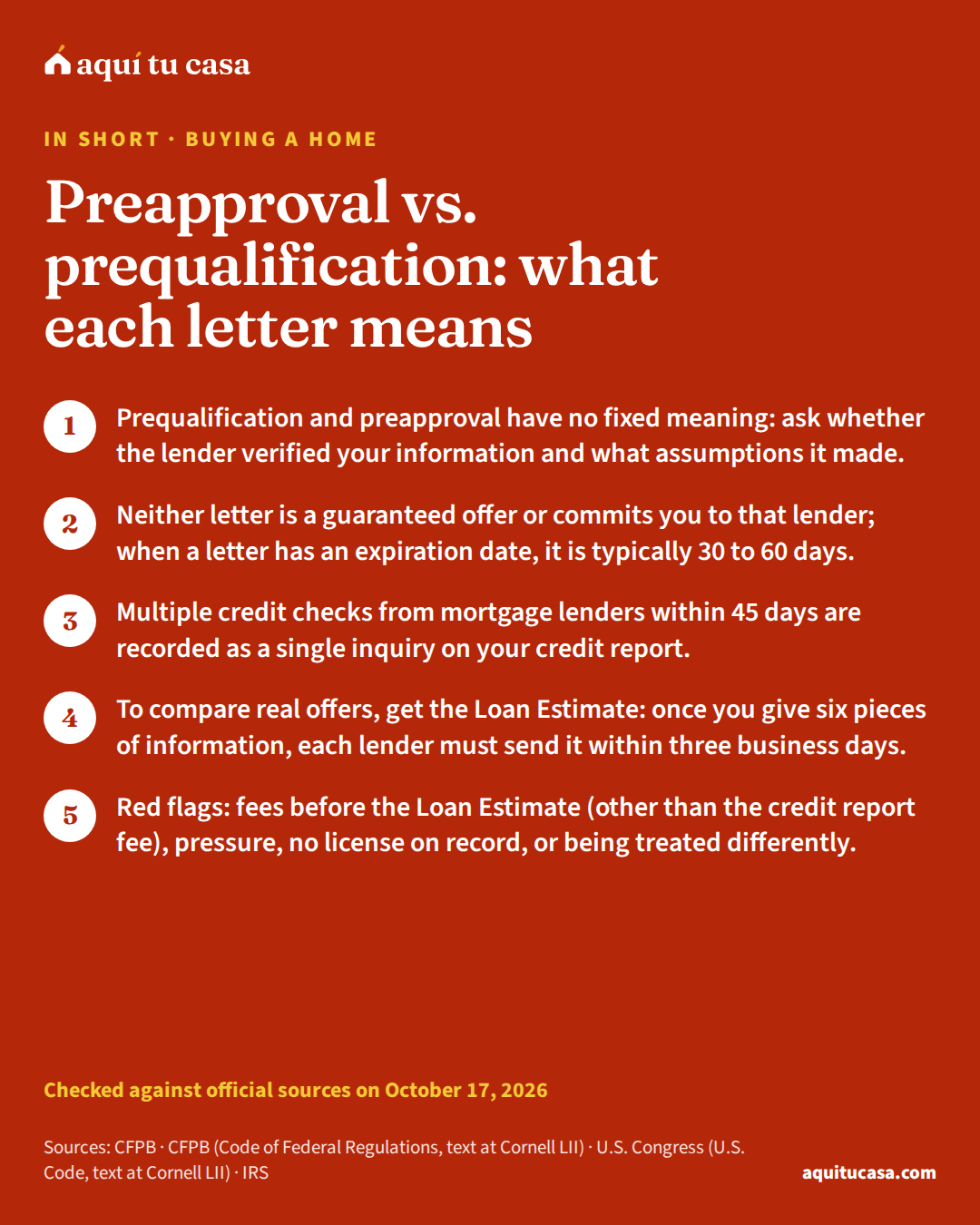
  2. Preapproval vs. prequalification: what each letter means What prequalification and preapproval letters are, what lenders check, why neither one is a loan, and how to compare lenders without hurting your credit. 14 min read Verified on October 17, 2026
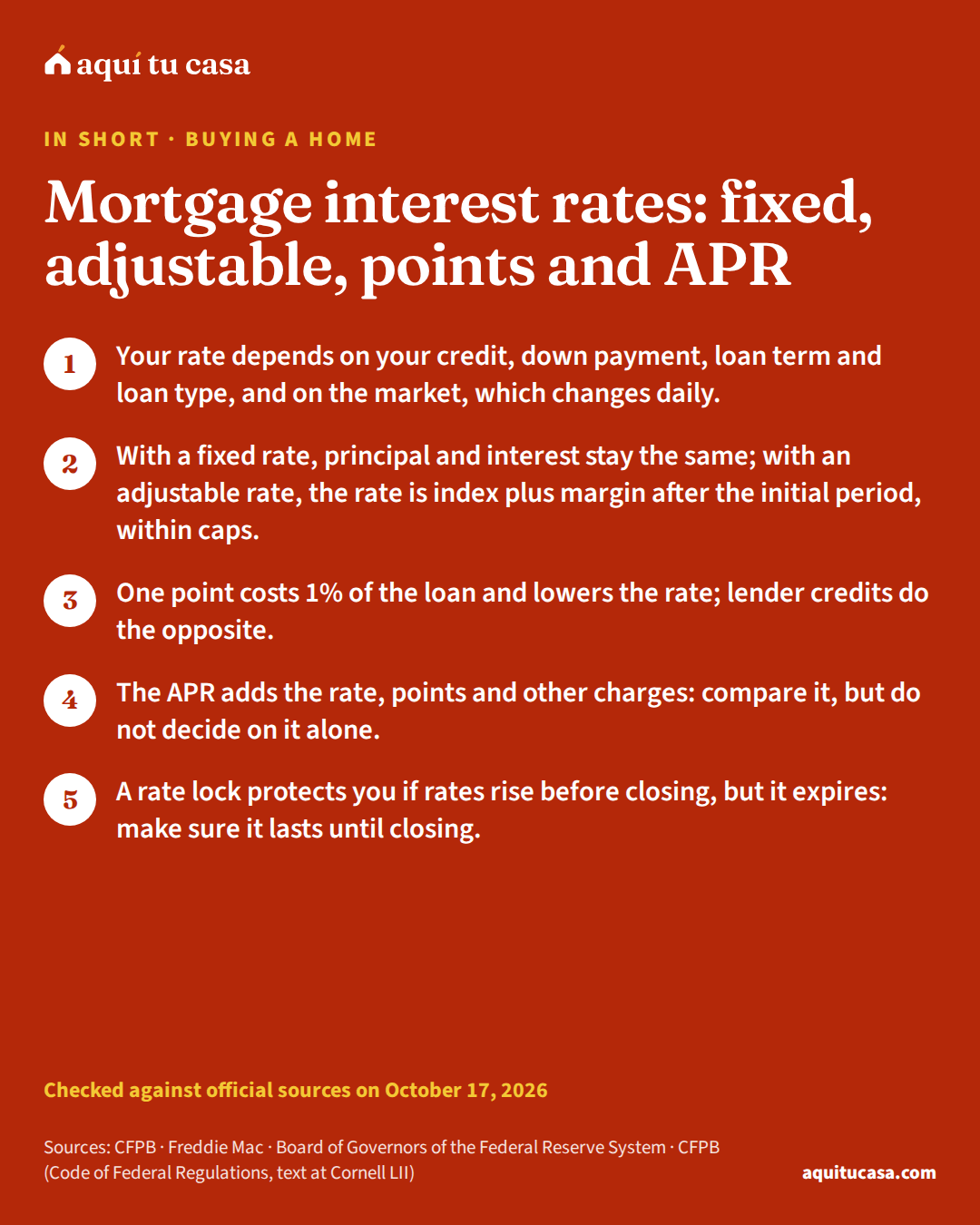
  3. Mortgage interest rates: fixed, adjustable, points and APR What your mortgage rate is and what moves it, how fixed and adjustable rates differ, and how points, the APR and rate locks work. 13 min read Verified on October 17, 2026
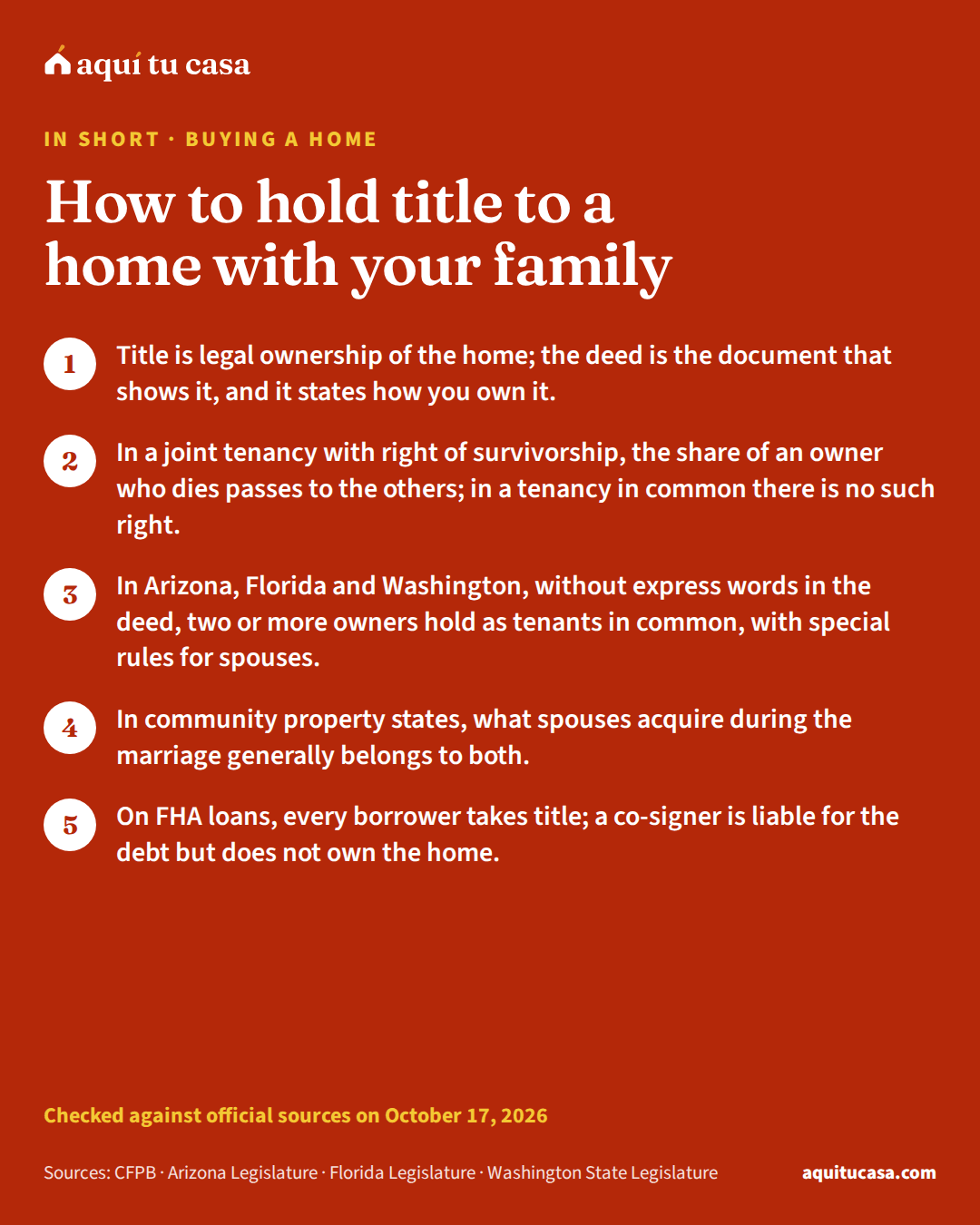
  4. How to hold title to a home with your family Joint tenancy, tenancy in common and community property: what some state laws say, what loans require and where to find free legal help. 10 min read Verified on October 17, 2026
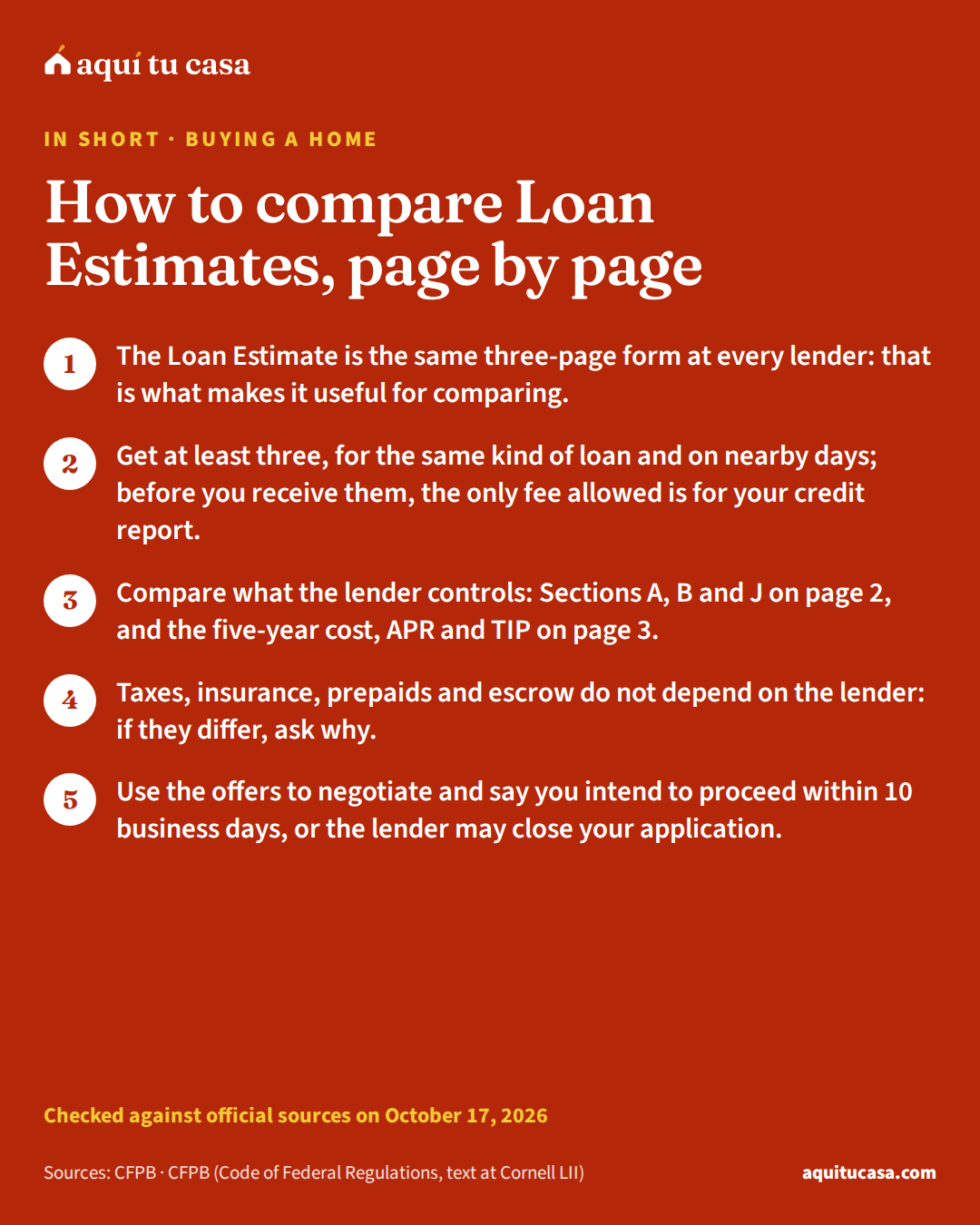
  5. How to compare Loan Estimates, page by page How to read and compare two or three Loan Estimates side by side: what to check on each page, what can change and how to negotiate with lenders. 16 min read Verified on October 17, 2026

Tools

Run the numbers with your own figures

The calculators these guides use. Each one leaves you with a result you can use today.

See all 26 tools

Stage 2 of 3

More guides in this stage

Keep going with the other guides on buying, from the most read to the most specific.

A large family with children poses by a white fence.

Featured guide 10 minute read

How to choose a real estate agent to buy a home

What a real estate agent does, who they represent, how to check their license in your state, what to ask them and your fair housing rights.

The most important thing

Choose an agent with experience in the neighborhoods, prices and type of home you want, and ask for references.

Verified on October 17, 2026

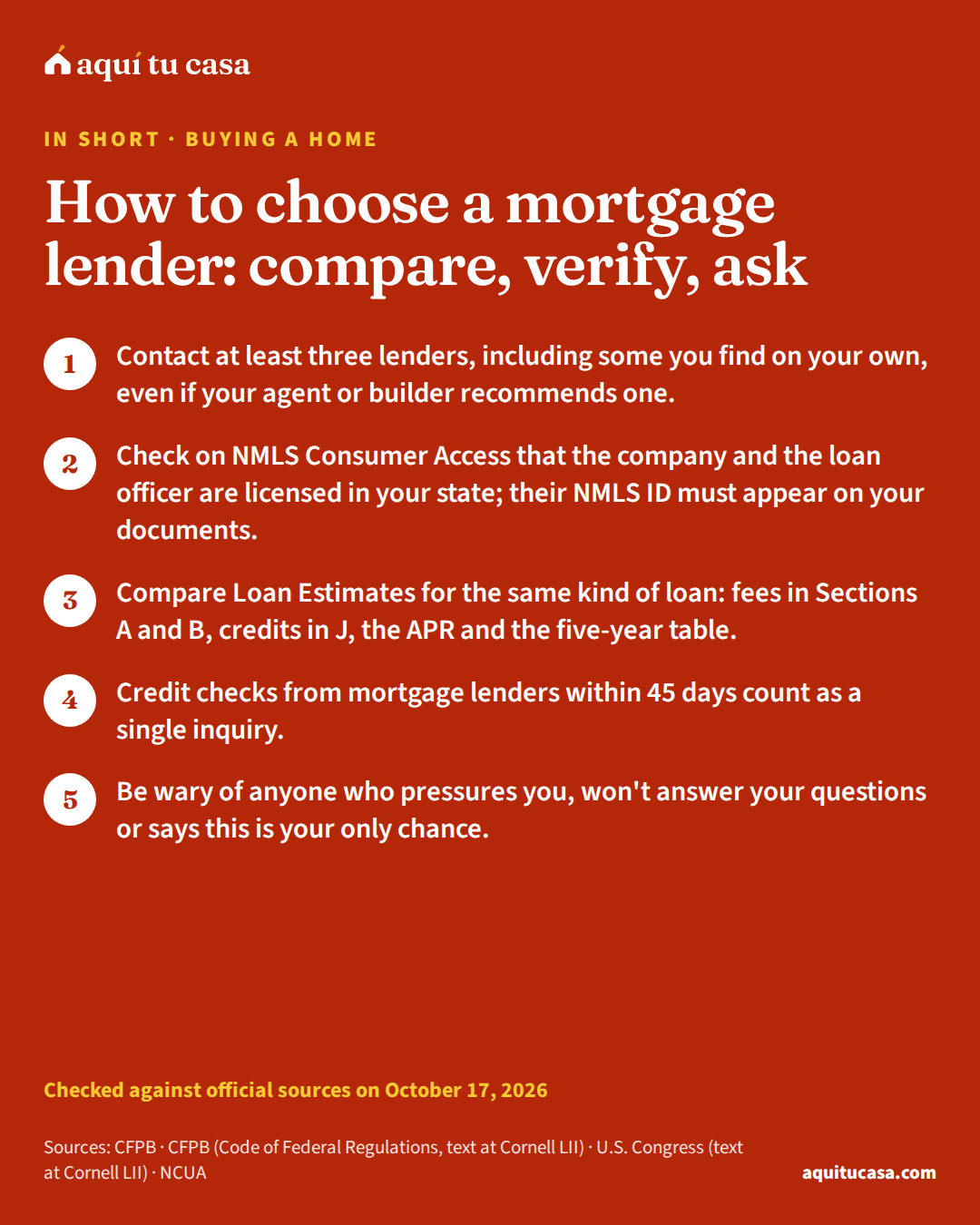
  1. How to choose a mortgage lender: compare, verify, ask How to find and compare mortgage lenders, check their license on NMLS, what to ask the loan officer and which warning signs to watch for. 13 min read Verified on October 17, 2026
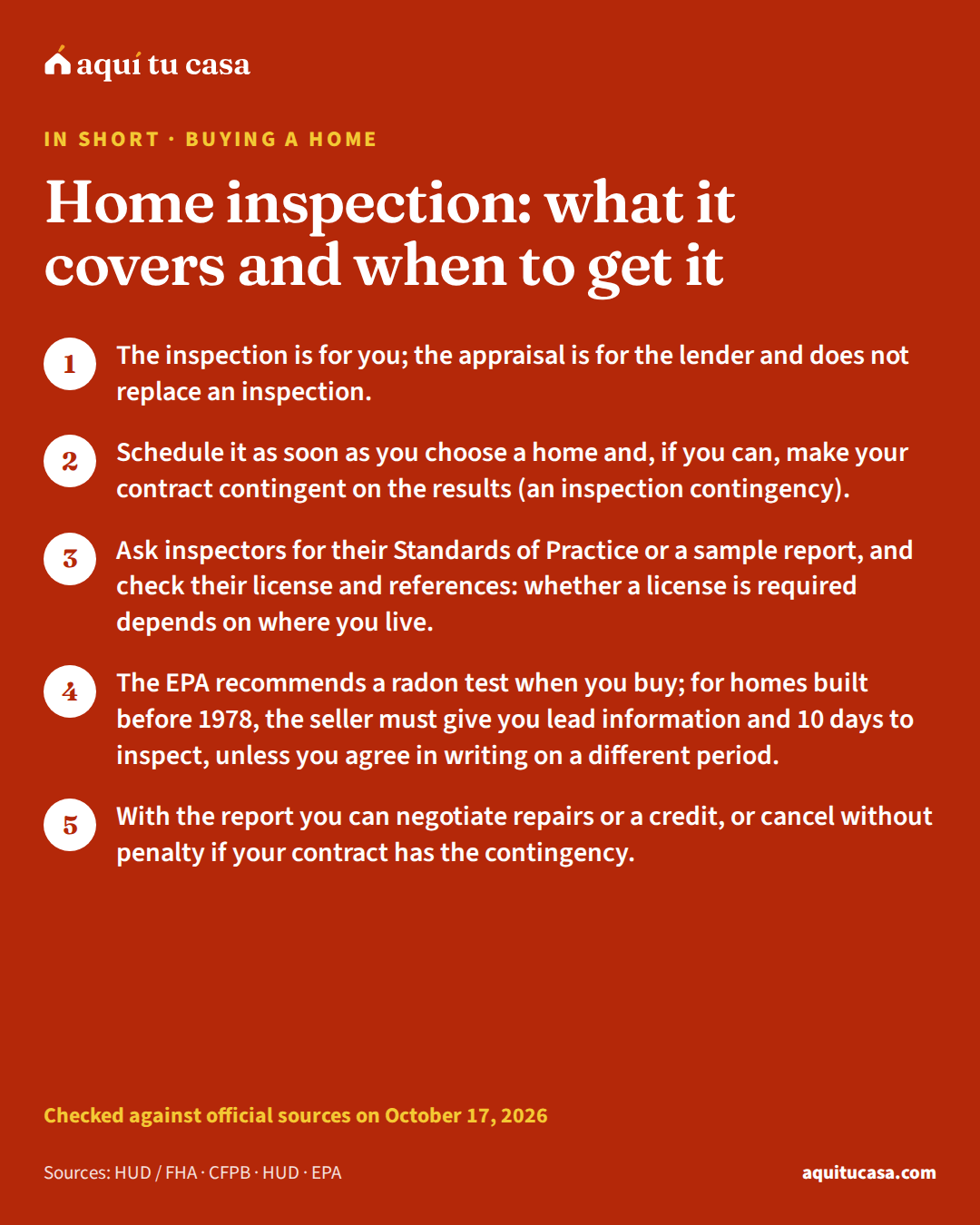
  2. Home inspection: what it covers and when to get it What a home inspection is, how it differs from the appraisal, when to get it under a contingency, radon and lead tests, and what to do with the report. 12 min read Verified on October 17, 2026
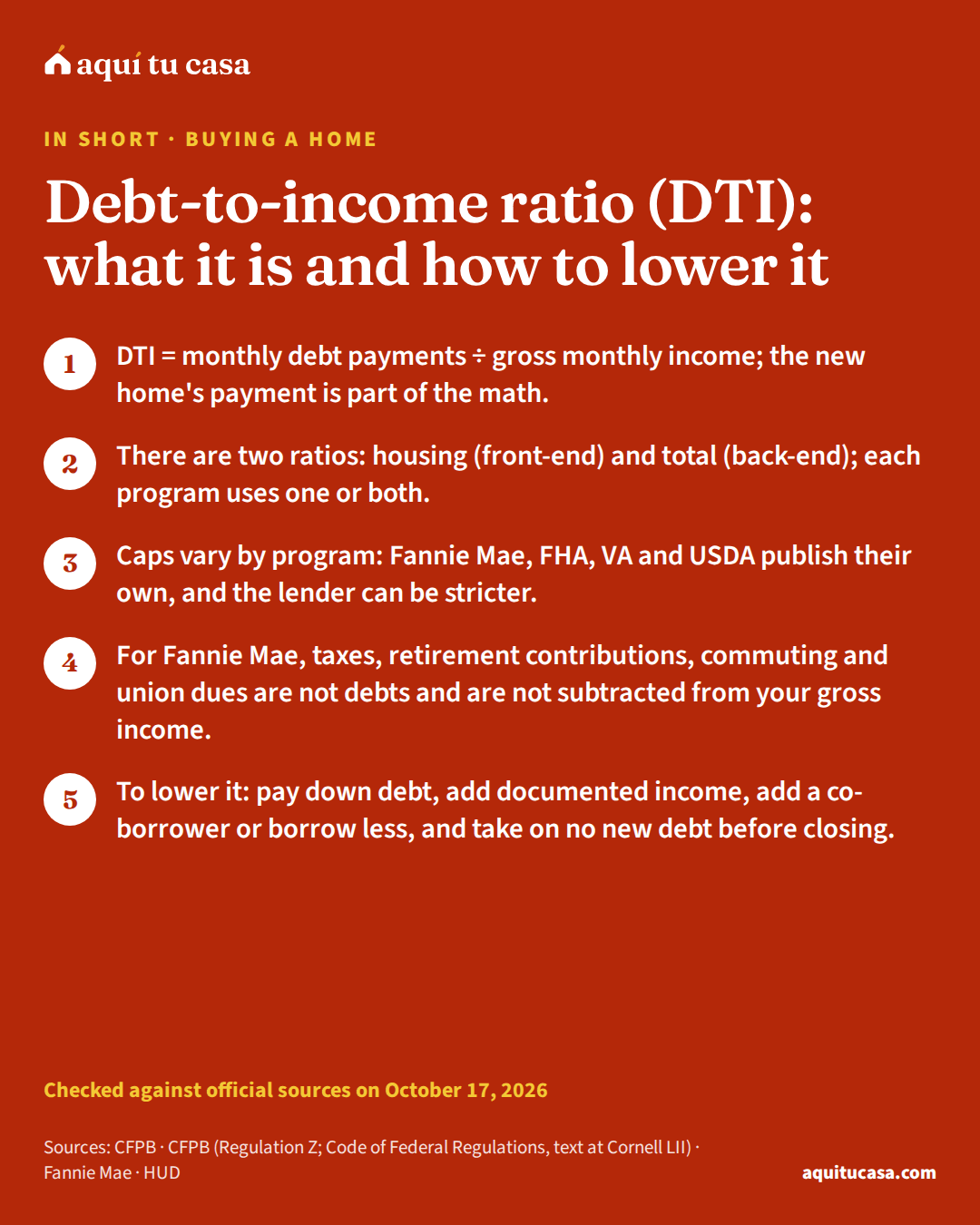
  3. Debt-to-income ratio (DTI): what it is and how to lower it What the debt-to-income ratio (DTI) is, how to calculate it, which payments count, the caps FHA, Fannie Mae, VA and USDA publish and how to lower it. 14 min read Verified on October 17, 2026
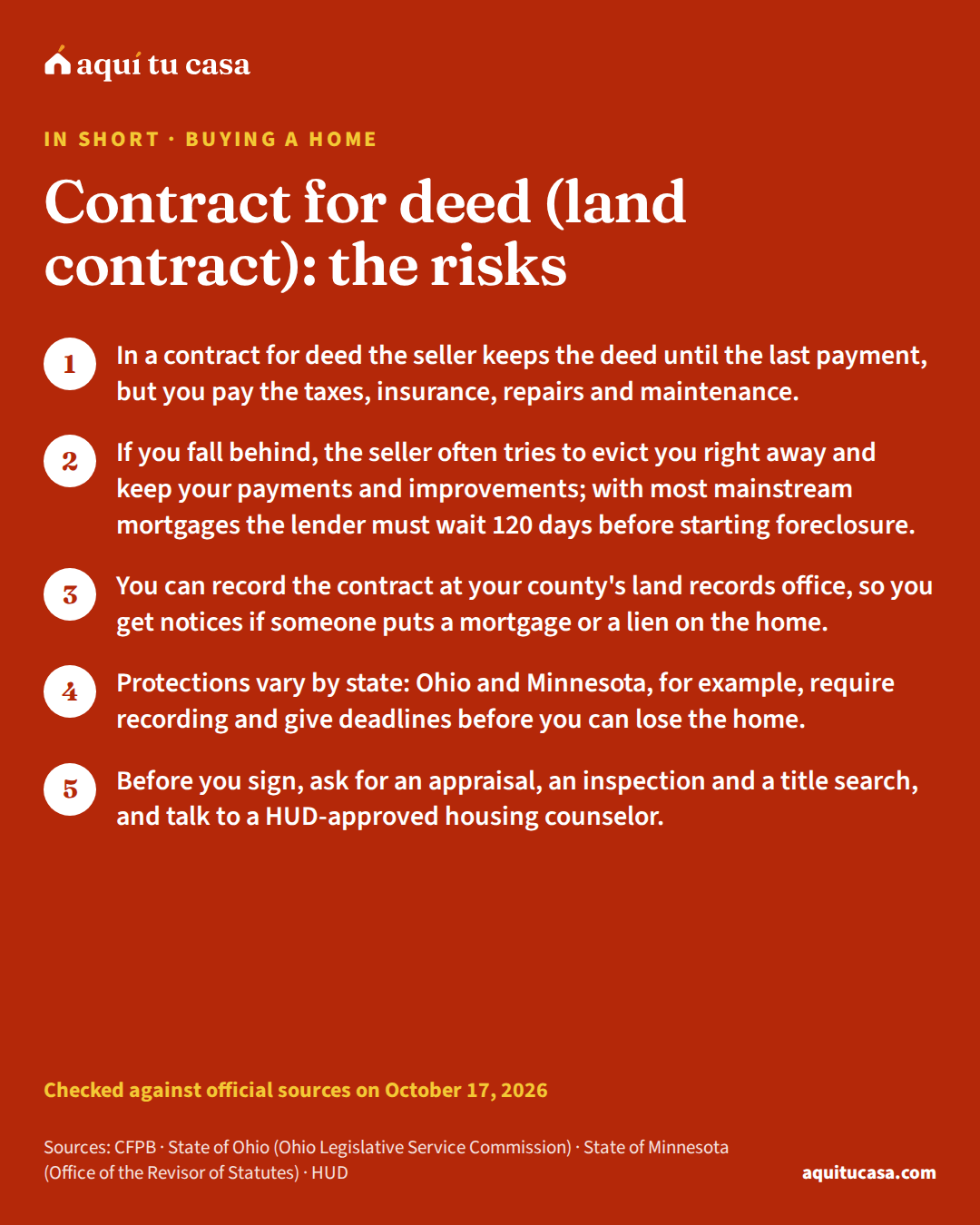
  4. Contract for deed (land contract): the risks What a contract for deed is, why you can lose the home and what you paid, how to record it and what some states require before a seller can take it back. 12 min read Verified on October 17, 2026
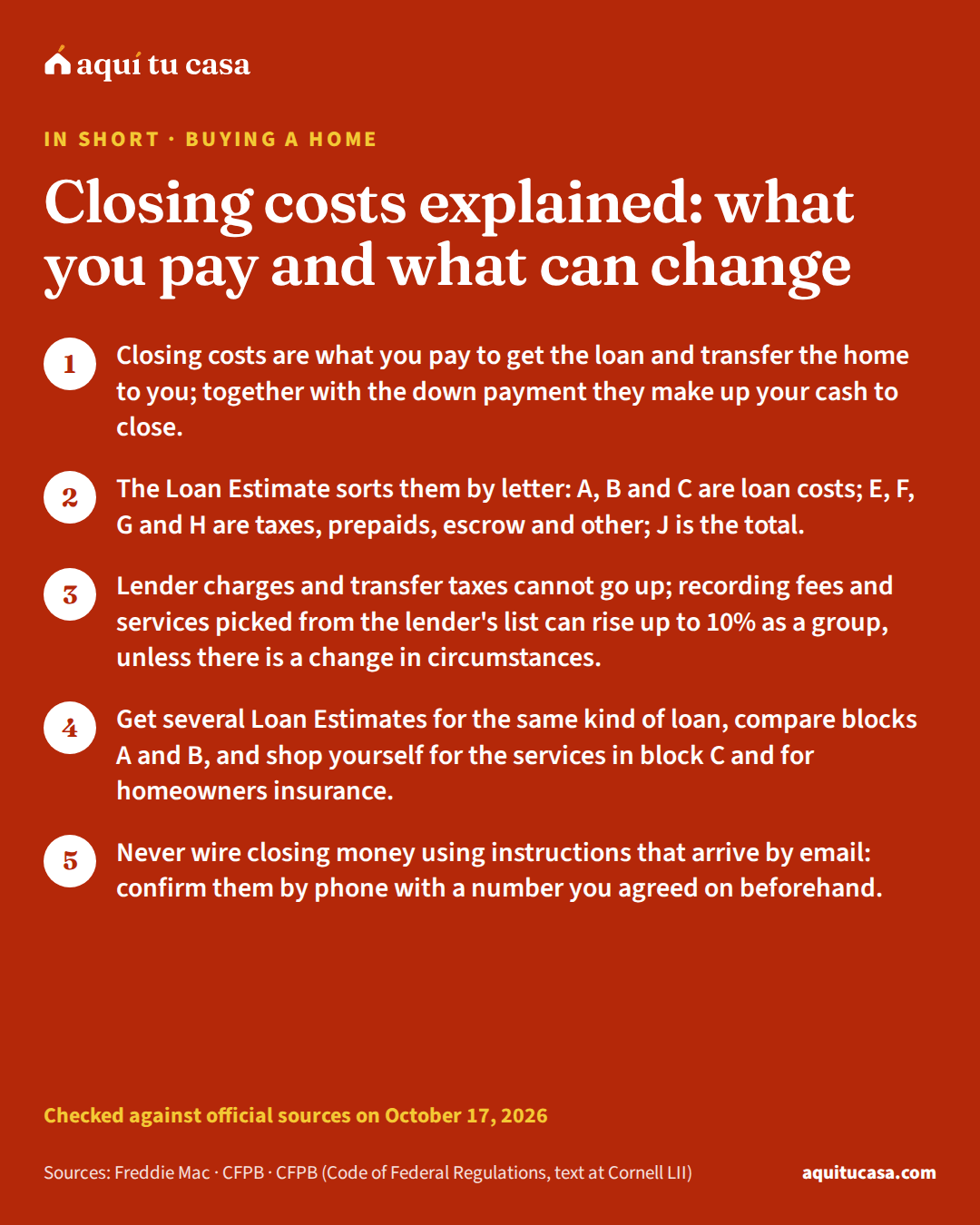
  5. Closing costs explained: what you pay and what can change What closing costs are, how to read them on your Loan Estimate, which charges cannot go up before closing and how to compare offers to pay less. 14 min read Verified on October 17, 2026

Stage 2 of 3

More guides in this stage

Keep going with the other guides on buying, from the most read to the most specific.

A father and daughter read a book together on the sofa.

Featured guide 11 minute read

Buying a home with family: co-borrowers and co-signers

Who in your family can sign the loan with you, how incomes and debts add up, and what changes if your relative will not live in the home or has an ITIN.

The most important thing

A co-borrower signs the note and usually goes on the title; a co-signer signs the note and is liable for the debt but does not own the home.

Verified on October 17, 2026

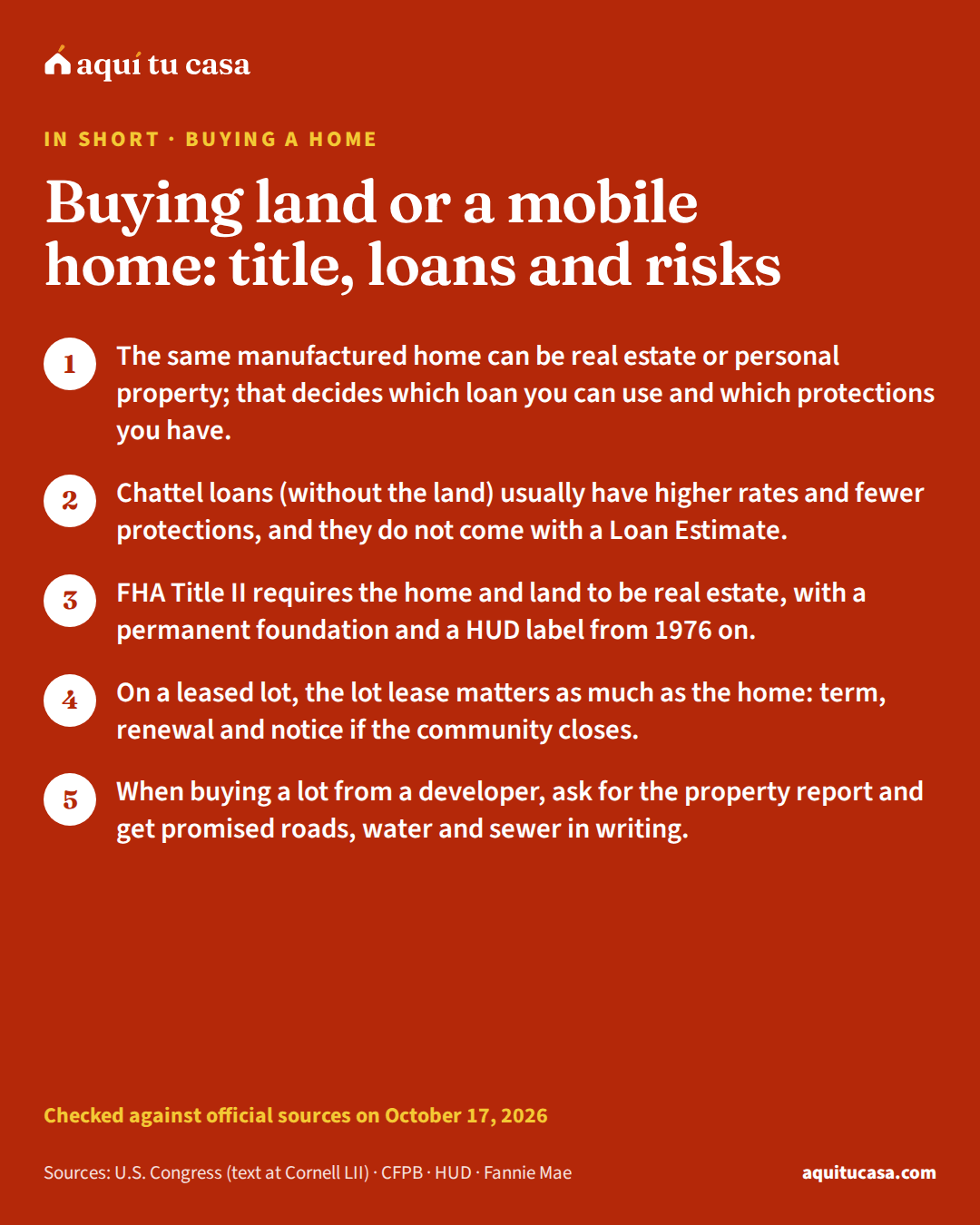
  1. Buying land or a mobile home: title, loans and risks How to buy land or a manufactured (mobile) home: real or personal property, how it is titled, FHA and chattel loans, leased lots and colonias. 12 min read Verified on October 17, 2026
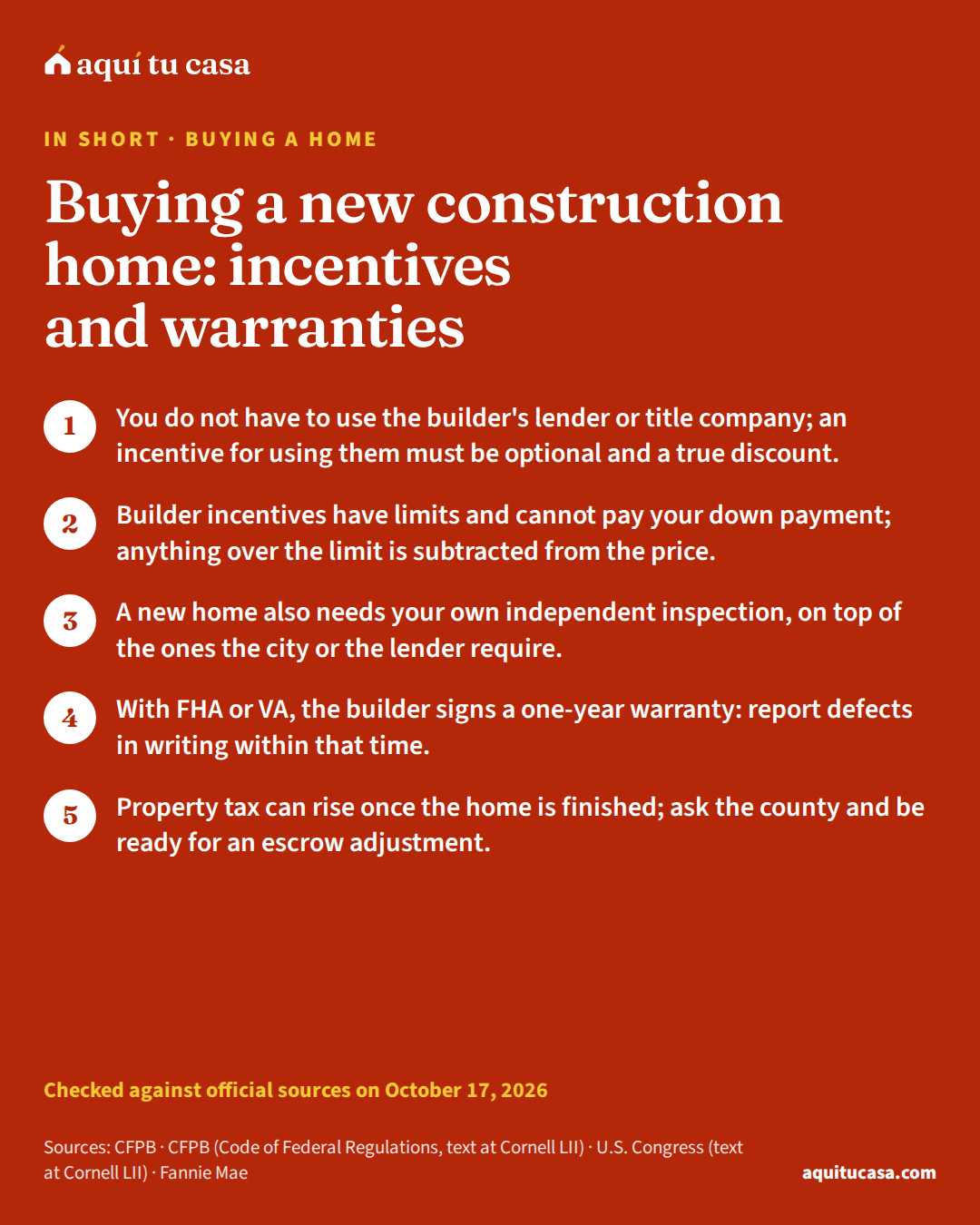
  2. Buying a new construction home: incentives and warranties How to buy a new home from a builder: incentives and rate buydowns, its affiliated lender, inspections, the warranty and the tax once it is built. 13 min read Verified on October 17, 2026
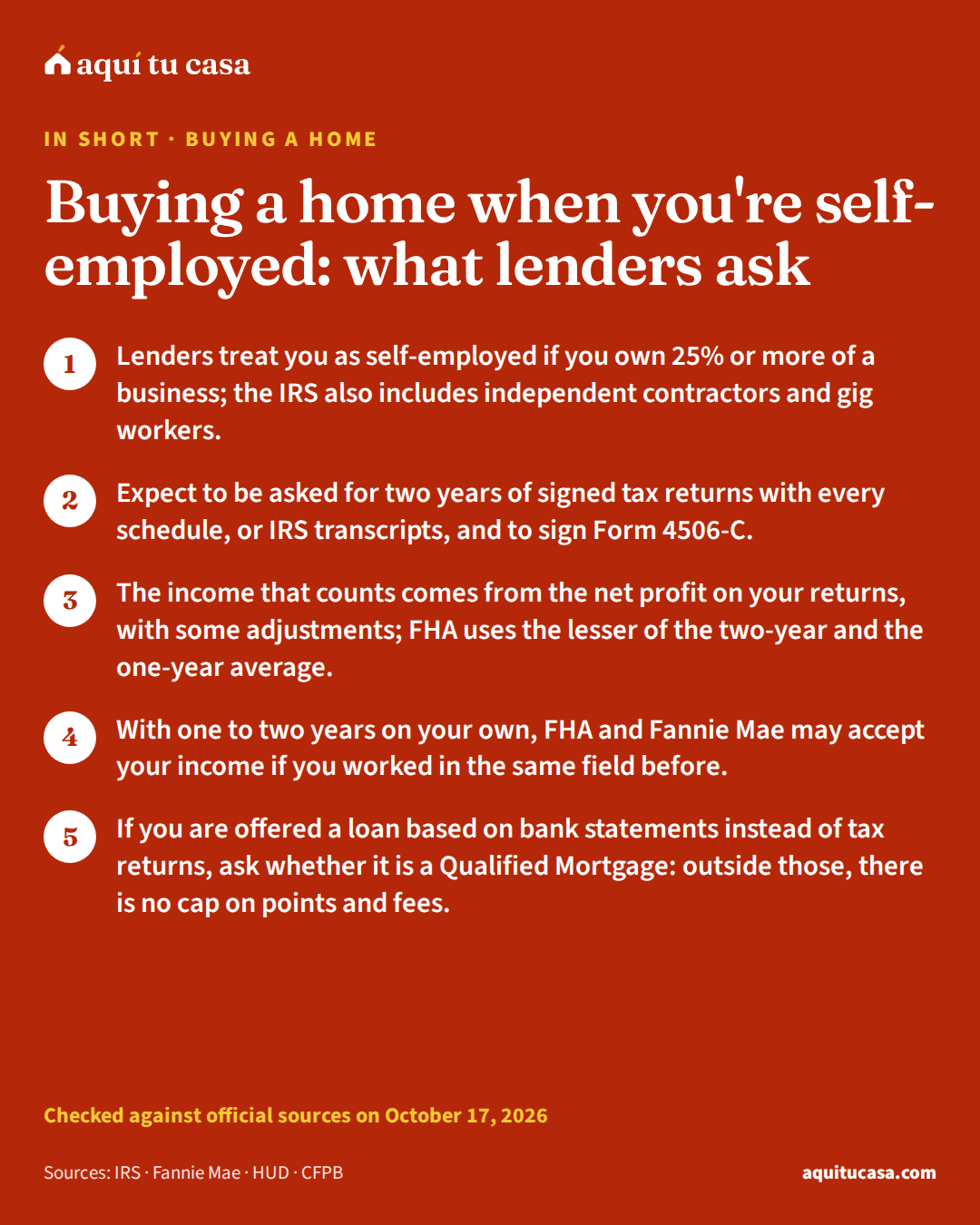
  3. Buying a home when you're self-employed: what lenders ask How lenders check your income if you are self-employed or paid on a 1099: tax returns, Schedule C, IRS transcripts, profit and loss and bank statements. 13 min read Verified on October 17, 2026
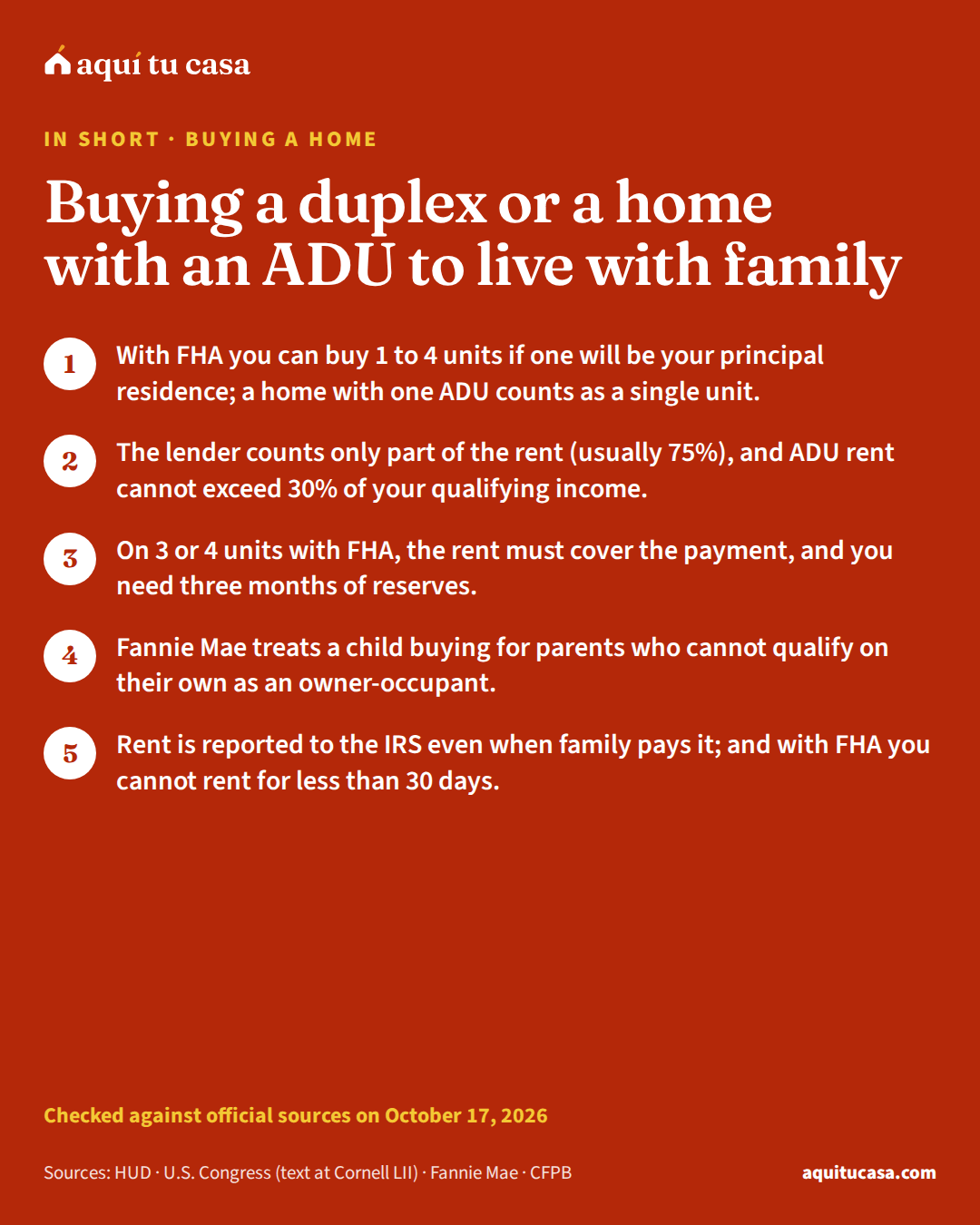
  4. Buying a duplex or a home with an ADU to live with family How to buy a 2- to 4-unit home or a home with an accessory dwelling unit (ADU) for family or to rent out part: who lives there, rent, limits and reserves. 11 min read Verified on October 17, 2026
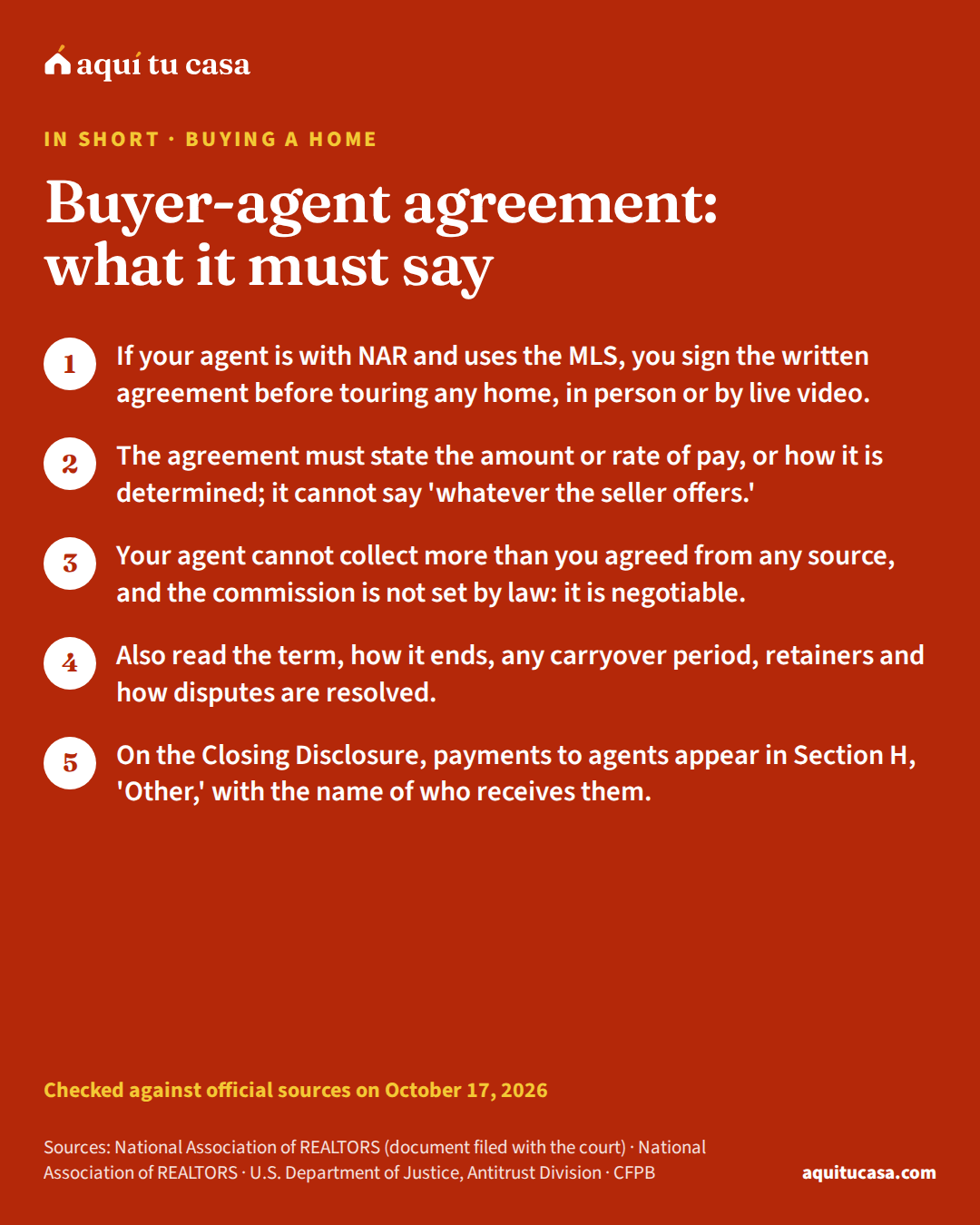
  5. Buyer-agent agreement: what it must say What the written agreement with your agent is, what it must say about pay, who pays your agent, what to read before signing and what you can negotiate. 10 min read Verified on October 17, 2026

Stage 3 of 3

Living as an owner

The payments, taxes, insurance and decisions that come after you buy.

1 guide in this stage

Featured guide 13 minute read

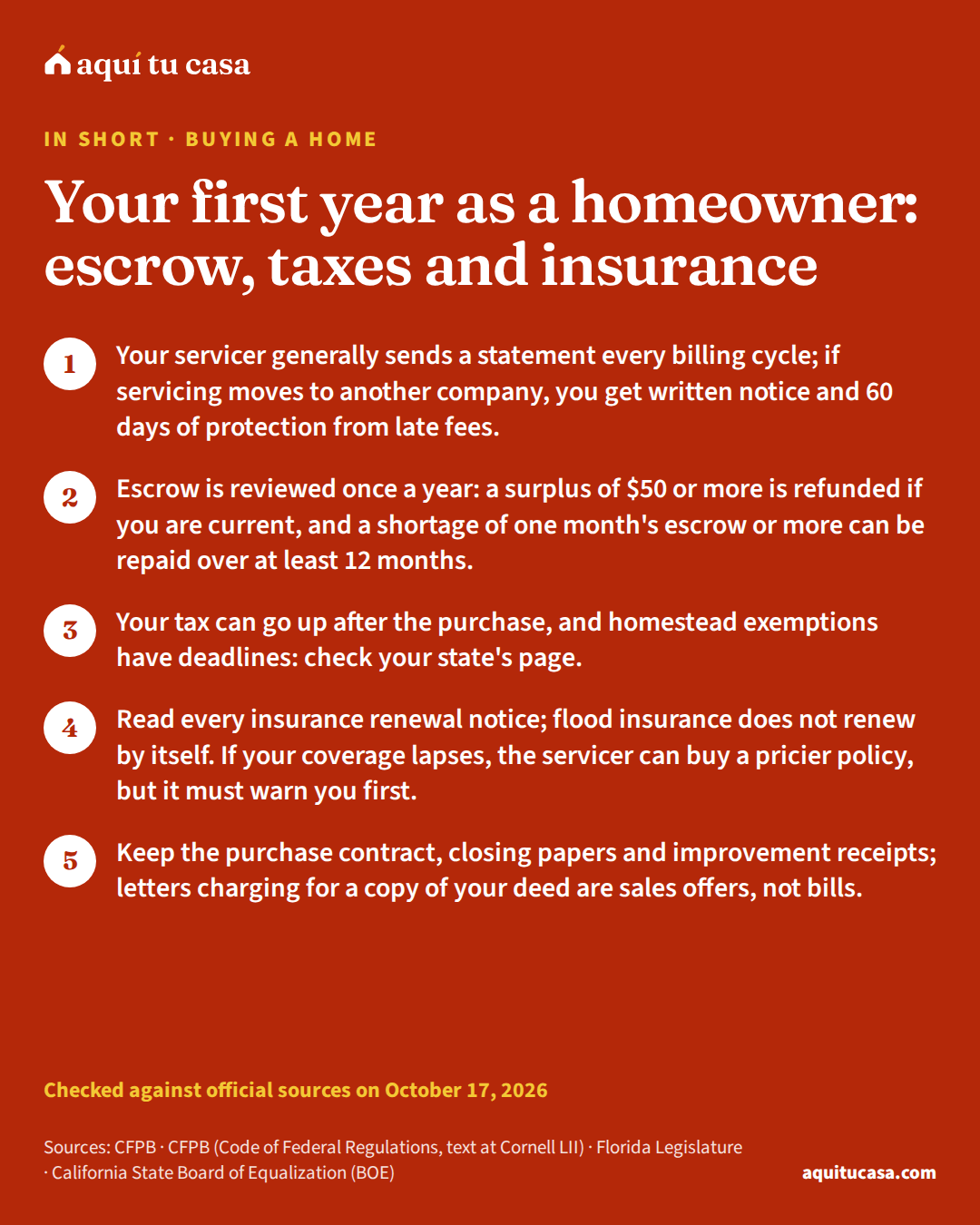
Your first year as a homeowner: escrow, taxes and insurance

Who collects your mortgage and what happens if that changes, the yearly escrow review, taxes, exemptions, insurance, records and scams aimed at new owners.

The most important thing

Your servicer generally sends a statement every billing cycle; if servicing moves to another company, you get written notice and 60 days of protection from late fees.

Verified on October 17, 2026

Frequently asked questions

What people ask most about buying a home

Short answers taken from the guides on this topic; each one links the guide that explains it with its sources.

How long does buying a home take?

It depends on you and on the market. The part you control (credit, savings, paperwork, preapproval) can take months. The CFPB warns that once a seller accepts your offer you may have as little as a couple of days to line up financing, so it pays to shop for a lender first. The fixed deadlines are the Loan Estimate's and the Closing Disclosure's: three business days each.

Read the full guide

Is it true that without 20% I cannot get a loan?

No. FHA accepts 3.5% with a score of 580 or higher, and a conventional HomeReady loan can accept 3%. What changes with less than 20% is that you pay mortgage insurance, and on a conventional loan that insurance can be removed as you pay down the debt.

Read the full guide

What if I get the Closing Disclosure less than three days before closing?

The deadline is the lender's, not yours: it must make sure you receive it at least three business days before you sign. If it arrives late, the closing has to move to respect the three days. Say so in writing to the lender and the closing agent, and do not sign in a hurry.

Read the full guide

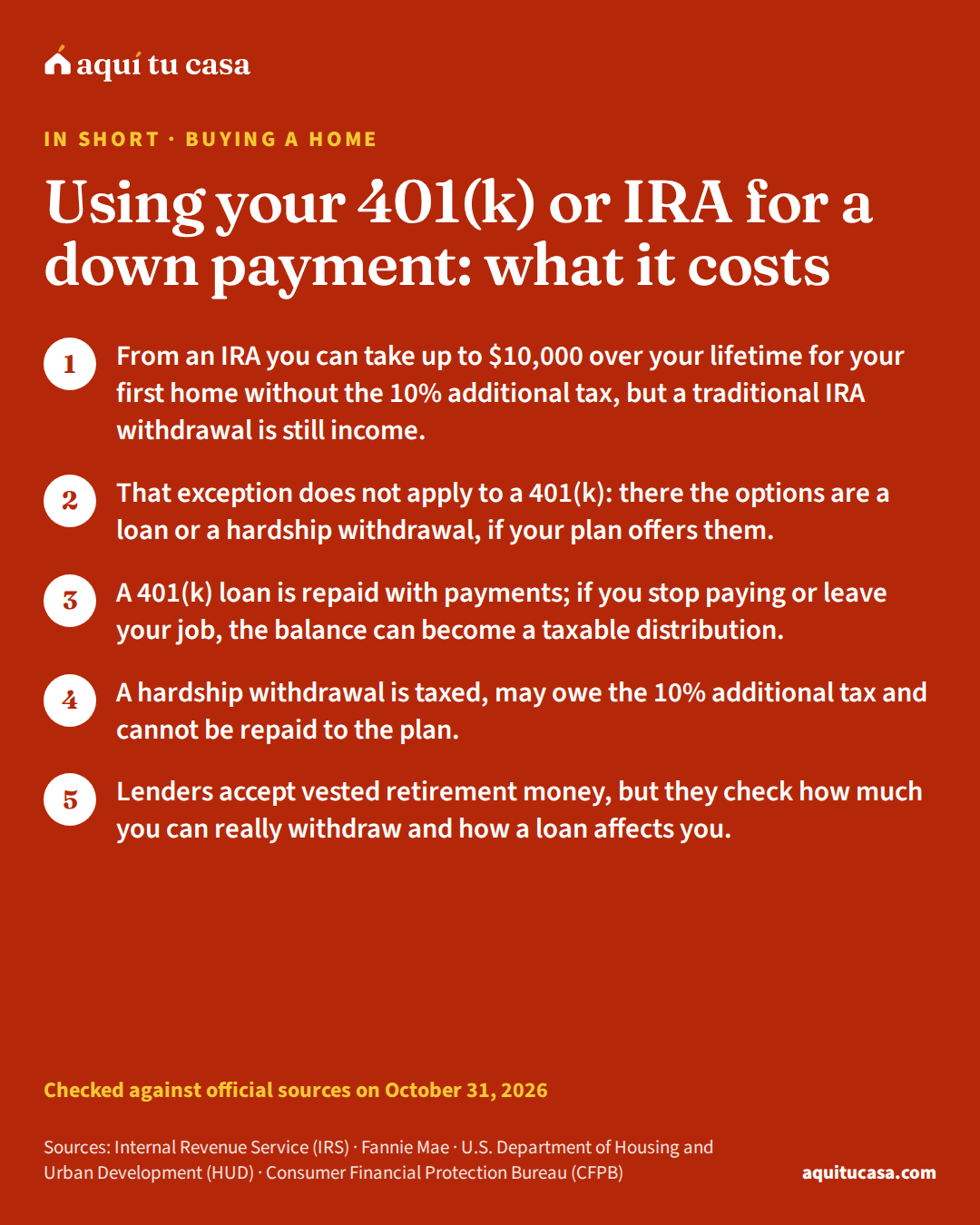
Can I take money out of my IRA for my first home without paying anything?

Without the 10% additional tax, yes, up to $10,000 over your lifetime, if you meet the IRS rules. But if the IRA is traditional, that money generally counts as income and you pay income tax on it. With a Roth, your contributions come out first and are not taxed.

Read the full guide

See all 279 questions about buying a home in the United States

Keep going

The full path with its steps in order, the calculators these guides use, and the agencies their rules come from.

The full path

Buy a home

This topic is part of a path with steps in order, so you know what to do first. Step by step, with your county's numbers. 9 steps in order.

See the path

Official sources behind these guides

Every rule, number and date in these guides comes from what these agencies publish. Each guide links the exact page.

  • CFPB
  • Fannie Mae
  • HUD
  • IRS
  • U.S. Congress
  • Freddie Mac
  • Florida Legislature
  • National Association of REALTORS

and 29 more official sources

How we make the guides