Finding a place, signing without fear, knowing your rights and what to do about an eviction. It covers deposits, repairs, discrimination and what a landlord may ask you about your status.
29 guides
Last verified: November 6, 2026
Stage 1 of 4
Your first steps in the United States
What to settle first: papers, accounts and how housing works here.
Renting your first apartment after arriving with parole, a pending asylum case or TPS: what landlords ask for, what to offer, your rights and free help.
The most important thing
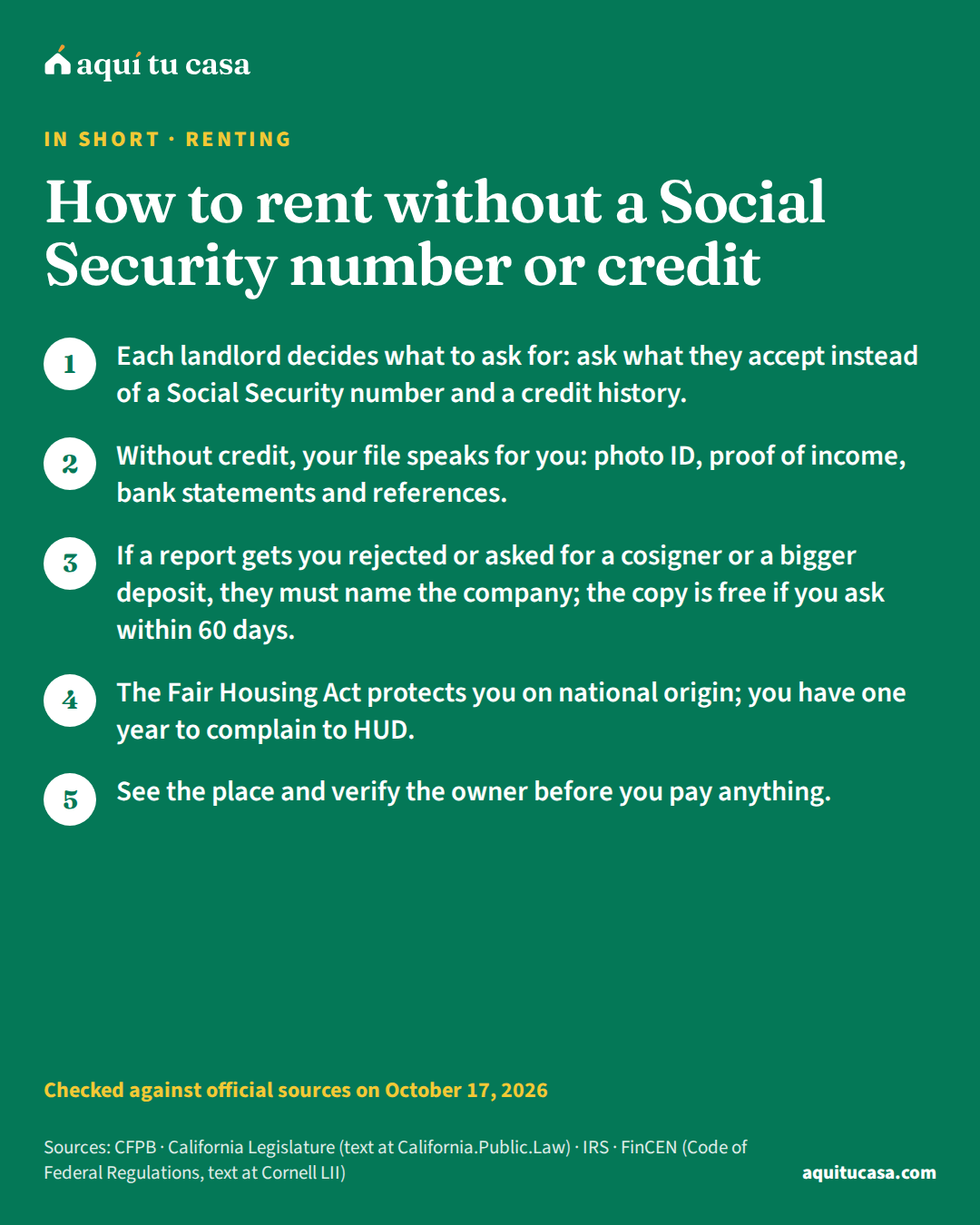
Landlords check credit, rental and job reports; with no U.S. history, offer proof of income, savings and references.
Verified on October 31, 2026 Read the guide
The data behind these guides
Today’s official numbers
The guides on Renting cite these figures. They update when their sources publish new ones; what you see here is current.
Renting for the first time as a student or young adult: the budget, a cosigner, roommates, renters insurance and the student rules for low-cost housing.
The most important thing
Do the full budget before you sign: rent, utilities, deposit, the move and insurance.
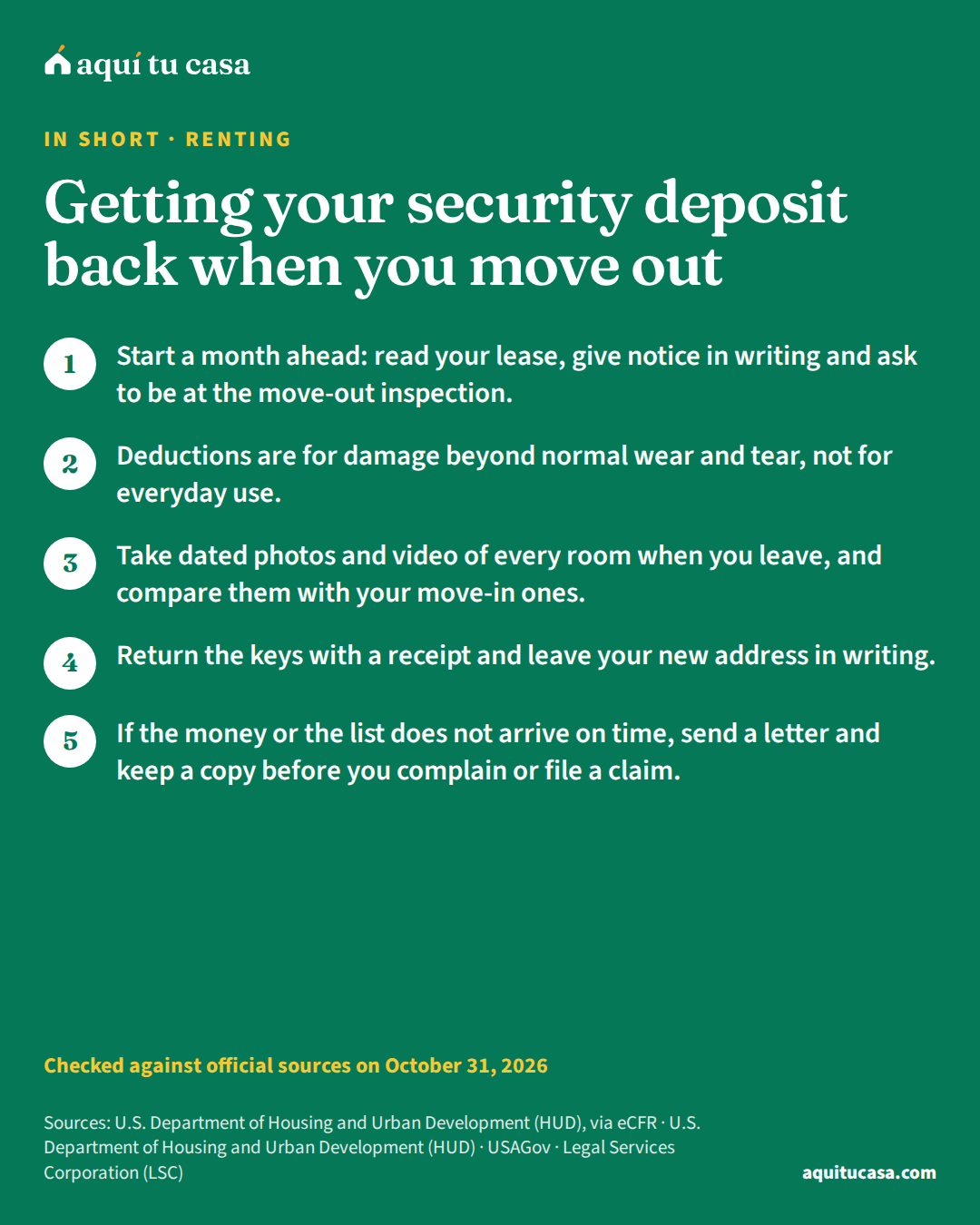
What a security deposit is, how much a landlord may charge in your state, what can be deducted, when it must be returned and where to complain if it isn't.
The most important thing
The deposit is yours: the landlord only holds it and, when you move out, returns it minus the deductions the law allows.
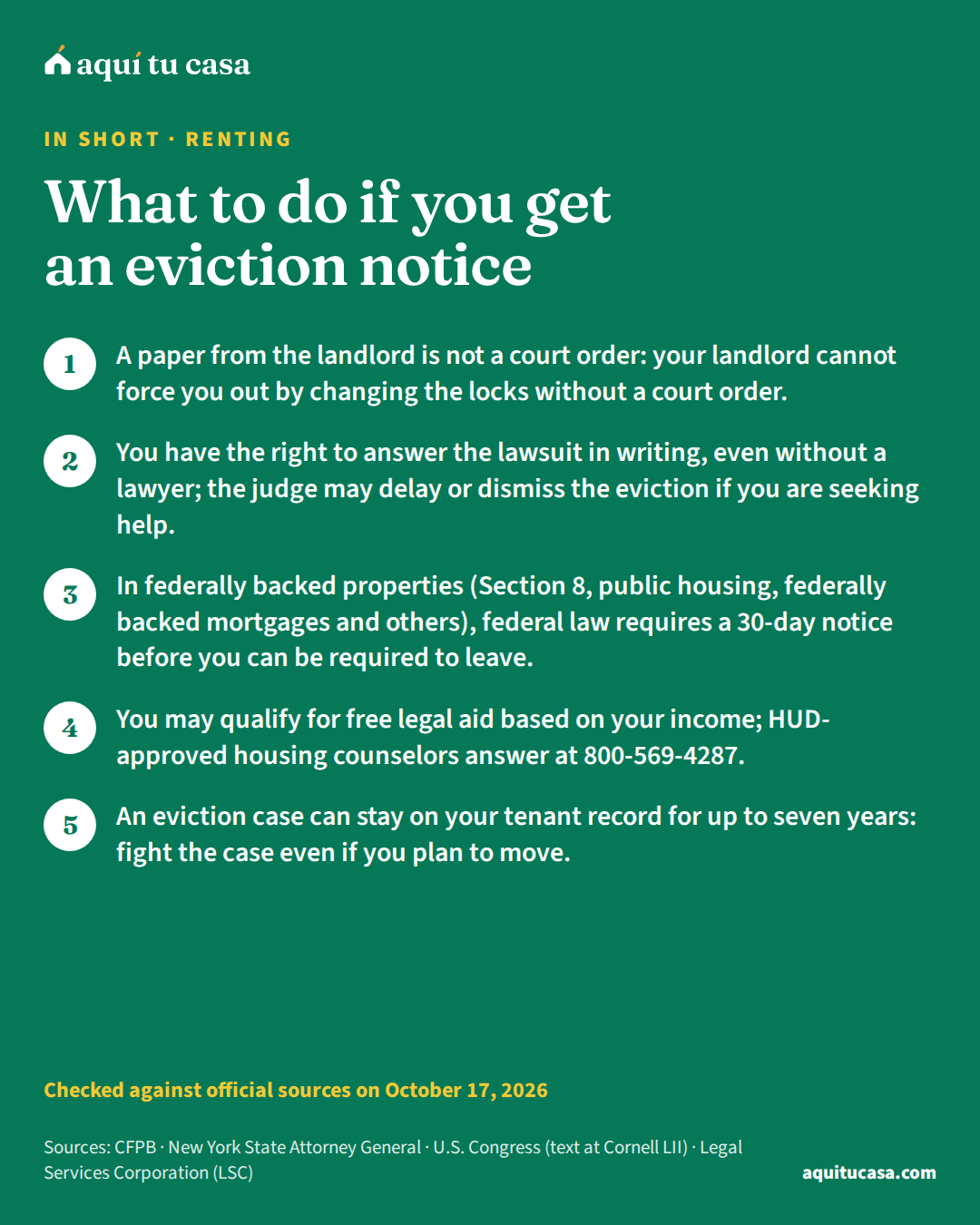
If your landlord changed the locks, removed your things or cut off water or power to make you leave: what several states' laws say and what to do today.
The most important thing
According to the CFPB, your landlord cannot force you out by changing the locks without a court order, even if you owe rent.
Short answers taken from the guides on this topic; each one links the guide that explains it with its sources.
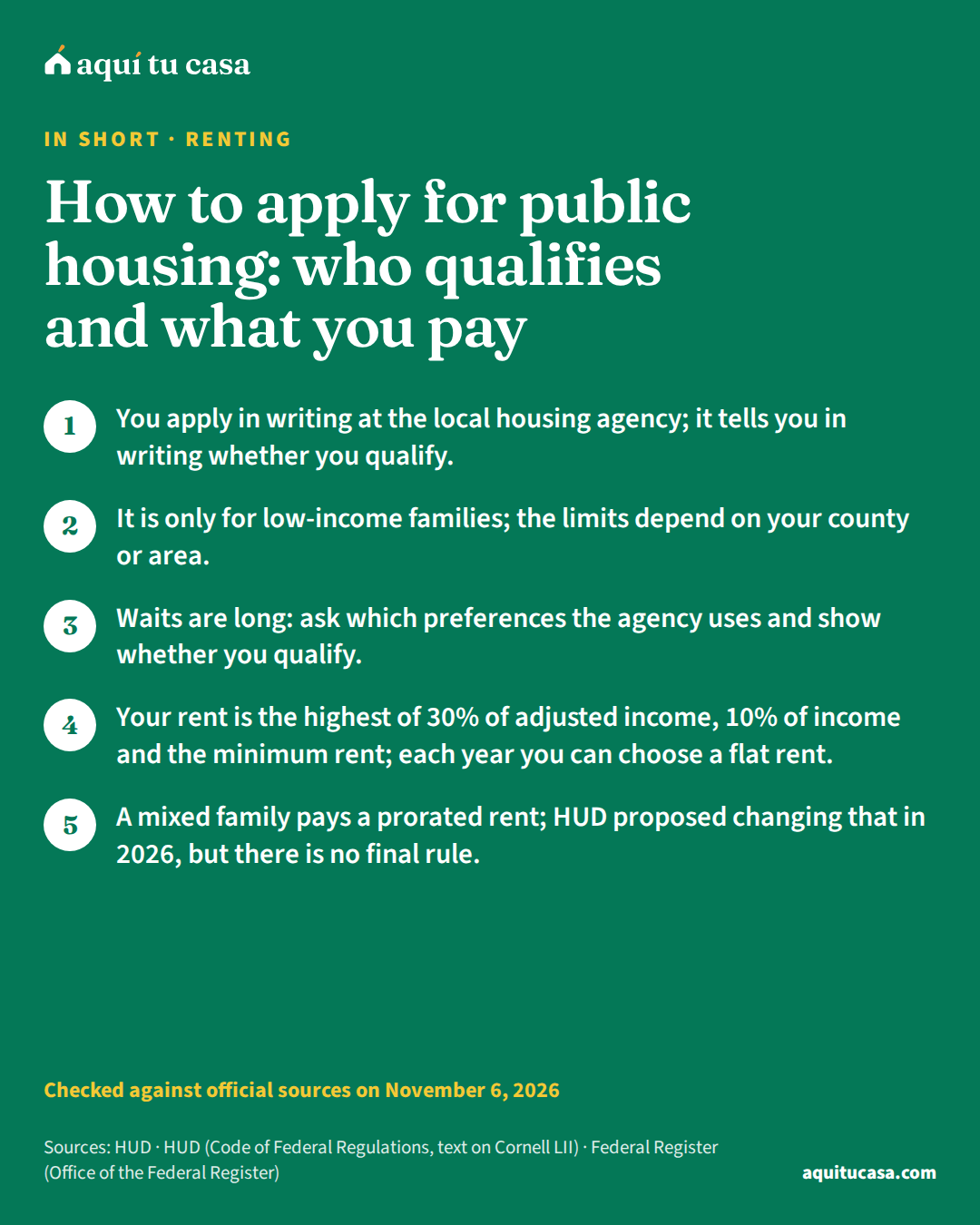
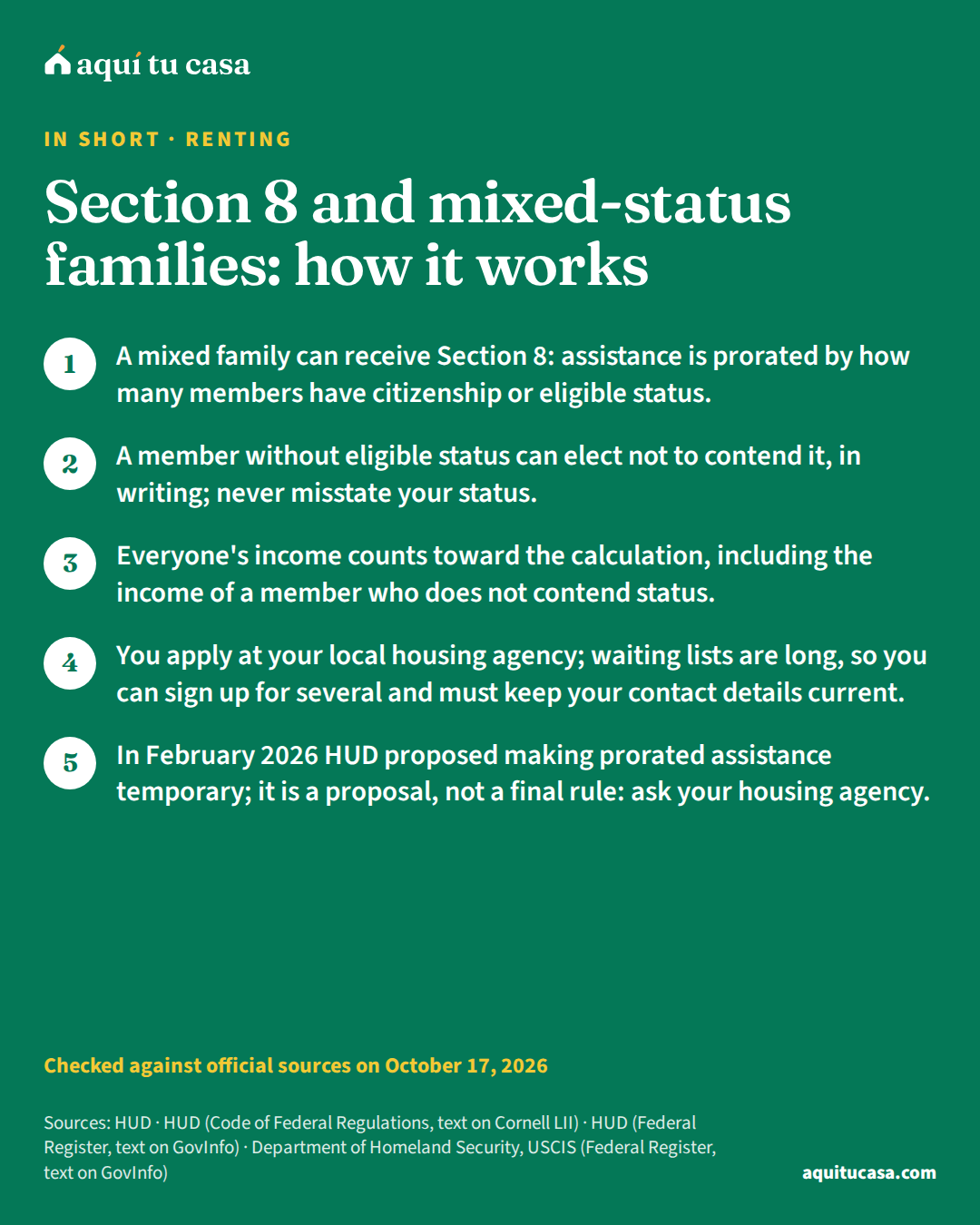
Where do I apply for Section 8?
At a public housing agency. You don't need to live in its area to apply, but if you lived elsewhere when you applied, it may require you to live there for the first 12 months. HUD suggests applying to several lists because they are usually long.
The notice is the first step, not the last. Your state's rules say how many days each kind of notice gives and what happens next; in general, the landlord has to file a lawsuit and a judge has to rule. Use those days to talk to the landlord, apply for assistance and call legal aid.
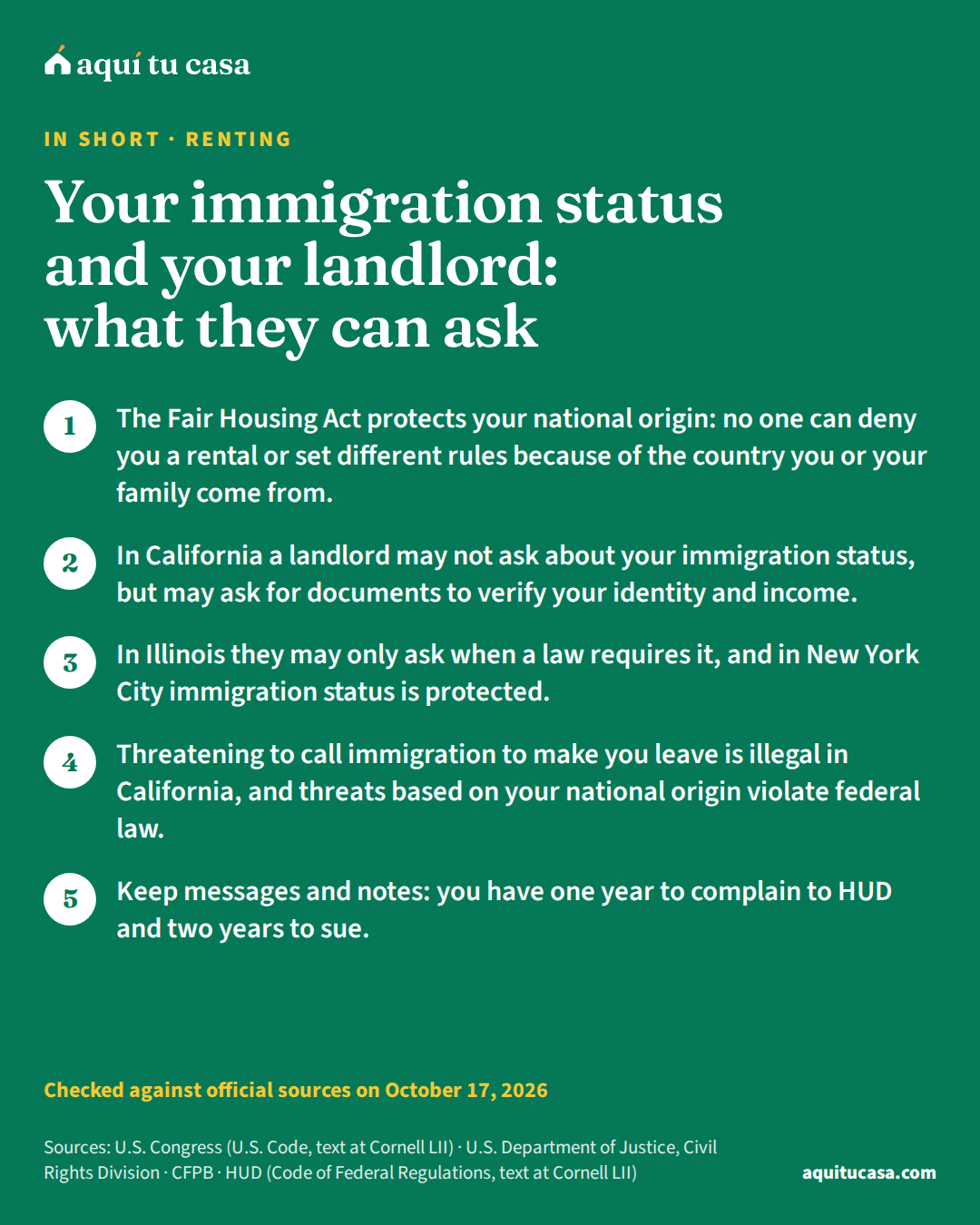
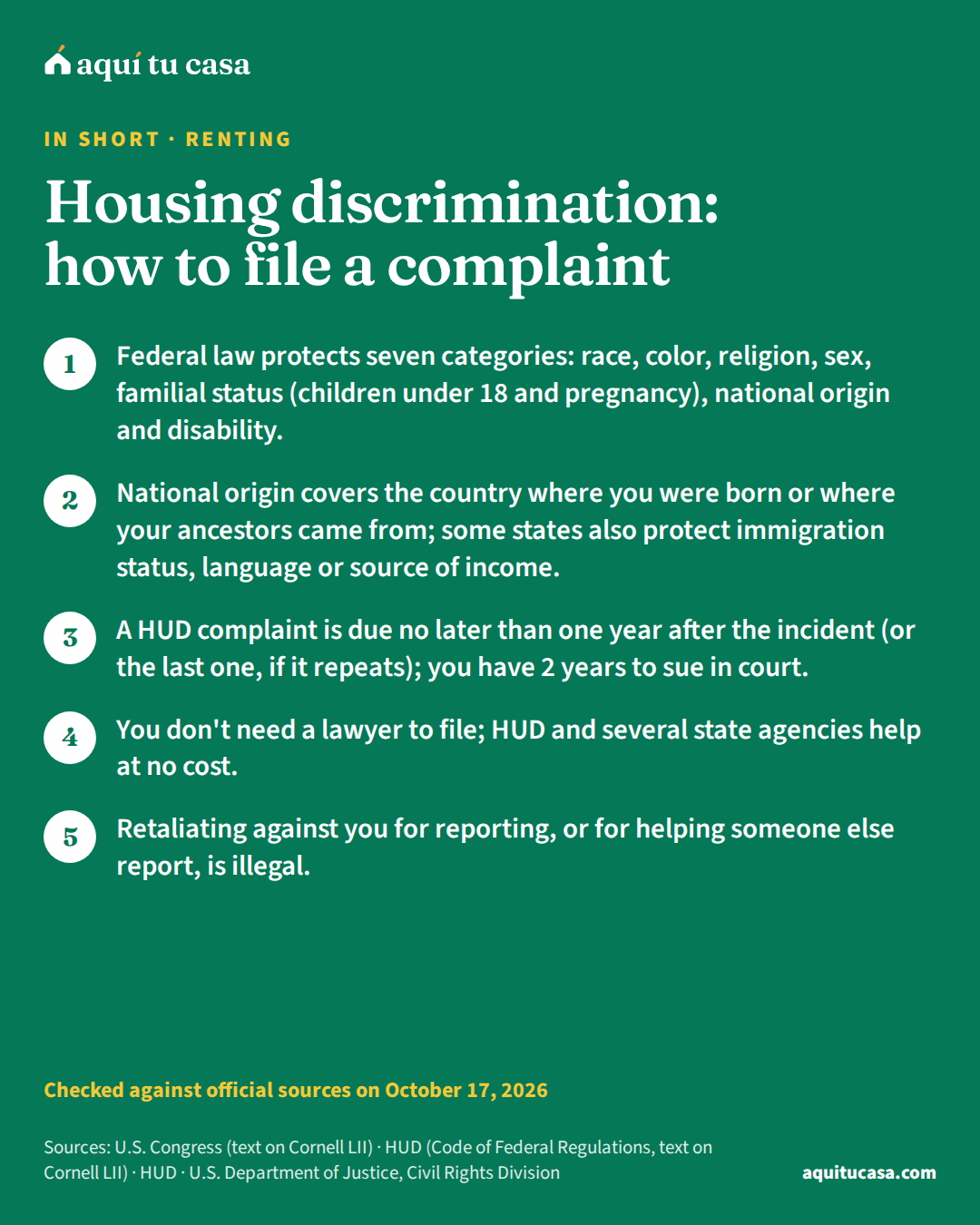
It depends on the state. In California, the law prohibits a landlord from asking about your immigration status or requiring you to state it, but allows them to request documents to verify your identity and ability to pay. Nationwide, the Fair Housing Act prohibits refusing to rent to you because of your national origin. If you think you were treated differently because of your origin, keep the messages and find free legal aid.
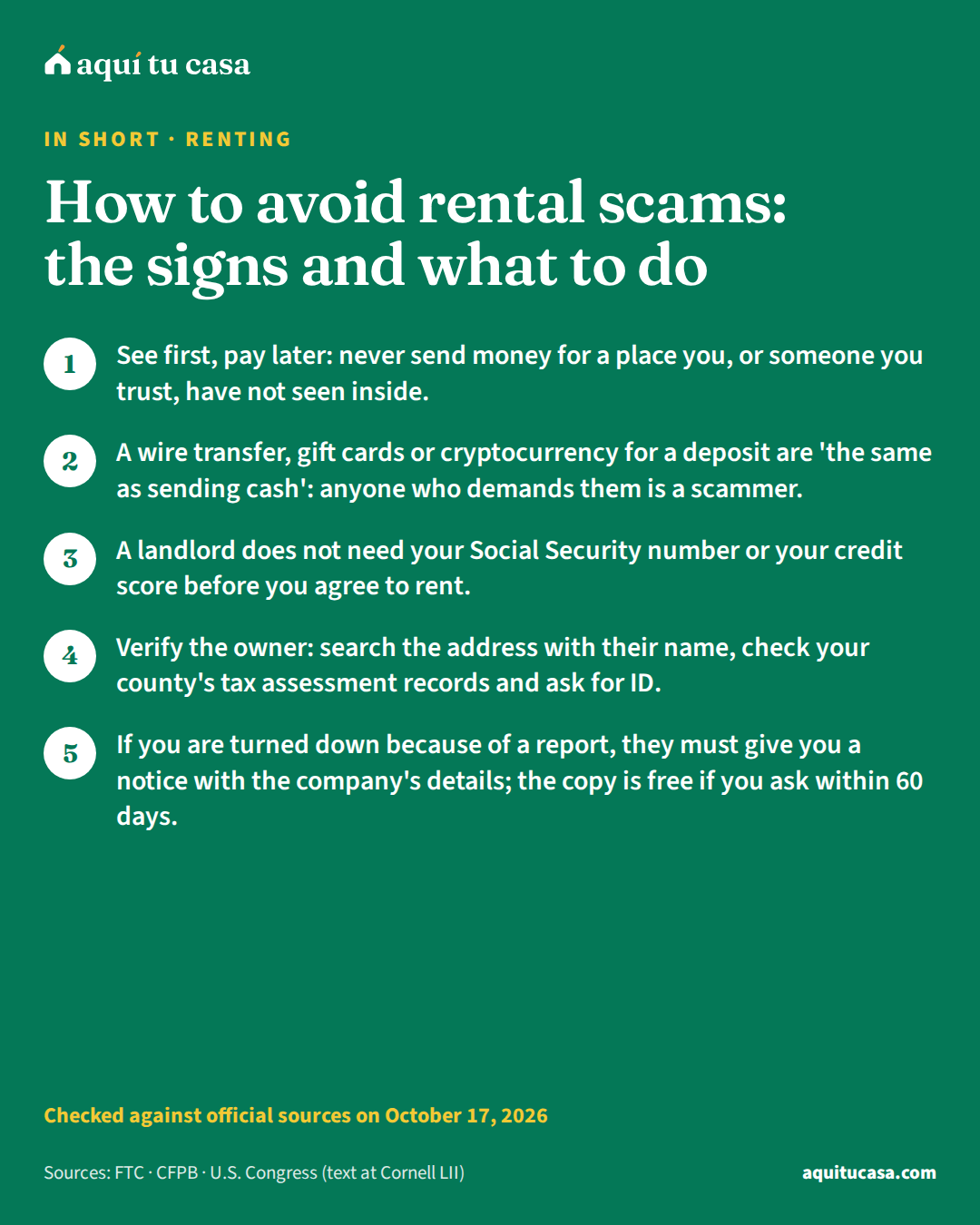
How do I know whether the person writing to me really owns the place?
Search the address online together with their name, check whether the property appears on the website of the company they claim to represent, and look up your city or county tax assessment records, which show whose name the property is in. Then ask to see their ID. If they make excuses about showing you the place, walk away.