
Este sitio también está en español. Leer en español

Topic

Taxes and money

Budgeting with several incomes, saving, remittances and taxes without the headache. It covers choosing between a bank and a credit union, and accounts with no overdraft fees.

  • 7 guides
  • Last verified: October 31, 2026
A pregnant woman takes groceries out of the car in front of her garage.

Stage 1 of 2

Saving and getting the money ready

How much you need, where it can come from and how to document it so a lender accepts it.

6 guides in this stage

A mother carrying groceries walks down the sidewalk with her daughter.

Featured guide 13 minute read

Free tax filing: IRS VITA, TCE and Free File

Who can file for free with VITA, TCE or Free File, what to bring, how to apply for an ITIN at a VITA site and how to find a free tax help site near you.

The most important thing

VITA and TCE prepare basic returns for free; the IRS sets no program-wide income limit, but many sites serve people who make about $70,244 or less.

Verified on October 31, 2026
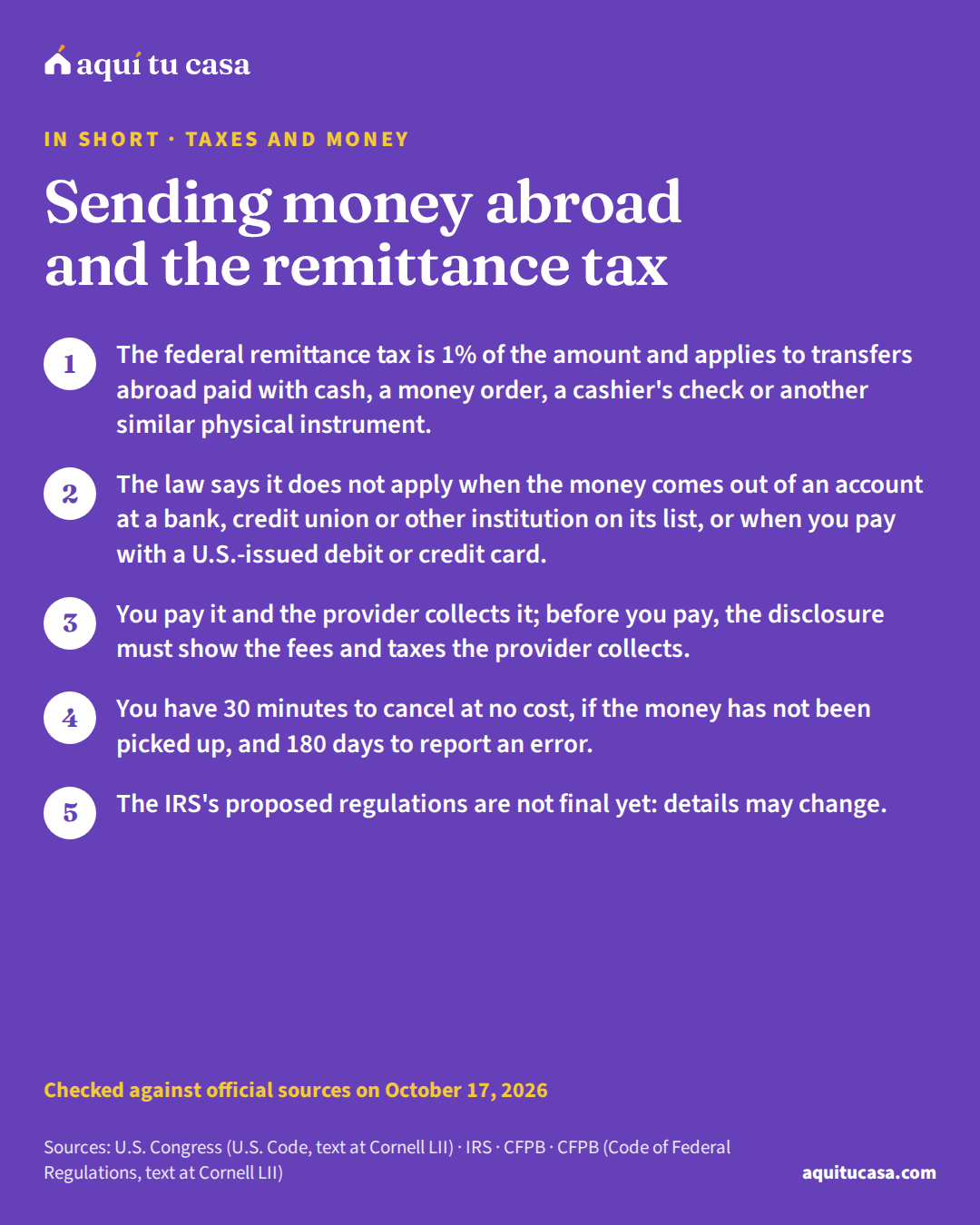
  1. Sending money abroad and the remittance tax The federal tax on cash-funded remittances: which transfers it applies to, which it does not, who collects it and your rights when you send money abroad. 10 min read Verified on October 17, 2026
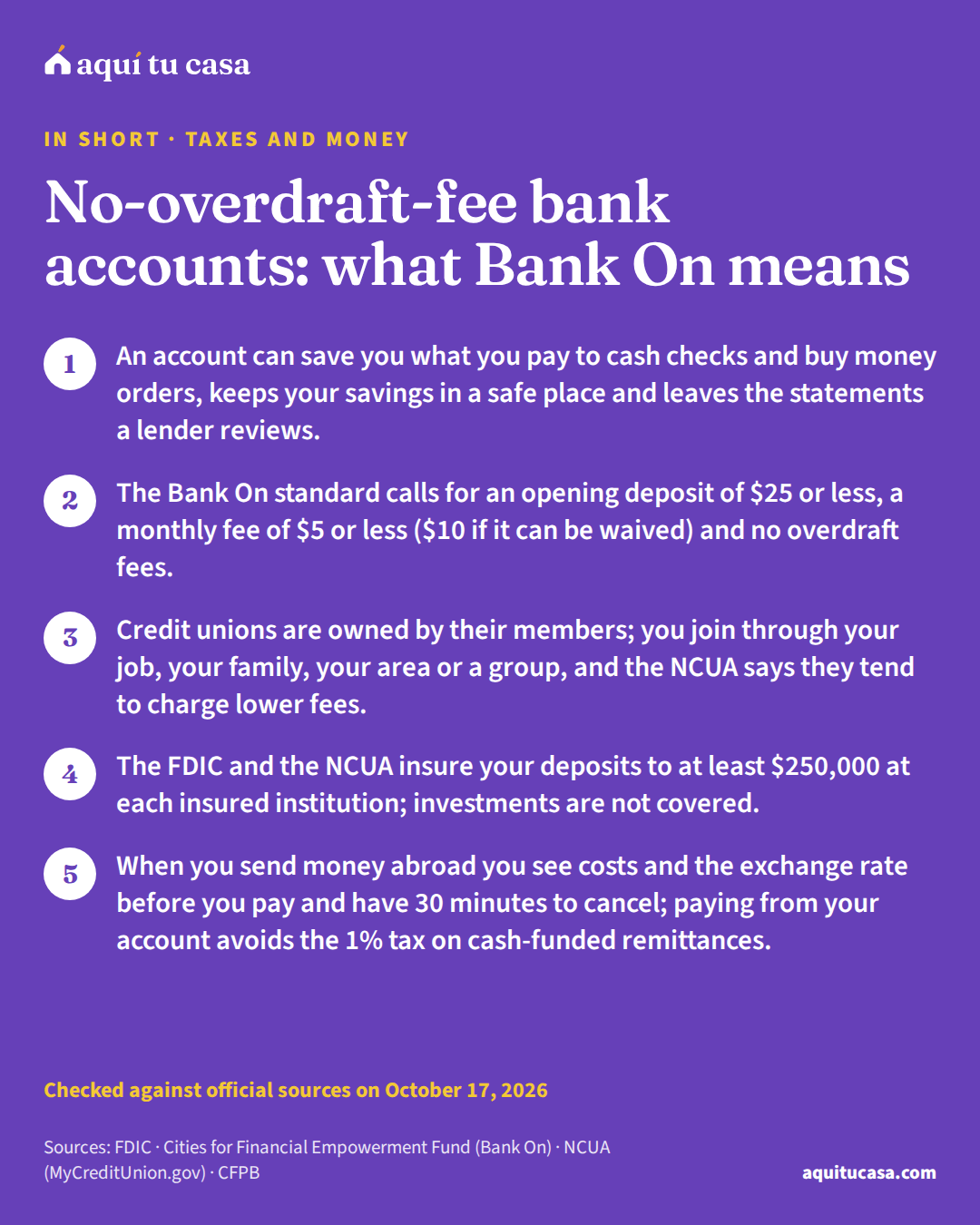
  2. No-overdraft-fee bank accounts: what Bank On means What a Bank On certified account is, why an account helps you save and buy a home, credit unions, FDIC/NCUA insurance, check cashing and remittances. 13 min read Verified on October 17, 2026
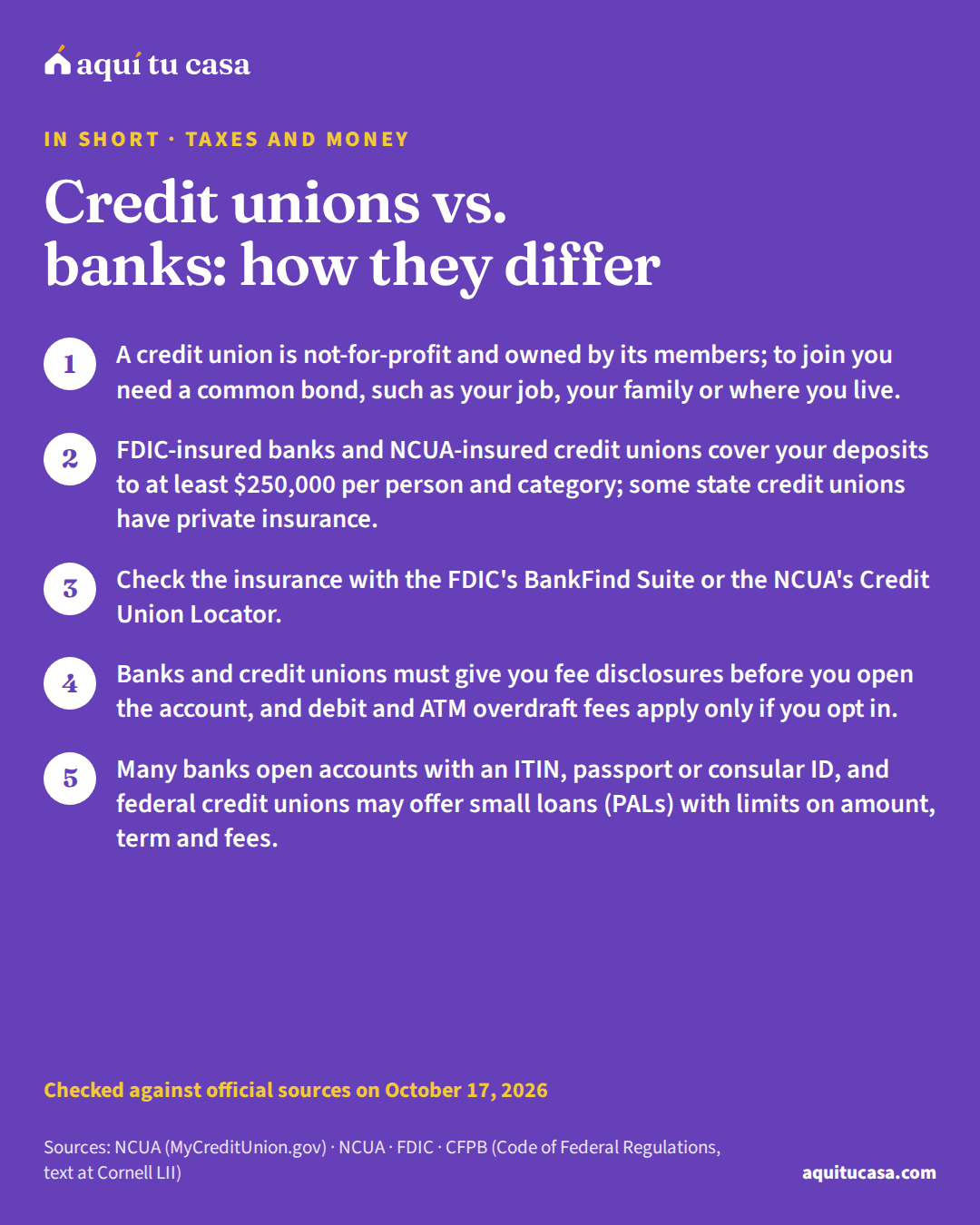
  3. Credit unions vs. banks: how they differ Credit unions and banks: who can join, NCUA and FDIC insurance, fees and overdrafts, accounts with an ITIN, small-dollar loans and CDFIs. 11 min read Verified on October 17, 2026
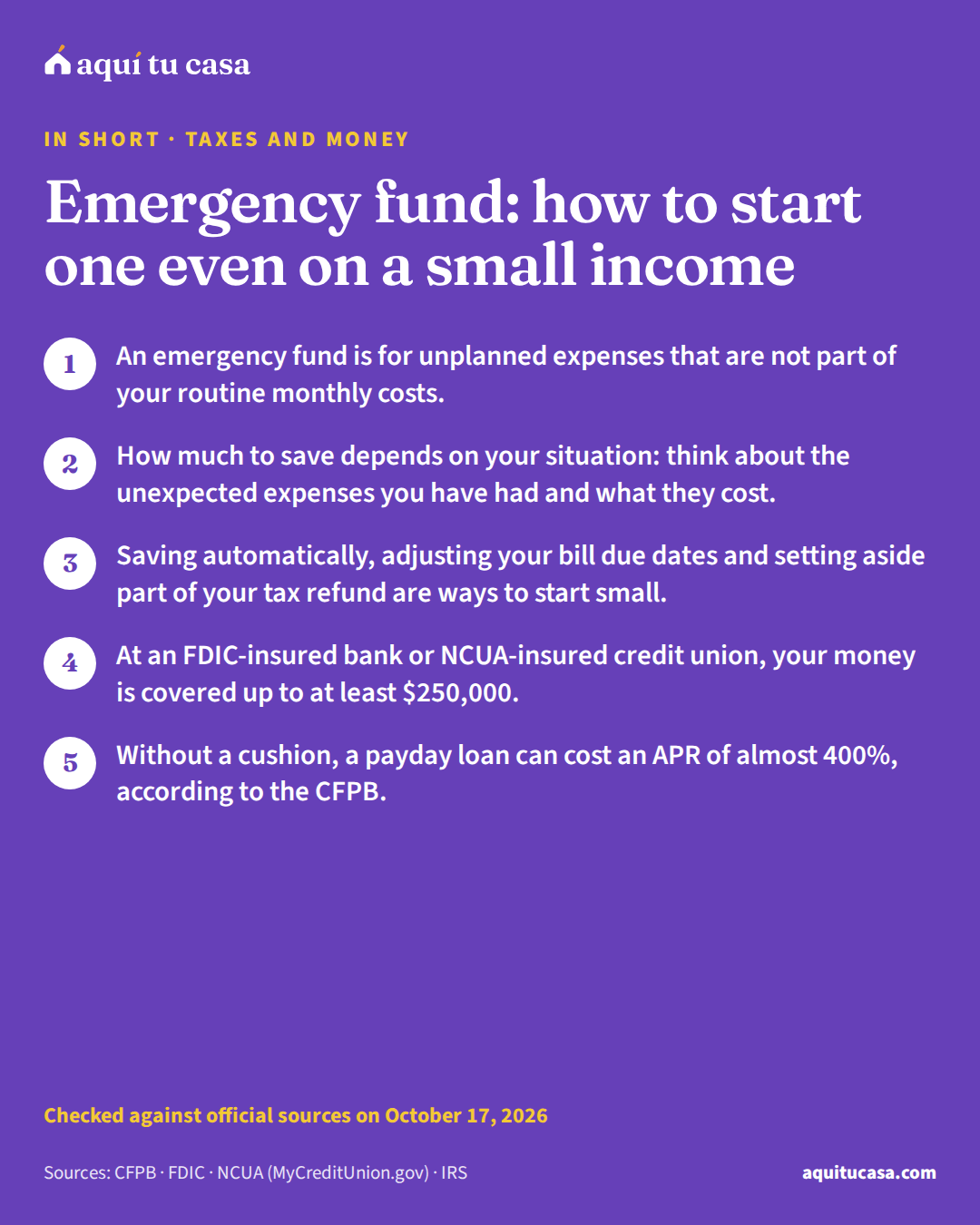
  4. Emergency fund: how to start one even on a small income What an emergency fund is, how much to save for your situation, how to start with little money, where to keep it safe and what it costs not to have one. 10 min read Verified on October 17, 2026
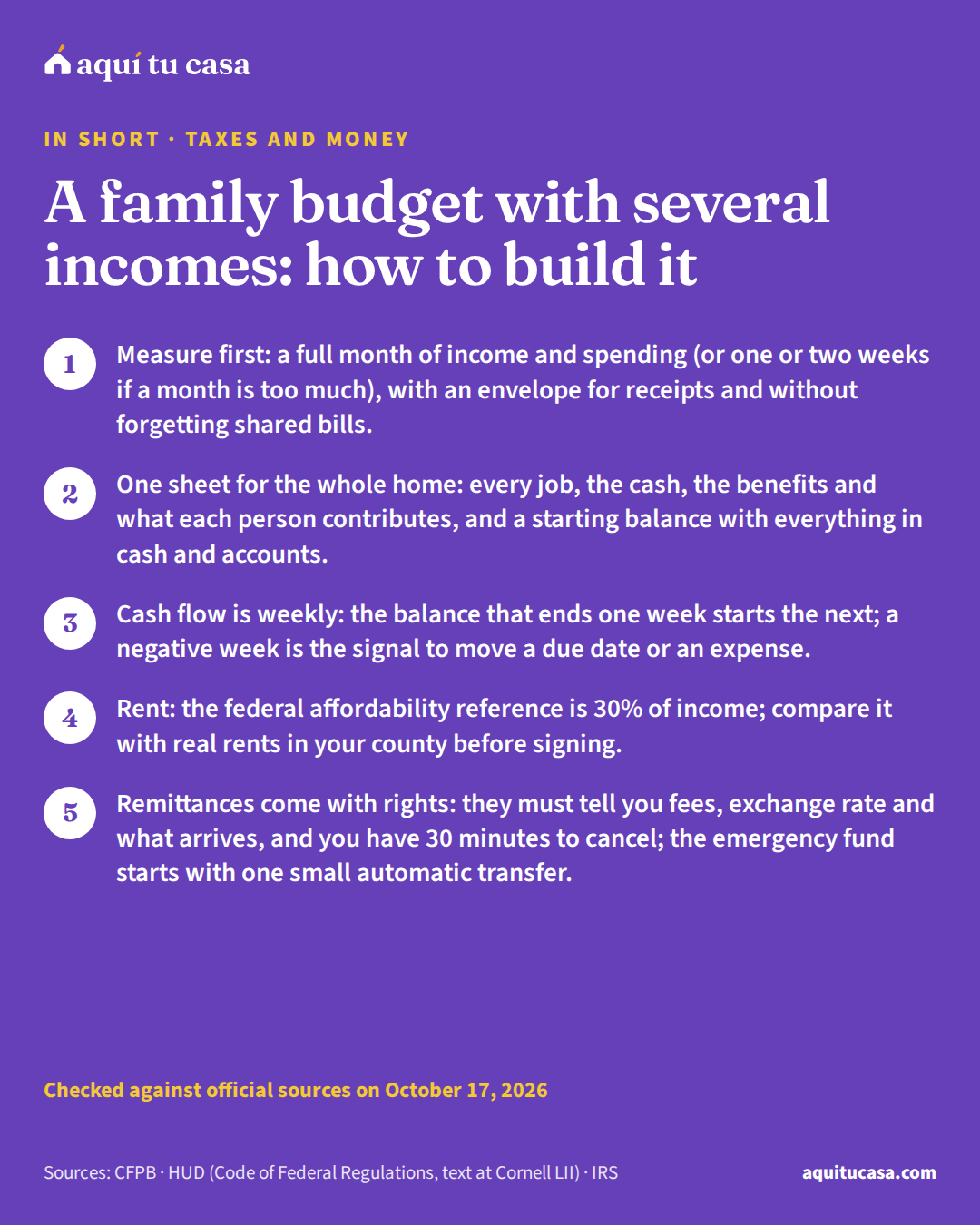
  5. A family budget with several incomes: how to build it How to budget when several incomes, cash and remittances come into the home: tracking, weekly cash flow, rent and the emergency fund. 11 min read Verified on October 17, 2026

The data behind these guides

Today’s official numbers

The guides on Taxes and money cite these figures. They update when their sources publish new ones; what you see here is current.

See all the data
Typical household income per year in the United States
$80,734
Typical monthly rent in the United States
$1,413
Renters who spend more than 30% of income on rent
51%

Sources: U.S. Census Bureau (Average 2020–2024)

Stage 2 of 2

Living as an owner

The payments, taxes, insurance and decisions that come after you buy.

1 guide in this stage

A woman cooks in her kitchen at home and looks at the camera.

Featured guide 10 minute read

Which documents to keep and for how long: home and taxes

How long to keep your tax returns, home papers and improvement records, how to protect them from a disaster or theft and how to replace what you lose.

The most important thing

Tax returns: generally 3 years; 6 or 7 in some cases; indefinitely if you did not file.

Verified on October 31, 2026

Tools

Run the numbers with your own figures

The calculators these guides use. Each one leaves you with a result you can use today.

See all 26 tools

Frequently asked questions

What people ask most about taxes and money

Short answers taken from the guides on this topic; each one links the guide that explains it with its sources.

How many years should I keep my tax returns?

According to the IRS, generally 3 years. But 6 years if you did not report income that was more than 25% of the income on your return, 7 years if you claimed certain losses, and indefinitely if you did not file a return.

Read the full guide

Who qualifies to have VITA prepare my taxes for free?

The IRS sets no program-wide income limit; each site may set its own. Many sites serve people who generally make about $70,244 or less, people with disabilities and limited English speakers. TCE mainly helps people 60 and older.

Read the full guide

How much is the remittance tax?

Federal law imposes 1% of the remittance amount, but only when you give the provider cash, a money order, a cashier's check or another similar physical instrument. It applies to transfers made after December 31, 2025.

Read the full guide

Is a Bank On account free?

Not always. The standard allows a monthly fee of $5 or less, or $10 or less if a single transaction such as a direct deposit can waive it. What it does not allow are overdraft, insufficient funds, activation, closure, inactivity or low balance fees.

Read the full guide

See all 49 questions about taxes and money

Keep going

The full path with its steps in order, the calculators these guides use, and the agencies their rules come from.

A man reads his mail outdoors in front of his building.

The full path

Credit & money

This topic is part of a path with steps in order, so you know what to do first. Credit from zero and family money. 8 steps in order.

See the path

Official sources behind these guides

Every rule, number and date in these guides comes from what these agencies publish. Each guide links the exact page.

  • CFPB
  • IRS
  • NCUA
  • FDIC
  • U.S. Congress
  • Cities for Financial Empowerment Fund
  • FEMA
  • FTC

and 5 more official sources

How we make the guides