Roof: when to repair it and when to replace it
What to do if your roof leaks, how to avoid scams after a storm, what Florida's law and insurance rules say and which programs help pay for a roof.
Verified against official sources on November 6, 2026 12 official sources
Show contents
In short
What you need to know
Quick answer
If your roof leaks, act fast: the EPA says that if you dry wet materials within 24 to 48 hours, in most cases mold will not grow. Photograph the damage and call your insurer. Be wary of anyone who knocks after a storm: the FTC recommends three written estimates, checking license and insurance, signing a contract before work starts and not paying cash. There is no federal rule on when to replace a roof; in Florida, the law sets rules for replacements and gives you one year to notify your insurer. Some programs help pay, depending on your state and income.
What matters most
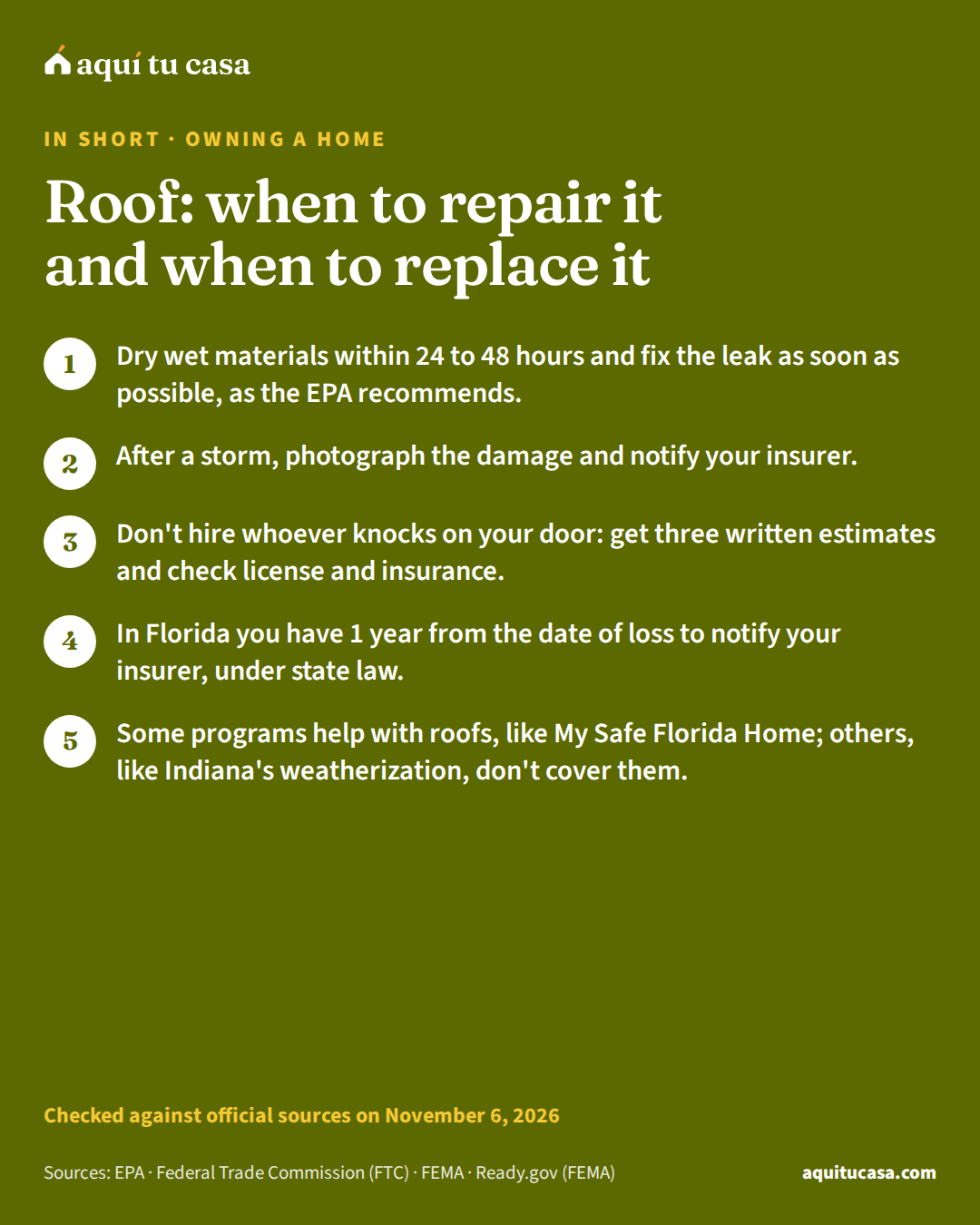
- Dry wet materials within 24 to 48 hours and fix the leak as soon as possible, as the EPA recommends.
- After a storm, photograph the damage and notify your insurer.
- Don't hire whoever knocks on your door: get three written estimates and check license and insurance.
- In Florida you have 1 year from the date of loss to notify your insurer, under state law.
Is this for you?
This guide is for you if…
- You own your home and your roof leaks, lost shingles or was damaged in a storm.
- A contractor offered you a new roof and you want to know what to check before signing.
- Your income is low and you are looking for public help to fix the roof.
Get direct help first if…
- You rent: the roof is the landlord's job; the renters' repairs guide explains your rights.
- You already filed an insurance claim and it was denied: the insurance claim guide explains how to appeal.
A small leak can turn into a stained ceiling, mold and a much more expensive repair. And after a storm, the roof is the first thing door-to-door sellers offer to fix. This guide is for you if you own your home and your roof leaks, lost shingles or was damaged by wind. It explains what to do first, how to decide between repairing and replacing, how to protect yourself from scams, what the law says in Florida and which programs may help you pay.
First steps if your roof leaks
The EPA says the key to mold control is moisture control. It recommends fixing leaks and other water problems as soon as possible, and says that if wet materials are dried within 24 to 48 hours after the leak, in most cases mold will not grow.1 Put out a bucket, move the furniture, dry what you can and open windows if the weather allows.
Water from a leak isn’t always visible. The EPA warns that mold can hide in roof materials above ceiling tiles, because of roof leaks or insufficient insulation.1 If you notice a musty smell or a stain that keeps growing, ask that the space above the ceiling be checked too.
If the damage came from a storm, Ready.gov recommends documenting any property damage with photographs and contacting your insurance company.4 Take the photos before you move or throw anything away, and keep the date. The home insurance claim guide explains each step.
Repair or replace: what official sources say
We found no federal rule that says how many years a roof lasts or when it must be replaced: it depends on the material, the climate and the care. That’s why the decision starts with written estimates. The Federal Trade Commission (FTC) says a written estimate should include a description of the work, the materials, the completion date and the price, and that you should consider only licensed and insured contractors.12
Ask that each estimate say whether it proposes repairing part of the roof or replacing all of it, and why. That way you can compare two options with the same information. The guide to what a repair quote must include has the full list.
Repair part of the roof or replace it
Damage in one area
Repair
Compare estimates that say the same things: the work, the materials, the date and the price.12
If you are replacing the roof, think about the heat. According to the Department of Energy (DOE), a standard roof can reach 150 °F or more in the summer sun, and a cool roof can lower the roof’s temperature by up to 50 °F and save on air conditioning. It can be made with highly reflective paint, a sheet covering or reflective tiles or shingles, and it doesn’t have to be white.8
On an existing home, the DOE names two paths: re-cover the roof with a new waterproofing surface, such as a tile coating, or replace the old roof with a cool roof.8 If your estimate proposes re-covering instead of replacing, ask what happens to the material underneath and how long each option’s warranty lasts.
When the work is done, keep the contract, receipts, warranties, permit and before-and-after photos together. You’ll need them if the roof leaks again, if you file an insurance claim or if you sell the house one day.
Care for your roof between storms
The best repair is the one you never need. The EPA recommends cleaning and repairing roof gutters regularly.1 Ready.gov adds that, before a hurricane, you should de-clutter drains and gutters, bring in outside furniture and consider hurricane shutters.4
After every strong storm, look at the roof from the ground or from a window, without climbing up. Look for missing shingles, lifted sections or fallen gutters, and check the ceilings inside. If you see something, take dated photos: they help with insurance and with comparing estimates.4
Example with real numbers
A leak after a windstorm
An example in words of the order of the steps; insurance deadlines change with your state and your policy.
- The same day
- Catch the water, dry what got wet and take photos
- Within 24 to 48 hours
- Have the wet materials dry to avoid mold
- That week
- Notify your insurer and get three written estimates
- Before work starts
- Sign a contract with the work and the guarantees in writing
- When paying
- No more than half up front, and never in cash
The steps come from the EPA, Ready.gov, the FTC and FEMA.1423 Plan the cost in your family budget.
Run it with your numbersFamily budgetWhat the law says in Florida
Florida is a good example of a state with its own roof rules. Section 553.844 of its Statutes says that if a roof or roof section was built, repaired or replaced in compliance with the 2007 Florida Building Code or a later edition, and 25 percent or more of it is being repaired, replaced or recovered, only the repaired, replaced or recovered portion must meet the code in effect. It also says that, on single-family homes, a roof replacement must include secondary water barriers and strengthening or correcting the roof-decking attachments.6
For insurance, section 627.70132 says a claim or reopened claim under a property insurance policy is barred unless you notified the insurer within 1 year after the date of loss, and a supplemental claim within 18 months. For hurricanes, tornadoes, windstorms and severe rain, the date of loss is the day the hurricane made landfall or the day NOAA verifies the event.5 If you live in another state, check your policy’s deadlines and ask your state’s insurance office.
How to protect yourself from scams after a storm
The FTC describes the scam: someone knocks on your door or calls saying they can fix your leaky roof, sometimes after a flood or windstorm. They pressure you to decide quickly and ask for cash or offer to get you financing. Then they run off with your money or do a poor repair.2
Before hiring someone for your roof
1. Ask for recommendations
Before calling
From people you trust, not from the seller who knocked on your door.2
2. Check license and insurance
Before signing
Confirm the license with your state or county government.12
4. Sign before work starts
Before the job
Demand that the contract detail the job and the guarantees in writing.3
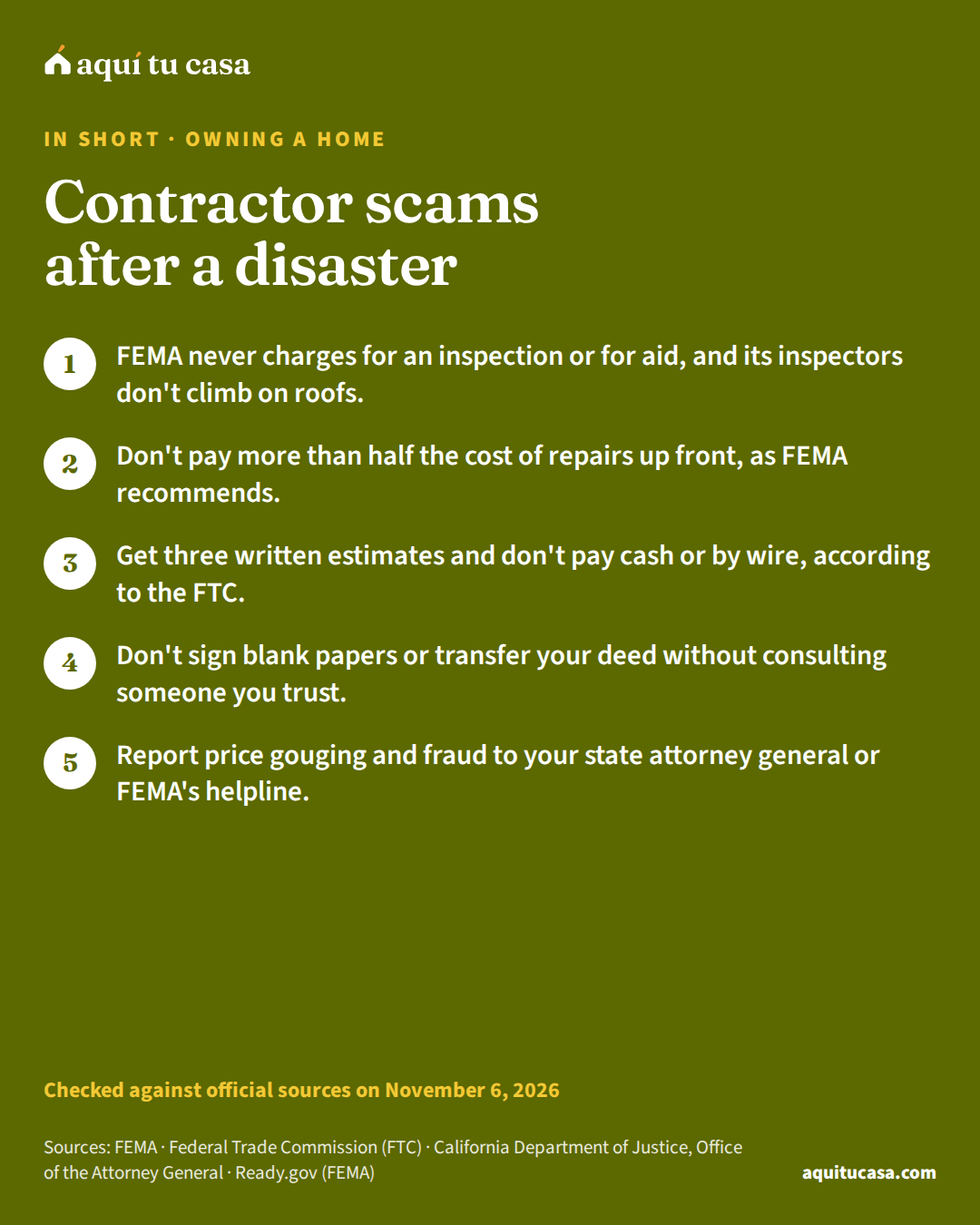
FEMA adds that its housing inspectors don’t climb on roofs or enter crawl spaces, and that FEMA never charges for an inspection.3 If someone says they’re from FEMA, climbs on your roof and asks for money, it isn’t FEMA. The guide to contractor scams after a disaster explains how to report it.

Programs that help pay for a roof
Some public programs pay for roof repairs; others don’t. This is what we found on their official pages:
- Florida. My Safe Florida Home offers free wind mitigation inspections and grants for approved upgrades such as roof improvements, impact windows and doors and garage door reinforcement, with potential eligibility for up to $10,000.7
- Chicago. The Home Repair Program fixes the roof or porch of households earning up to 50% of area median income, but its page says registration will not open in 2026.9
- Weatherization. The District of Columbia’s program lists roof repair among its typical measures; Indiana’s says it typically does not pay for roofing.1011
- Rural areas. If your income is very low and you live in a rural area, the USDA 504 home repair loans and grants guide explains that federal help.
Look up your state’s agency in our list of repair-help programs.
If this is you
The storm damaged your roof last night
Photograph the damage, notify your insurer and dry what got wet as soon as possible.41
A seller offers you a new roof at your door
Don't sign or pay today; get three written estimates.2
Costly mistakes
Mistake: Leaving the leak for later.
Instead: Fix it as soon as possible and dry wet materials within 24 to 48 hours.1
Mistake: Throwing out damaged items before taking photos.
Instead: Document the damage with photos and notify your insurer.4
Mistake: Hiring the seller who showed up after the storm.
Instead: Ask for recommendations, check license and insurance, and get three estimates.2
Mistake: Paying everything up front or in cash.
Instead: Don't pay more than half in advance, and pay in a way that leaves a record.32
Mistake: In Florida, waiting more than a year to notify the insurer.
Instead: Notify it within 1 year from the date of loss.5
What to do this week
- If your roof leaks, dry what got wet and take dated photos.14
- Clean the gutters, as the EPA recommends.1
- Get three written estimates with the work, materials, date and price.212
- Look up each contractor’s license on your state’s page.12
- If you live in Florida, write down the date of loss and notify your insurer in time.5
- Add the cost to your family budget and review your homeowners insurancehomeowners insuranceHomeowners insurance pays for losses and damage to your property if something unexpected happens, like a fire or a burglary, and usually includes liability coverage if someone is hurt at your home. Lenders require it as long as you have a mortgage, because the home is their collateral, and almost always collect it inside your monthly payment through the escrow account. The price depends on the location, the rebuilding cost, the deductible and your history. A standard policy does not cover floods or, in many states, earthquakes: those risks are insured separately.See the full definition before the next storm.
Your household this month
Let's do the math
Left each month
Enter what at least one person takes home to see the result.
What helps
- Pay savings first: set the goal aside the day the money arrives, before flexible spending.
- Add up the bills that come every few months (car insurance, school) and divide by twelve.
- If income changes, plan on a low month and save the extra from good months.
- A HUD-approved housing counselor can go over the budget with you, often for free.
This is a planning tool with your numbers, not a credit evaluation or an approval. The split reference is only a guide.
Ready to see the numbers? Find your county here
See how this applies in your county: its loan limits, prices and rents, from the official data.
Printable checklist
Frequently asked questions
How many years does a roof last?
The official sources we reviewed don't give one life for all roofs: it depends on the material, the climate and the care. What they do recommend is checking and fixing leaks as soon as possible and cleaning gutters regularly.
What do I do if my roof is leaking today?
Catch the water, dry what got wet and take photos. The EPA says that if you dry materials within 24 to 48 hours after the leak, in most cases mold will not grow. Then get written estimates for the repair.
A contractor knocked on my door after the storm. Should I hire them?
The FTC warns that these sellers show up after windstorms and floods, pressure you and ask for cash. Ask people you trust for recommendations, check license and insurance, get three written estimates and sign a contract before work starts.
How much should I pay up front?
FEMA recommends not paying more than half the costs of repairs in advance, and the FTC recommends not paying everything at the start. The FTC says some states limit the down payment a contractor can ask for; ask your state's consumer protection agency.
In Florida, how long do I have to file an insurance claim?
Florida law says a claim or reopened claim is barred unless you notified the insurer within 1 year after the date of loss, and a supplemental claim within 18 months. For a hurricane, the date of loss is the day it made landfall.
Does the weatherization program fix roofs?
It depends on the state. The District of Columbia's lists roof repair among its typical measures, but Indiana's says it typically does not pay for roofing. Ask your state's agency.
Will a FEMA inspector climb on my roof?
No. FEMA says its housing inspectors don't climb on roofs or enter crawl spaces, and that FEMA never charges for an inspection. If someone who says they are from FEMA asks you for money, that's a sign of a scam.
Sources
Every figure in this guide comes from one of these official sources. The number next to a sentence leads to the source behind it.
Each source on one line: who publishes it, its title, its address and the date we read it.
- 1. EPA · A Brief Guide to Mold, Moisture and Your Home · epa.gov · Accessed November 6, 2026
- 2. Federal Trade Commission (FTC) · Home Repair Scams · consumer.ftc.gov · Accessed November 6, 2026
- 3. FEMA · Disaster Fraud · fema.gov · Accessed November 6, 2026
- 4. Ready.gov (FEMA) · Hurricanes · ready.gov · Accessed November 6, 2026
- 5. Florida Legislature · Florida Statutes §627.70132, Notice of property insurance claim · leg.state.fl.us · Accessed November 6, 2026
- 6. Florida Legislature · Florida Statutes §553.844, Windstorm loss mitigation; requirements for roofs and opening protection · leg.state.fl.us · Accessed November 6, 2026
- 7. Florida Department of Financial Services · My Safe Florida Home · mysafeflhome.com · Accessed November 6, 2026
- 8. U.S. Department of Energy (DOE) · Energy Saver Guide: Tips on Saving Money and Energy at Home (2022) · energy.gov · Accessed November 6, 2026
See the other 4 sources
- 9. City of Chicago Department of Housing · Home Repair Program · chicago.gov · Accessed November 6, 2026
- 10. DC Department of Energy & Environment (DOEE) · Weatherization Assistance Program (WAP) · doee.dc.gov · Accessed November 6, 2026
- 11. Indiana Housing and Community Development Authority (IHCDA) · Weatherization/Energy Conservation · in.gov · Accessed November 6, 2026
- 12. Federal Trade Commission (FTC) · How To Avoid a Home Improvement Scam · consumer.ftc.gov · Accessed November 6, 2026
Keep reading
Related guides
If this guide helped, these follow the same path.

Owning a home 10 minute read
What a repair quote must include
What a repair estimate and contract should say according to the FTC and ENERGY STAR, and where to look up a contractor's license in your state.
- A written estimate states the work, materials, completion date and price, according to the FTC.
- The contract adds the contractor's details and license, the dates, spoken promises and your right to cancel.
- Don't sign anything with blank spaces, and put every change in writing, with its price.
- Owning a home Contractor scams after a disaster How to spot a fake FEMA inspector or a contractor taking advantage of a storm, what the law says about price gouging and where to report it. 9 minute read
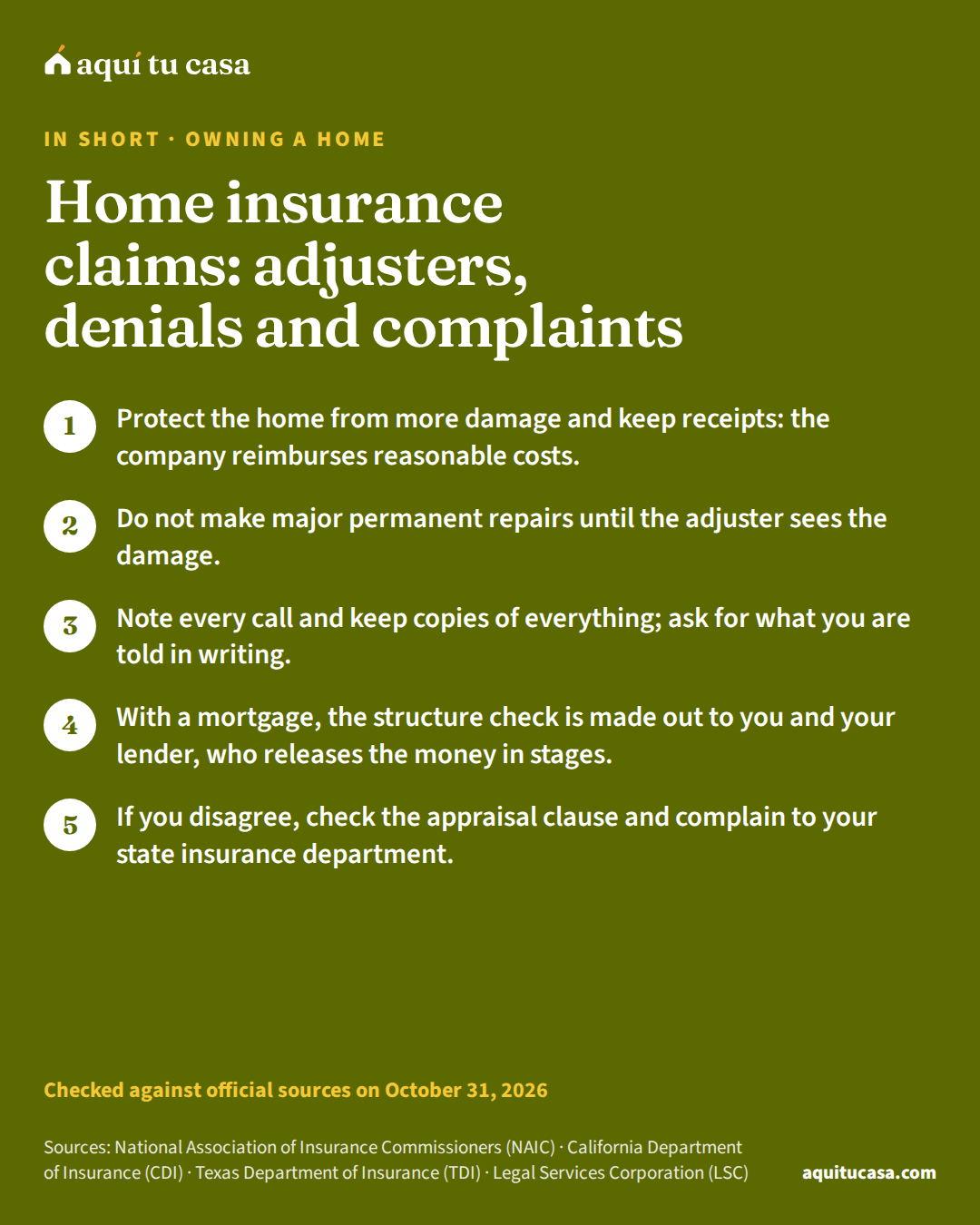
- Owning a home Home insurance claims: adjusters, denials and complaints How to file and document a home insurance claim, what each kind of adjuster does, the check with your lender and what to do if you are denied or underpaid. 11 minute read
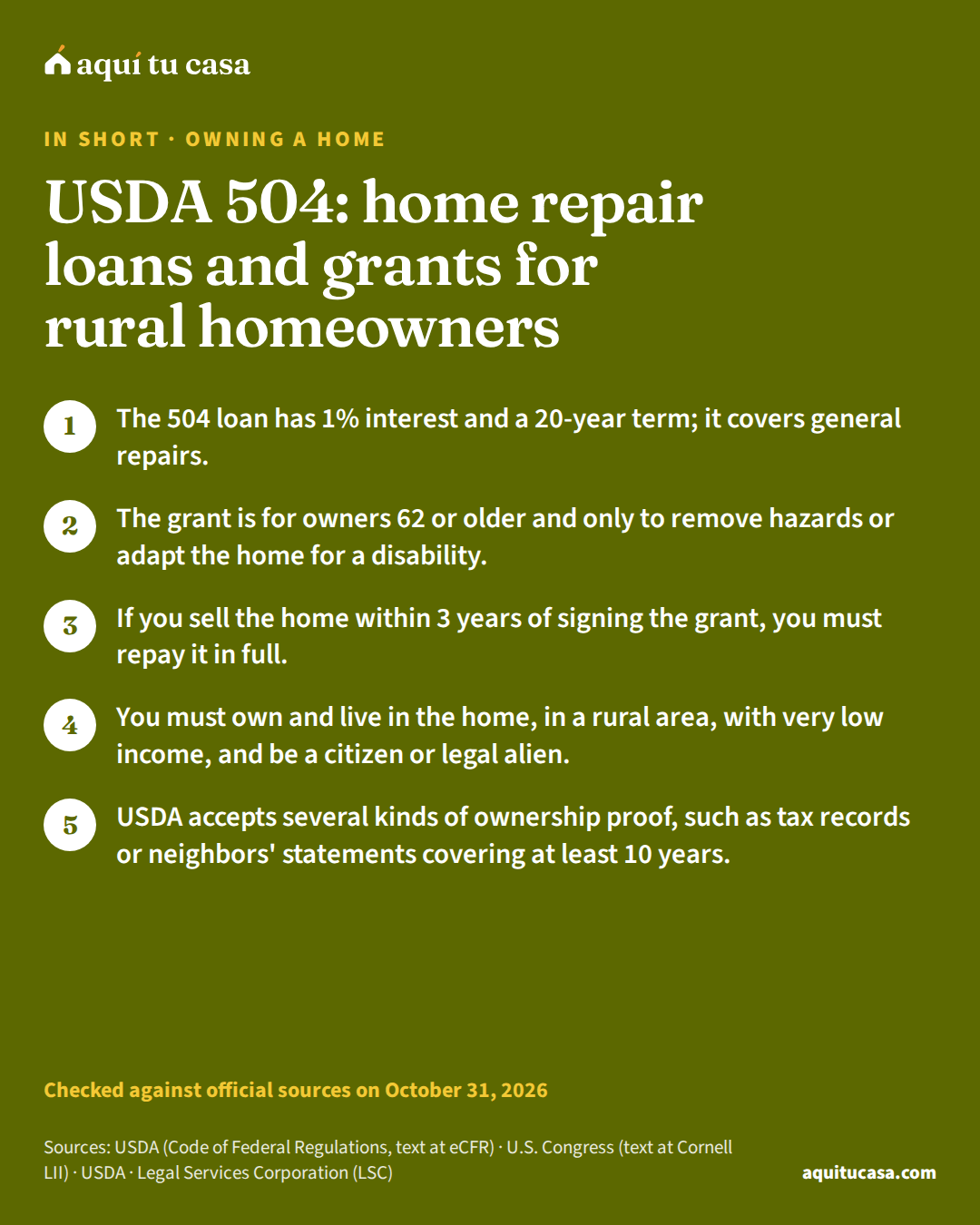
- Owning a home USDA 504: home repair loans and grants for rural homeowners USDA Section 504 repair loans and grants for very-low-income rural homeowners: the age rule for grants, the 1% interest rate and how to apply. 13 minute read
Tools for this topic
Was this guide useful?
Thank you. Your answer stays in your browser; nothing is sent.