How to apply for public housing: who qualifies and what you pay
How to apply for public housing: where you apply, who qualifies, what the application asks, waiting lists and preferences, and how your rent is set.
Verified against official sources on November 6, 2026 9 official sources
Show contents
In short
What you need to know
Quick answer
You apply for public housing in writing at your city's or county's housing agency. It is for low-income families, elderly people and people with disabilities, and the agency looks at your income, the kind of family and the citizenship or status of whoever claims it. If you qualify, you go on a waiting list, which is usually long; each agency has its own preferences. Your rent is usually 30% of your adjusted monthly income, and once a year you can choose a flat rent instead. A mixed-status family pays a prorated rent.
What matters most
- You apply in writing at the local housing agency; it tells you in writing whether you qualify.
- It is only for low-income families; the limits depend on your county or area.
- Waits are long: ask which preferences the agency uses and show whether you qualify.
- Your rent is the highest of 30% of adjusted income, 10% of income and the minimum rent; each year you can choose a flat rent.
Is this for you?
This guide is for you if…
- You want to rent an apartment or house from your city's or county's housing agency and don't know how to apply.
- You already applied and want to understand the waiting list, preferences and the rent you would pay.
- Your family has members with and without eligible immigration status and you want to know how rent is calculated.
Get direct help first if…
- You want a voucher to rent on the private market: read the guide on how to apply for a Section 8 voucher.
- You live in Puerto Rico: read the guide on public housing and vouchers in Puerto Rico.
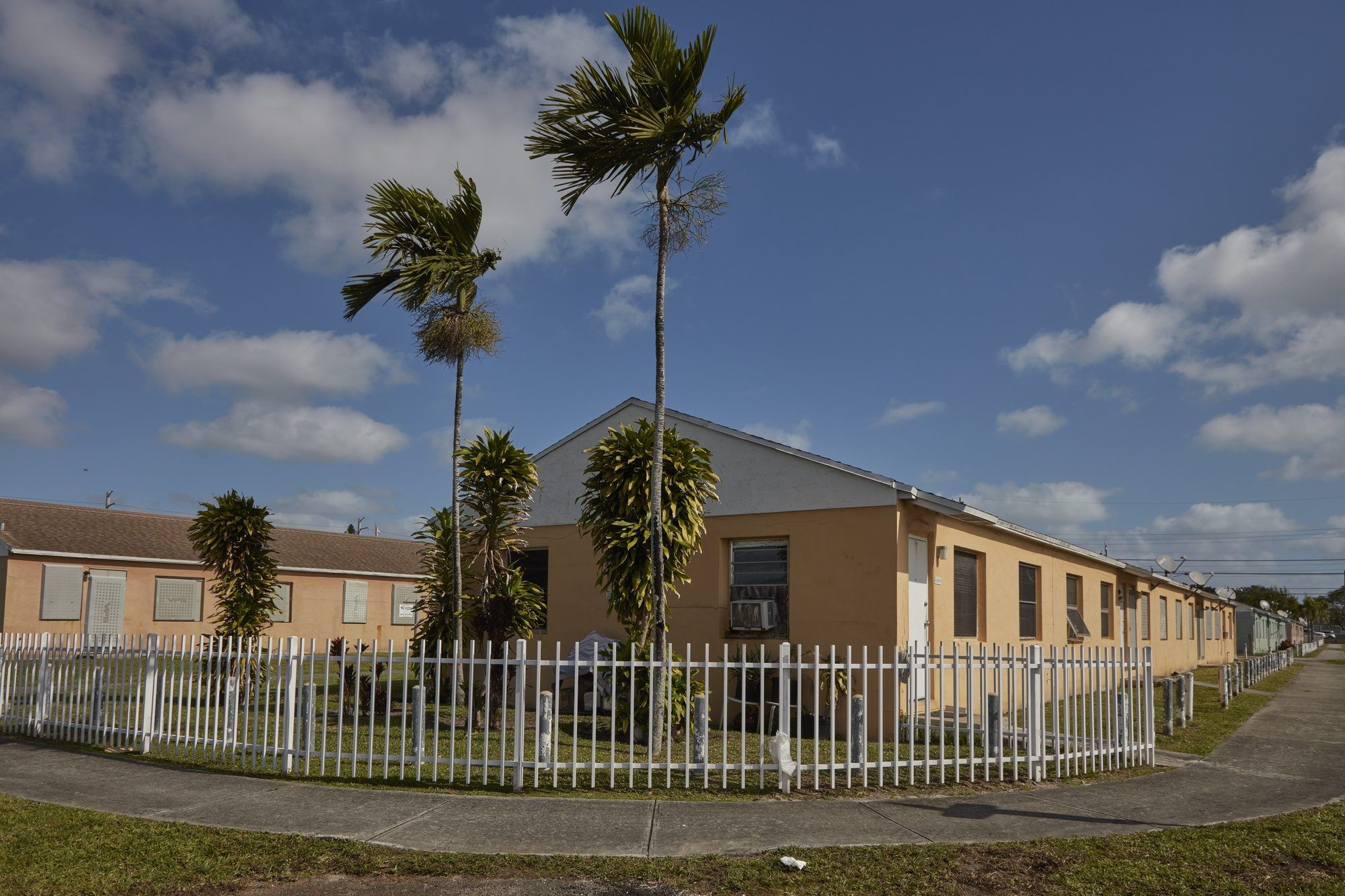
You apply for public housingpublic housingPublic housing is a program of rental homes for low-income families, older adults and people with disabilities. HUD funds local public housing agencies (PHAs), which manage the homes and charge rents those families can afford. It comes in all sizes and types, from scattered single-family houses to high-rise apartments. The PHA decides whether you qualify based on your annual gross income, whether you are elderly, have a disability or are a family, and your U.S. citizenship or eligible immigration status. To apply, you contact your local PHA. In general, you can stay as long as you comply with the lease.See the full definition in writing at the public housing agencypublic housing agency (PHA)A public housing agency (PHA) is a state, county, municipal or other governmental entity or public body authorized to operate public housing or rental assistance programs. These are the agencies that locally administer the Housing Choice Vouchers (Section 8) and public housing with HUD funds: they open and manage the waiting lists, review eligibility and income, inspect units and pay the owner its share of the rent. Each county usually has one or several; your page shows the ones serving your area with their phone numbers.See the full definition for your city or county; if you qualify, your name goes on a waiting listwaiting list (public housing and Section 8)The waiting list is where a public housing agency (PHA) places families who qualify for public housing or a Section 8 voucher when it cannot help them right away. When your name comes up, the PHA contacts you. Because more families need help than there are resources, long waits are common and a PHA may close its list. Each PHA can give preference to certain groups under its written policies. In the voucher program, a PHA may remove you if you do not answer its requests for information, but if that was because of a family member's disability, it must put you back in your place.See the full definition.1 1 It is for low-income families, elderly people and people with disabilities, and the agency looks at your income, the kind of family and the citizenship or status of whoever claims it.1 This guide explains how to apply, what the application asks, how the list and preferences work, what you would pay and what changes in a mixed-status family.
What public housing is and who qualifies
HUD says public housing was established to provide decent and safe rental housing for low-income families, the elderly and people with disabilities. It comes in all sizes, from scattered houses to high-rise buildings, and local housing agencies run it with federal aid from HUD.1 Unlike a Section 8 voucher, here you rent a unit from the agency itself, not on the private market; the guide on how to apply for a Section 8 voucher explains the other option.
Only a low-income family can be admitted, and single people can be eligible too.2 The agency decides based on your annual gross income, whether you qualify as elderly, a person with a disability or a family, and citizenship or eligible immigration status; if you qualify, it checks your references as a tenant.1
Agencies use HUD’s income limits: the lower-income limit is 80% and the very-low-income limit 50% of the median for the county or area where you want to live. Because they change by area, you may qualify at one agency and not another.1 Also, at least 40% of the families an agency admits from its list each year must be extremely low-income.3 The limits for your area are on your county’s income-limit page and in the income limits tool.

How to apply and what the application asks
To apply, contact your local housing agency; if you can’t reach it, HUD suggests calling its local field office. The application is in writing, and you or an agency representative fills it out.1 Your state’s agencies are on its housing-authority page, for example Texas, California, Florida or Illinois.
From application to move-in
1. Fill out the written application
When the agency takes applications
With your household, landlord and income details.1
2. Hand in the papers they ask for
After you apply
Birth certificates, tax returns and a release to verify.1
3. Get the written notice
When they decide
If you qualify, you go on the list; if not, they tell you why.1
5. Sign the lease
When you are offered a unit
Go over the lease with the agency; a deposit may be required.1
The agency usually asks for the names, birth dates and relationship of everyone who would live with you; your address and phone; circumstances that could give you a preference, such as being a veteran or living in substandard housing; the names and addresses of your current and previous landlords; an estimate of your income for the next twelve months; and your employers’ and banks’ details. It may also visit you at home.1
Then it asks for documents that prove what you wrote, such as birth certificates and tax returns, verifies directly with your employer and asks you to sign a release so it can get that information.1 Answer every question on the form, keep a copy of what you hand in, and write down the date, so you can show what you applied with if anything is questioned later.

The waiting list and preferences
The agency must notify you in writing. If you qualify, your name goes on the waiting list, unless it can house you right away.1 Once you qualify, the agency must tell you the approximate date you could move in, as far as it can be determined.5
HUD says there are sometimes preferences that prioritize the families in greatest need, that long waits are common and that an agency may close its list when it has more families than it can help soon. Preferences are in each agency’s written policy manual, and you should ask which it uses.1
The regulations require the agency to tell you its preferences and give you a chance to show you qualify. They prohibit residency requirements; a residency preference can only use a county or municipality and cannot depend on how long you have lived there. There may be preferences for working families, for families with a person with disabilities and for victims of domestic violence.4
What you would pay in rent
Your rent, the Total Tenant Payment, is based on your family’s expected gross annual income less deductions. It is the highest of 30% of your adjusted monthly income, 10% of your monthly income, welfare rent if applicable, or a minimum rent of $25 or more, up to $50, set by the agency.1
Once a year, the agency must let you choose between that income-based rent and a flat rent. The flat rent is based on the unit’s market value and may not be less than 80% of the applicable HUD fair market rentfair market rent (FMR)The fair market rent (FMR) is the rent HUD estimates every year for each area and each unit size, including the cost of utilities (except telephone). It is neither the lowest nor the highest rent: by rule it is set at the 40th percentile, the dollar amount below which 40% of the area's standard-quality rental units rent. HUD uses it to set the payment standards of the Housing Choice Voucher program (Section 8) and for other programs; on aquitucasa we use it as the benchmark for what renting costs in your county and for the wage needed to pay it.See the full definition. Whichever you choose, you pay at least the minimum rent.6
Income-based rent or flat rent
Changes with your income
Income-based rent
If your income rises, compare the two each year: you can choose once a year.6
In general you may stay in public housing as long as you comply with the lease.1 The how much rent can I afford calculator compares your current rent with what fits your income.
If your family has mixed immigration status
If one or more members choose not to contend eligible immigration status and others establish citizenship or status, the family can receive assistance; it must say in writing who does not contend.7 An eligible mixed family that requests prorated assistance must receive it.8
In public housing, assistance is prorated in steps: the agency computes your Total Tenant Payment using everyone’s income, including anyone who has not established eligible status; subtracts it from the unit’s flat rent; divides the result by the total number of members; and multiplies it by the number of members with citizenship or eligible status. Your rent is the flat rent minus that subsidy.8
Example with real numbers
A family of four with two eligible members
An example in words. The figures in your case come from your agency's calculation.
- Step 1
- Total Tenant Payment using all four members' income8
- Step 2
- Flat rent minus that payment: the maximum subsidy8
- Step 3
- Maximum subsidy divided by four members8
- Family rent
- Flat rent minus two-fourths of the maximum subsidy8
Ask the agency to show you each step of the calculation in writing.
Run it with your numbersHow much rent can I afford?HUD published a proposal in February 2026 that would make prorated assistance temporary. As of November 6, 2026 there is no final rule: the rules in this section still apply.9 The guide on Section 8 and mixed-status families explains what papers each member submits.

Common mistakes and where to get help
Mistake: Waiting for the agency to call without asking about preferences.
Instead: Ask which preferences it uses and prove the ones that apply to you.4
Mistake: Leaving income or landlord details incomplete.
Instead: Fill in everything: expected income, employers and landlords.1
Mistake: Not asking for a hearing when they say you don't qualify.
Instead: Ask soon and in writing; the agency must tell you the reason.5
Mistake: Always paying income-based rent without comparing.
Instead: Each year you can choose the flat rent if it is better for you.6
Mistake: Thinking HUD's 2026 proposal is already law.
Instead: It is a proposal; as of November 6, 2026 there is no final rule.9
A HUD-approved housing counselorHUD-approved housing counselorA HUD-approved housing counselor works at an agency HUD has approved to provide housing counseling: independent, expert advice customized to your situation about buying a home, renting, a missed mortgage payment, a foreclosure or credit problems. The agencies usually charge little or nothing; many serve in Spanish and offer the homebuyer education course several assistance programs require. They are not lenders or real estate agents and sell you nothing. Your county page lists the official agencies with phone numbers.See the full definition can help for free or at low cost; the guide to HUD-approved housing counselors explains how to find one. If you are denied or have a lease problem, free legal aid can review your case. If you live in Puerto Rico, read the guide on public housing and vouchers in Puerto Rico.
If this is you
You are 62 or older
The agency may consider you an elderly family; ask which preferences apply.1
Someone in your family has a disability
There may be a preference for families with a person with disabilities.4
Your children are citizens and you don't have eligible status
The family can pay a prorated rent; you choose not to contend, in writing.7
Your income changed while you wait
Report it; the agency uses your expected income for the next twelve months.1

What to do this week
- Find the public housing agency for your city or county and ask whether it takes applications.1
- Ask for its list of preferences and mark the ones that apply to you.4
- Gather your household, landlord and expected-income details.1
- Keep a copy of the application and of every letter you receive.1
- If they say you don’t qualify, request the informal hearing in writing.5
Your income
Let's do the math
Rent that fits your budget (30% of income)
$2,018
With an income of $6,728 a month. Up to $3,364 would already be a severe burden (50% of income).
Compared with HUD’s Fair Market Rent in the United States
- 2 bedrooms$1,750Fits · 26%Needs $33.65 an hour
The wage needed pays that rent without going over 30% of income, working 40 hours a week all year.
The typical rent households actually pay in the United States is $1,413 a month (Census).
A reference to give you an idea. Each landlord and each program sets its own requirements.
Ready to see the numbers? Find your county here
See how this applies in your county: its loan limits, prices and rents, from the official data.
Printable checklist
Frequently asked questions
Where do I apply for public housing?
At the housing agency that runs public housing in your city or county. If you can't reach it, HUD says to call its local field office. The application is in writing; you or an agency representative fills it out.
Who qualifies?
Low-income families and single people, elderly people and people with disabilities. The agency looks at your annual gross income, the kind of family and the citizenship or eligible immigration status of whoever claims it, and checks your references as a tenant.
How long does it take?
It depends on the agency. HUD says long waits are common and an agency may close its list when it has more families than it can help soon. If you qualify, the agency must give you the approximate date you could move in, if it can be determined.
How much rent would I pay?
The highest of 30% of your adjusted monthly income, 10% of your monthly income, welfare rent if applicable, or a minimum rent of $25 to $50 set by the agency. Once a year you can choose to pay a flat rent instead of the income-based rent.
Can I apply if someone in my family is undocumented?
Yes, if at least one member has citizenship or eligible status. A member without it can choose not to contend status, in writing, and the family pays a prorated rent. HUD proposed in 2026 to make that temporary; as of November 6, 2026 there is no final rule.
What if they say I don't qualify?
The agency must tell you why in writing. You can request an informal hearing; ask for it soon and in writing, and look for free legal aid if you disagree.
Sources
Every figure in this guide comes from one of these official sources. The number next to a sentence leads to the source behind it.
Each source on one line: who publishes it, its title, its address and the date we read it.
- 1. HUD · Public Housing · hud.gov · Accessed November 6, 2026
- 2. HUD (Code of Federal Regulations, text on Cornell LII) · 24 CFR §960.201, Eligibility · law.cornell.edu · Accessed November 6, 2026
- 3. HUD (Code of Federal Regulations, text on Cornell LII) · 24 CFR §960.202, Tenant selection policies · law.cornell.edu · Accessed November 6, 2026
- 4. HUD (Code of Federal Regulations, text on Cornell LII) · 24 CFR §960.206, Waiting list: Local preferences in admission to public housing program · law.cornell.edu · Accessed November 6, 2026
- 5. HUD (Code of Federal Regulations, text on Cornell LII) · 24 CFR §960.208, Notification to applicants · law.cornell.edu · Accessed November 6, 2026
- 6. HUD (Code of Federal Regulations, text on Cornell LII) · 24 CFR §960.253, Choice of rent · law.cornell.edu · Accessed November 6, 2026
- 7. HUD (Code of Federal Regulations, text on Cornell LII) · 24 CFR §5.508, Submission of evidence of citizenship or eligible immigration status · law.cornell.edu · Accessed November 6, 2026
- 8. HUD (Code of Federal Regulations, text on Cornell LII) · 24 CFR §5.520, Proration of assistance · law.cornell.edu · Accessed November 6, 2026
See the other 1 sources
- 9. Federal Register (Office of the Federal Register) · Federal Register: documents matching "Verification of Eligible Status" from HUD, newest first · federalregister.gov · Accessed November 6, 2026
Keep reading
Related guides
If this guide helped, these follow the same path.
Renting 10 minute read
How to apply for a Section 8 voucher: waiting lists and papers
How to apply for a Section 8 voucher: where to apply, how waiting lists and preferences work, the papers you need and what changes for a mixed family.
- You apply at a local housing agency when it opens its list; you can get on several lists.
- Your place depends on your application date, local preferences and how many vouchers there are; some agencies use a drawing.
- Report every change of address, phone or household size, or you can be removed from the list.
- Renting Section 8 and mixed-status families: how it works How the Section 8 voucher works, how aid is prorated in a mixed-status family, how to apply through your housing agency and what HUD proposed. 12 minute read
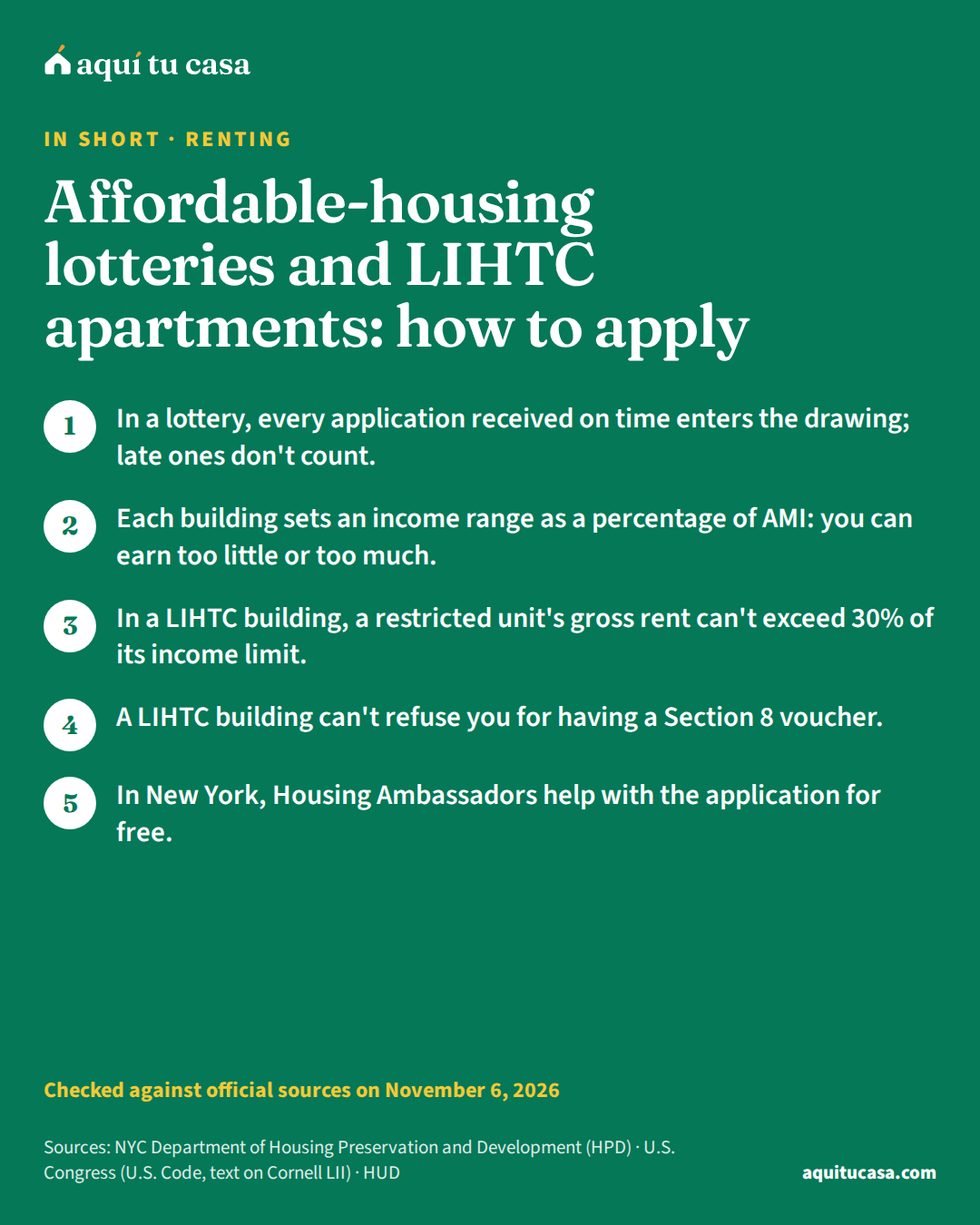
- Renting Affordable-housing lotteries and LIHTC apartments: how to apply How affordable-housing lotteries (like NYC Housing Connect) and tax-credit (LIHTC) apartments work: who qualifies, what they cost and how to apply. 9 minute read
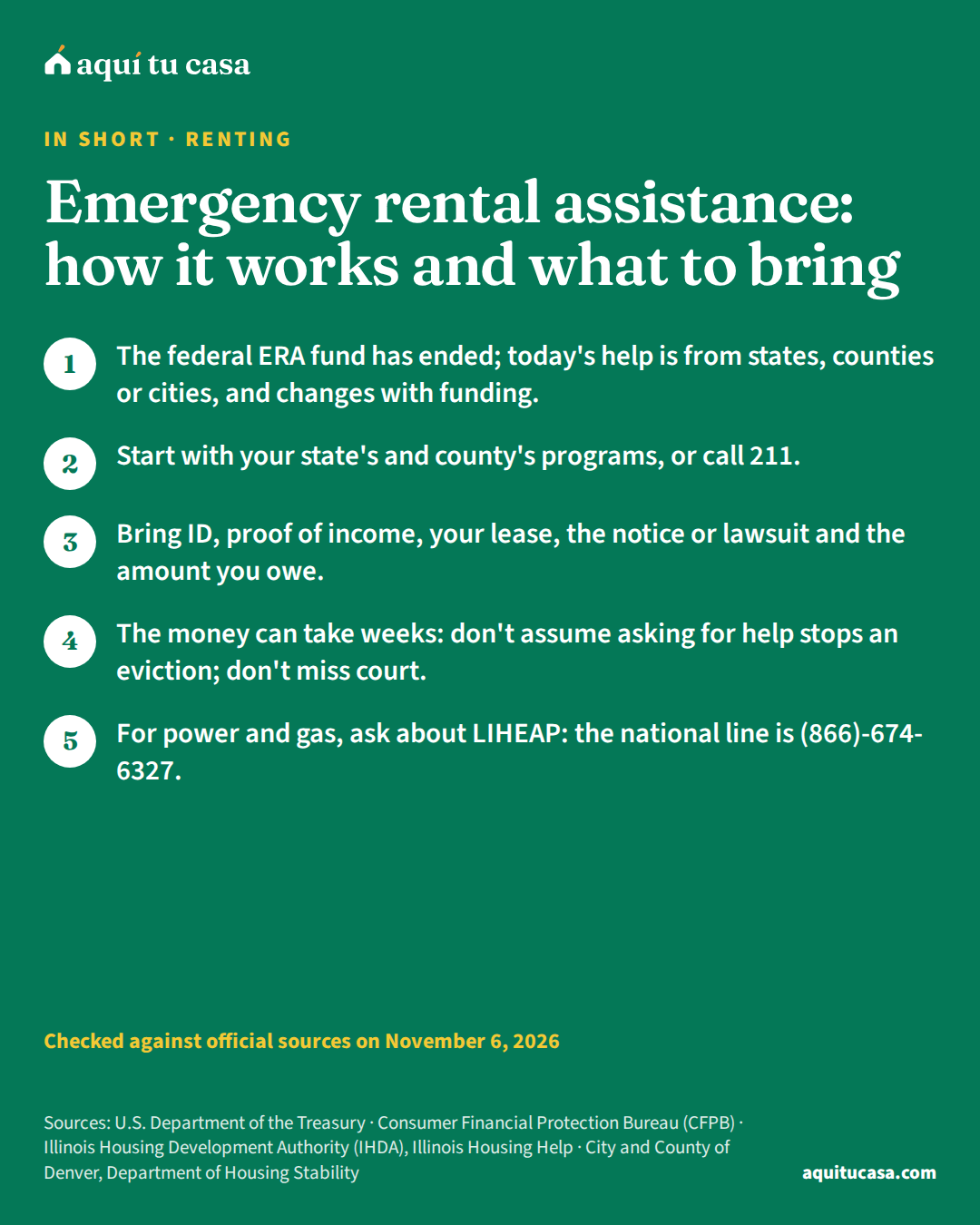
- Renting Emergency rental assistance: how it works and what to bring How to get help with back rent or utility bills: who offers it today, what papers to bring, how long it takes and what to do if you have an eviction case. 9 minute read
Tools for this topic
Was this guide useful?
Thank you. Your answer stays in your browser; nothing is sent.