If a family member is deported: money, papers and the house
What to do with bank accounts, a power of attorney, the mortgage or lease and sending money when a family member is deported or leaves the country.
Verified against official sources on October 31, 2026 9 official sources

Show contents
In short
What you need to know
Quick answer
When a family member is deported or leaves, the practical problem is that the accounts, mortgage or lease are still in their name and no one else can handle them. Before they leave, or while they are detained, you can decide who will help: a convenience account, a trusted contact or a power of attorney. A power of attorney gives a lot of authority over their money, so give it only to someone you trust deeply; it can be revoked. If they are the parent of minor children, ICE says it should give them the chance to sign powers of attorney and other papers before removal. To send them money afterward, know your rights on transfers.
What matters most
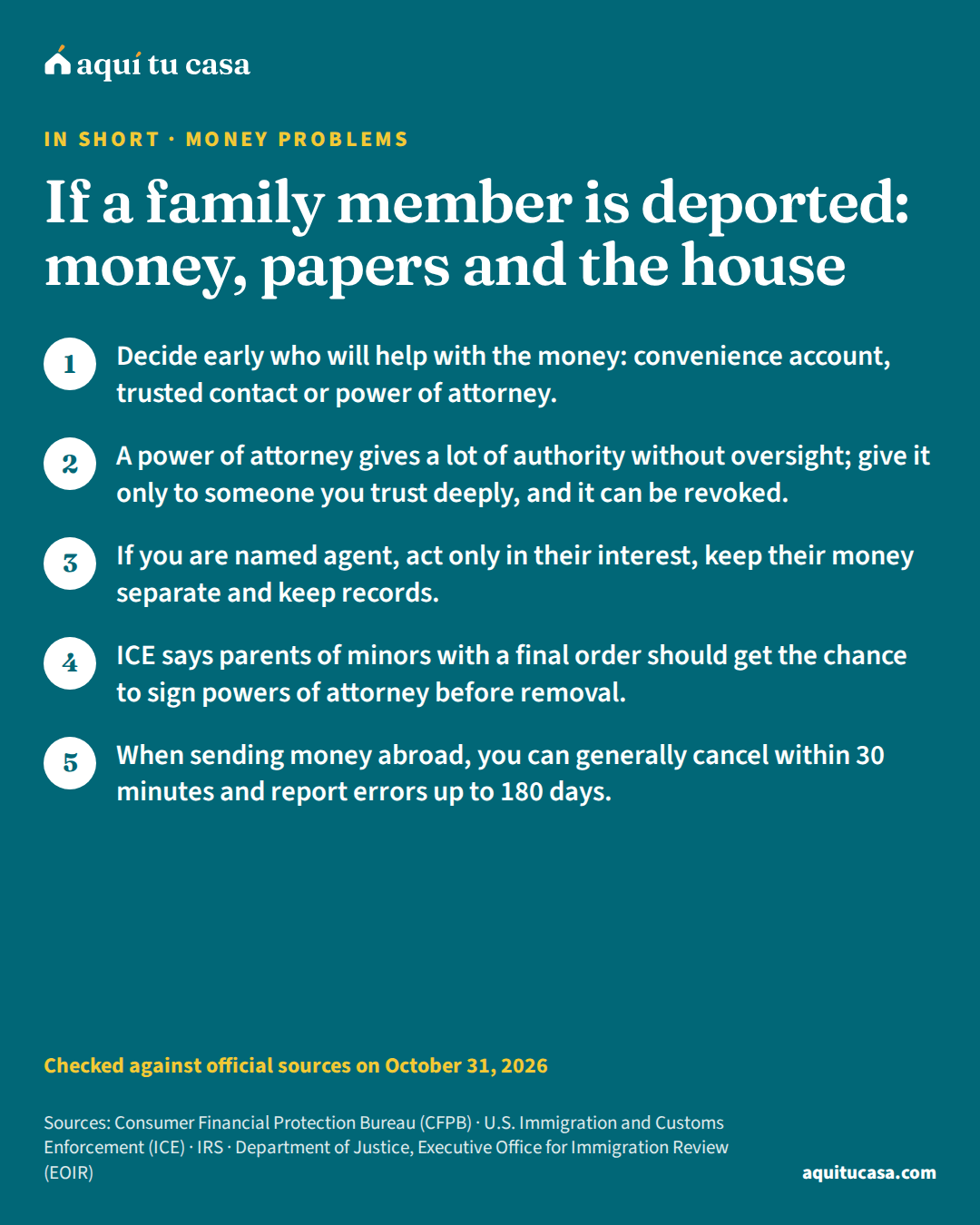
- Decide early who will help with the money: convenience account, trusted contact or power of attorney.
- A power of attorney gives a lot of authority without oversight; give it only to someone you trust deeply, and it can be revoked.
- If you are named agent, act only in their interest, keep their money separate and keep records.
- ICE says parents of minors with a final order should get the chance to sign powers of attorney before removal.
Is this for you?
This guide is for you if…
- A family member was detained by immigration and may be deported, and you want to put the household's money and papers in order.
- A family member was already deported or decided to leave the country, and the accounts, mortgage or lease are in their name.
- You want to prepare your family in case it ever happens.
Get direct help first if…
- Your family member was just detained and you need to know where they are and how to protect your home this week: start with our A family member was detained guide.
- You need advice on their immigration case: only a lawyer or an accredited representative can give it.
When someone in your family is deported, or decides to leave, household life does not stop. The accounts, mortgage, rent and utilities are still in their name, and often no one else can handle them. This guide explains, with what the CFPB, ICE and the IRS say, how you can decide who will help with the money, what a power of attorney is and its risks, what happens to the house and how to send money afterward. It does not give immigration advice or replace a lawyer.
First: who will help with the money
Many accounts are in one person’s name. If that person is gone, the bank, the power company or the mortgage servicer will not talk to just anyone. That is why it helps to decide early who will help and how, ideally before your family member leaves or while they can still sign.
The CFPB explains three options for a relative or friend to help with bills and banking:1
- A convenience account. The helper can make deposits, withdrawals and checks, but the money still belongs to the account owner. The risk is that they can also withdraw money for their own use. The CFPB advises asking specifically for a convenience account and saying you do not want a joint account.
- A trusted contact. That person has no access to the money, but the institution may call them if it sees signs of financial exploitation.
- A power of attorney. The agent handles the banking and the account stays in the owner’s name. If the document is shared with the bank, the bank should honor it and let the agent handle transactions.
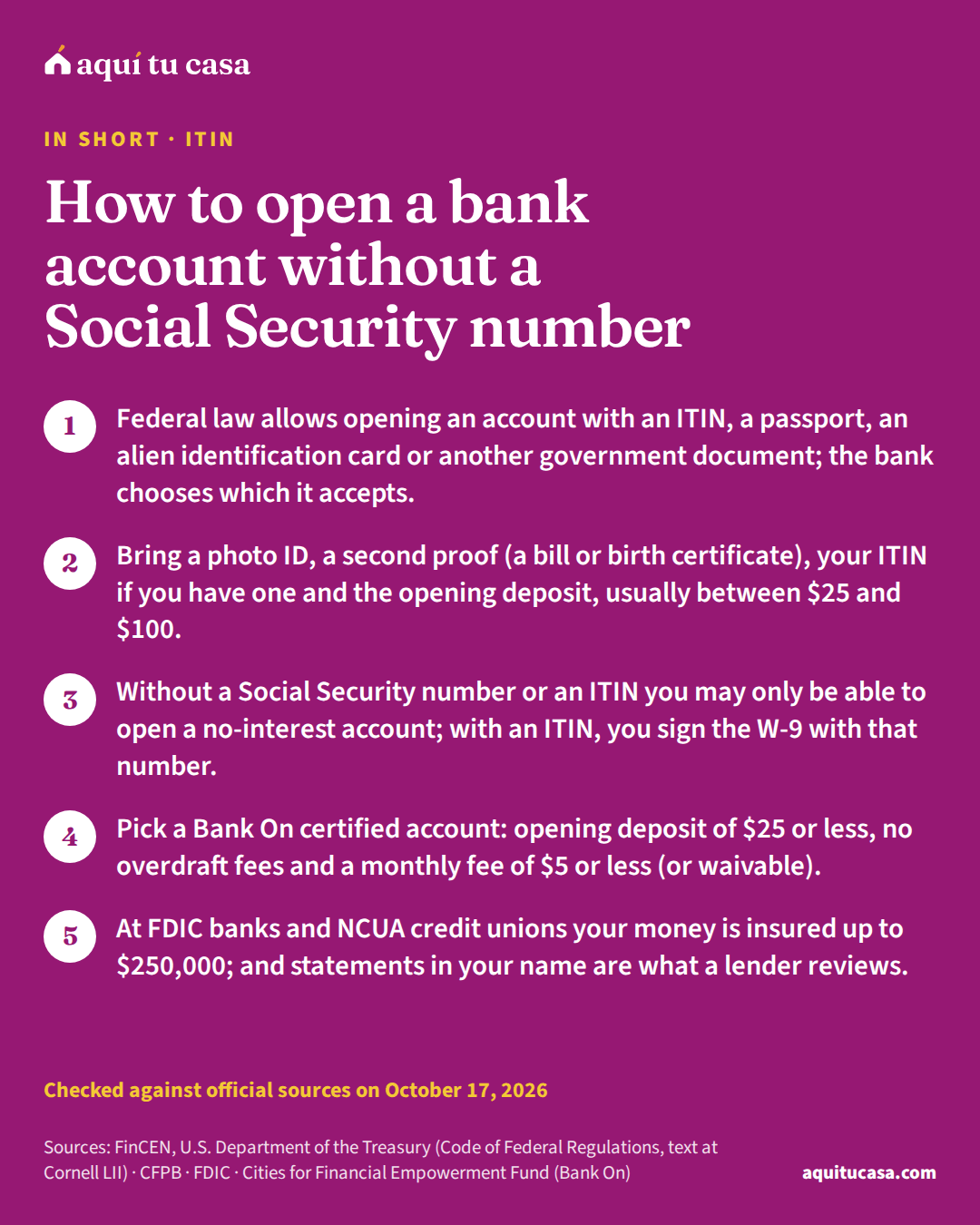
What about a joint account? The CFPB says that if you do not want your money to become the other person’s when you die, avoid a joint account with right of survivorshipjoint tenancy with right of survivorshipJoint tenancy with right of survivorship is a way for two or more people to own property, each with an equal, undivided interest in the whole. When one owner dies, that share passes to the surviving owners, not to the owner's heirs; that is the main difference from a tenancy in common. Generally the deed has to say so; if it does not, the ownership is presumed to be a tenancy in common. That is the case, for example, in Arizona and Florida, where the law requires the deed to state the right of survivorship expressly.See the full definition.1 If the person staying in the U.S. has no account of their own, our guide How to open a bank account without a Social Security number explains which documents many banks and credit unionscredit unionA credit union is a not-for-profit financial institution that, like a bank, accepts deposits, makes loans and offers other services, but is owned by its members. Members elect a volunteer board of directors, and profits go back to them as lower fees, higher savings rates and lower loan rates. To join you need a common bond, such as your employer, your family, where you live or a group you belong to. It is chartered by the NCUA, a federal agency, or by a state. If the credit union is federally insured, your deposits are protected by the NCUA's insurance fund.See the full definition accept.
Three ways someone can help with the money
For everyday bills
Convenience account
- The helper can deposit, withdraw and write checks
- The money still belongs to the account owner
- Risk: they can withdraw money for their own use
For alerts
Trusted contact
- Has no access to the money
- The institution may call them if it sees signs of abuse
- Cannot pay bills
To handle everything
Power of attorney
- The agent acts on the owner's behalf
- The bank should honor it when shown
- Gives a lot of authority without oversight; can be revoked
For someone leaving the country, many families need a power of attorney; ask the bank what it accepts.
The power of attorney: what it is and its risks
According to the CFPB, a power of attorneypower of attorney (POA)A power of attorney (POA) is a legal document that lets someone else act on your behalf. That person is called your agent. A financial power of attorney can help you plan ahead: it is generally "durable," meaning it stays in effect even if you can no longer make decisions. It can also be for something short-term, such as paying bills while you are away. If you show it to your bank, the bank should let your agent handle transactions for you. The CFPB warns that it gives a lot of authority over your money without regular oversight, so choose someone you trust deeply.See the full definition is a legal document that lets someone else, called an agent, act on your behalf. It is usually durable: it stays in effect even if you lose the ability to make decisions. It can also be temporary, for example so someone can pay your bills while you are out of the country.2
A power of attorney is serious. It gives someone else a great deal of authority over your money without regular oversight. You can change or revoke it if that person is no longer the right choice. The CFPB says a lawyer can help protect you against abuse and that, if you cannot afford one, you may be able to use free legal aid programs. It also says many states have laws to protect against power of attorney abuse.2 Each state sets how a power of attorney is signed (before a notary, with witnesses or another way), so ask your local legal aid what your state requires. LSC has a finder by address or city.9
One more thing: a power of attorney made to be used in the United States and one made to be used in Mexico are not the same. If your family member has property in Mexico, read our guide Buying or inheriting a home in Mexico, which explains the powers of attorney Mexican consulates prepare.
If you are named agent: your four duties
If your family member gives you a power of attorney, you start managing their money. The CFPB explains, in its guide for agents, that a person managing someone else’s money is a fiduciary with four basic duties:3
- Act only in their best interest, not yours or anyone else’s.
- Manage their money and property carefully.
- Keep their money and property separate from yours. Do not mix them in your account.
- Keep good records of everything you pay and receive.
The same guide says your family member can take away your authority at any time while they can still decide, and that your authority ends when they die.3 Keep every receipt, even for a small bill. If anyone ever asks what happened to the money, those papers protect you.
Putting the money and papers in order, step by step
1. Make the list of accounts
Today
Bank, cards, loans, mortgage or rent, utilities and insurance, with each one's phone number.
3. Get legal help with the power of attorney
Before signing
Each state sets how it is signed; free legal aid can guide you.2
4. If they are detained, ask their lawyer
While they are detained
For parents of minors with a final order, ICE says it should let them sign powers of attorney before removal.4
5. Take the power of attorney to the bank and the servicer
Once you have it
The bank should honor it; ask what copy each one needs.1
6. Keep records of everything
Every month
Keep their money separate from yours and save every receipt.3

If they are detained: signing papers before removal
If your family member is detained, first find them only through official channels. According to ICE, the online detainee locator may show where they are held. To speak with them or their deportation officer, you contact the ERO field office where they are held. ICE’s Detention Reporting and Information Line is 1-888-351-4024, Monday through Friday, 8 a.m. to 8 p.m. Eastern Time.5
If your family member is a parent or guardian of minor children, one policy matters. Under ICE Directive 11064.4, when they have a final order of removal and ICE is carrying it out, ICE officers should, to the extent practicable, give them a reasonable opportunity to talk with their legal representative and a way to contact consulates, notaries, courts or family members before removal. The goal is for them to sign the necessary documents, such as powers of attorney, passport applications or appointments of guardians, and to prepare.4 Parental interests inquiries go to ICE through the ERO contact form, choosing “Parental Interests.”5
Ask their lawyer or accredited representative to help you coordinate it. Never pay a “notario” or a consultant who promises results in their case.8

The house: the mortgage, the rent or a sale
The house does not wait. If you own, the mortgage, property tax and insurance still need to be paid even if the owner is no longer in the country. If you rent, the lease is still in effect. The worst thing is to stop paying without telling anyone.
- If you have a mortgage. Call the loan servicerloan servicerThe loan servicer is the company that sends you your mortgage statements and handles the day-to-day tasks of the loan: it processes your payments, answers your questions, keeps track of principal and interest paid and manages your escrow account, if you have one. It can also offer options if you fall behind and, in certain cases, start a foreclosure. It may be the same company that lent you the money or a different one, and it is common for another company to take over the loan after closing.See the full definition before the first late payment and ask what options there are. Our guide If you can’t pay your mortgage explains the federal rules that protect you. If you have a power of attorney, ask the servicer what it needs to talk to the agent.
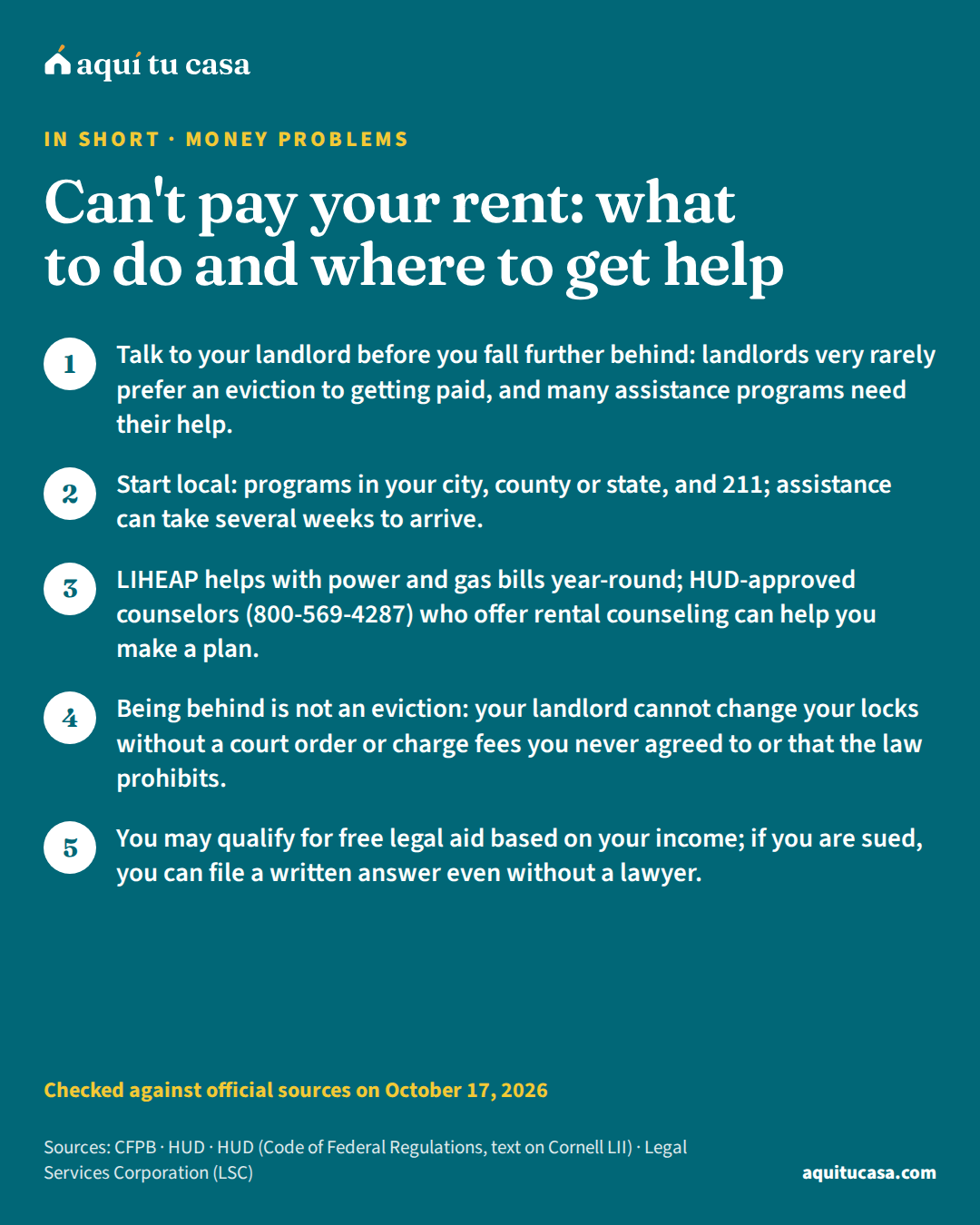
- If you rent. Talk to the landlord early. Our guide If you can’t pay your rent explains how to ask for a payment plan and where to find help.
- If you plan to rent out the house. Our guide Renting out a room or unit explains the basics of being a landlord.
- If the house will sit empty. Keep an eye on it and check that no one changes the title. Our guide Deed theft and title fraud explains how to protect the deeddeedA deed is the legal document the seller uses to transfer ownership of the home to you. The seller signs it at closing, it lists the names of all the buyers and you receive a copy. Afterward, the settlement agent records it with the county records office; that recording puts the public on notice that you are now the owner. There are several types: a warranty deed gives the most promises about the title, and a quitclaim deed promises nothing. Do not confuse it with a deed of trust, which is the mortgage document.See the full definition.
If you decide to sell. According to the IRS, when a foreign person sells U.S. real property, the sale is subject to FIRPTA withholding. It is generally 15% of the amount realized, and in most cases the buyer must withhold it; if the buyer does not, it may be liable for the tax. There is an exception when the amount is $300,000 or less and the buyer plans to live in the home.6 Our guide Taxes when you sell your home and FIRPTA explains who counts as a foreign person and how any excess withholding is recovered.
Example with real numbers
A family that stays in the home when the father is deported
An example in words, not a real case, of how they can organize it.
- Whose name the mortgage and the account are in
- Only the father's
- What he signed before leaving
- A power of attorney naming the mother, with help from legal aid
- What the mother does with it
- Takes a copy to the bank and to the mortgage servicer
- How she handles the money
- Keeps his money separate from hers and saves every receipt
- If they later decide to sell
- They check with the closing whether FIRPTA withholding applies
- What they achieve
- Paying on time, keeping the home and having everything in order
The rules in the example come from the CFPB and the IRS.3 Use the budget tool to see how to cover the mortgage with one income less.
Run it with your numbersFamily budgetSending money to another country
If your family member is already back in their country, you may send them money. Know your rights. According to the CFPB, before you pay you generally see the total cost of the transfer, with taxes and fees, and the exchange rate. Afterward you get a receipt that says when the money will be available and what to do in case of an error. You can generally cancel within 30 minutes after sending, unless it was already picked up or deposited. You can report a problem up to 180 days from the date the money was available, and if the company does not fix it, you can complain to the CFPB.7
Compare companies before you send: since they show you the total cost and the exchange rate before you pay, you can see which one works best for you. Our guide Sending money abroad explains the tax on remittancesremittance transferA remittance transfer is an electronic money transfer you send from the United States to a person or company in another country through a remittance transfer provider, such as a bank or another financial services company. Federal law protects transfers above a minimum amount made by a provider in the normal course of its business. The provider must tell you, before and after you pay, the fees, taxes, exchange rate and how much the other person will receive, in your language if it advertises in it or served you in it. You have up to thirty minutes to cancel at no charge, if the money has not been picked up, and one hundred eighty days to report an error.See the full definition and how it affects cash transfers.
If this is you
Your husband was deported and the account is in his name
Ask the bank what it needs; the CFPB explains the convenience account and the power of attorney, and legal aid can guide you.1
Your family member is detained and has minor children
ICE says it should give them the chance to sign powers of attorney before removal; ask their lawyer.4
You own the home and want to sell
If a foreign person sells, the buyer generally withholds 15% under FIRPTA.6
You rent and the lease is in their name
Talk to the landlord early; with a power of attorney, you can act for your family member.2
You were named agent for your son or daughter
Act only in their interest, keep their money separate from yours and keep records.3

Mistakes that cost you
Mistake: Waiting until they leave to think about the money.
Instead: Decide beforehand who will help: convenience account, trusted contact or power of attorney.1
Mistake: Giving anyone a power of attorney because you are in a hurry.
Instead: A power of attorney gives a lot of authority without oversight; give it only to someone you trust deeply.2
Mistake: Mixing their money with yours in the same account.
Instead: As agent, keep their money separate and keep records.3
Mistake: Opening a joint account without knowing what it means.
Instead: With right of survivorship, the money goes to the other person when the owner dies.1
Mistake: Paying a notario for the immigration case.
Instead: Only a lawyer or an accredited representative can give legal advice.8
Mistake: Selling the house without asking about FIRPTA.
Instead: If a foreign person sells, there is generally a 15% withholding.6
What to do this week
- Make a list of every account in your family member’s name, with each one’s phone number.
- Decide who will help with the money and how.1
- Find free legal aid to prepare the power of attorney under your state’s rules.9
- If they are detained and have minor children, ask their lawyer to coordinate the signing of papers with ICE.4
- Call the mortgage servicer or the landlord before the first late payment.
- If you will send them money, compare the total cost and keep every receipt.7
Your household this month
Let's do the math
Left each month
Enter what at least one person takes home to see the result.
What helps
- Pay savings first: set the goal aside the day the money arrives, before flexible spending.
- Add up the bills that come every few months (car insurance, school) and divide by twelve.
- If income changes, plan on a low month and save the extra from good months.
- A HUD-approved housing counselor can go over the budget with you, often for free.
This is a planning tool with your numbers, not a credit evaluation or an approval. The split reference is only a guide.
Ready to see the numbers? Find your county here
See how this applies in your county: its loan limits, prices and rents, from the official data.
Printable checklist
Frequently asked questions
My husband was deported and the bank account is in his name. Can I take the money out?
It depends on how the account is set up and what authorization you have. The CFPB explains options such as a convenience account or a power of attorney, and says that with a power of attorney the bank should honor the document and let the agent handle the account. Ask the bank what it needs and get free legal aid.
What is a power of attorney?
According to the CFPB, it is a legal document that lets someone else, the agent, act on your behalf. It can be durable or temporary, for example to pay bills while you are away. It gives a lot of authority over your money without oversight, and you can change or revoke it. Each state has its own rules for signing it.
My family member is detained. Can they sign a power of attorney before removal?
If they are the parent or guardian of minors and have a final order, ICE Directive 11064.4 says ICE should, to the extent practicable, give them the chance to talk to their lawyer and contact consulates, notaries or family to sign papers such as powers of attorney. Ask their lawyer or accredited representative how to arrange it.
Is a joint account better?
It depends on what you want. The CFPB says that if you do not want your money to become the other person's when you die, avoid a joint account with right of survivorship. For someone to just help with bills, the CFPB mentions a convenience account, and notes that the helper could also withdraw your money.
What happens to the house if the owner is no longer in the country?
The house and the mortgage stay in their name. Someone has to keep paying or talk to the loan servicer soon. If you decide to sell and the seller is a foreign person for the IRS, the buyer generally must withhold 15% of the amount realized under FIRPTA, with some exceptions.
How do I send money to my family member in their country?
Through a money transfer company or your bank. According to the CFPB, before you pay you see the total cost and the exchange rate, you get a receipt, you can generally cancel within 30 minutes and you can report an error up to 180 days later.
Where do I get help without paying a notario?
For the money and house papers, find free legal aid with the LSC finder. For the immigration case, go only to a lawyer or an accredited representative; notarios and consultants cannot give legal advice.
Sources
Every figure in this guide comes from one of these official sources. The number next to a sentence leads to the source behind it.
Each source on one line: who publishes it, its title, its address and the date we read it.
- 1. Consumer Financial Protection Bureau (CFPB) · I would like to be able to have my friend or family member help with my bill paying and banking. What are my options? · consumerfinance.gov · Accessed October 31, 2026
- 2. Consumer Financial Protection Bureau (CFPB) · What is a power of attorney (POA)? · consumerfinance.gov · Accessed October 31, 2026
- 3. Consumer Financial Protection Bureau (CFPB) · Managing someone else's money: Help for agents under a durable power of attorney in Florida · files.consumerfinance.gov · Accessed October 31, 2026
- 4. U.S. Immigration and Customs Enforcement (ICE) · ICE Directive 11064.4: Detention and Removal of Alien Parents and Legal Guardians of Minor Children · ice.gov · Accessed October 31, 2026
- 5. U.S. Immigration and Customs Enforcement (ICE) · Parental Interests · ice.gov · Accessed October 31, 2026
- 6. IRS · FIRPTA withholding · irs.gov · Accessed October 31, 2026
- 7. Consumer Financial Protection Bureau (CFPB) · Sending money · consumerfinance.gov · Accessed October 31, 2026
- 8. Department of Justice, Executive Office for Immigration Review (EOIR) · Can Someone Represent You at EOIR? · justice.gov · Accessed October 31, 2026
See the other 1 sources
- 9. Legal Services Corporation (LSC) · I Need Legal Help · lsc.gov · Accessed October 31, 2026
Keep reading
Related guides
If this guide helped, these follow the same path.

Money problems 11 minute read
A family member was detained: a plan to keep your home
If a relative was detained: how to find them through official channels, protect the rent or mortgage, talk to the servicer and get free help.
- Find your relative only through ICE's official locator and the immigration court's case system; be wary of anyone who asks for money for information.
- If you rent, talk to the landlord early: the CFPB describes payment plans you can agree on, and 211 connects you with local help.
- If you have a mortgage, call the servicer before the first missed payment; under a federal rule it cannot start foreclosure before 120 days of delinquency, with exceptions.
- Money problems Can't pay your mortgage? What to do in the first week Can't pay your mortgage? Call your servicer, learn the options that exist, the federal rules that protect you and the rescue scams to avoid. 14 minute read
- Money problems Can't pay your rent: what to do and where to get help If you can't cover the rent: how to talk to your landlord, where to find rental assistance (211, local programs, HUD) and what an eviction requires. 13 minute read
- ITIN How to open a bank account without a Social Security number What banks and credit unions ask for to open an account without a Social Security number (ITIN, passport or consular ID) and which account to pick. 11 minute read

Tools for this topic
Was this guide useful?
Thank you. Your answer stays in your browser; nothing is sent.