Can't pay your mortgage? What to do in the first week
Can't pay your mortgage? Call your servicer, learn the options that exist, the federal rules that protect you and the rescue scams to avoid.
Verified against official sources on October 17, 2026 17 official sources

Show contents
In short
What you need to know
Quick answer
Call your loan servicer as soon as you know you cannot pay, explain why and ask for the application for help avoiding foreclosure. The options it may offer include forbearance, a repayment plan, a loan modification, a short sale or a deed-in-lieu, but none is guaranteed. Under Regulation X, a servicer generally cannot start foreclosure until you are more than 120 days behind, and a complete application sent in time gives you more protections, with exceptions. A HUD-approved counselor helps for free; never pay anyone up front.
What matters most
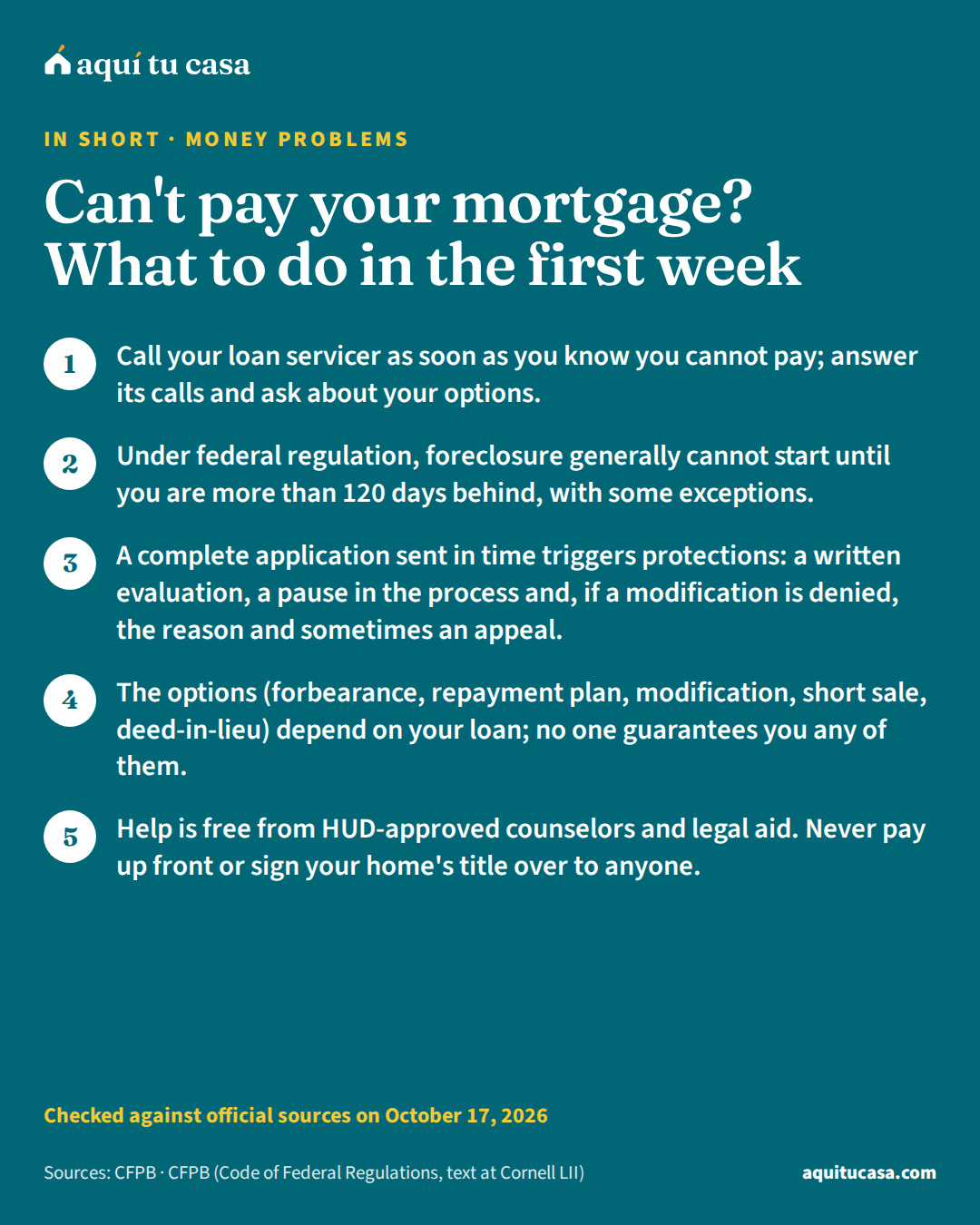
- Call your loan servicer as soon as you know you cannot pay; answer its calls and ask about your options.
- Under federal regulation, foreclosure generally cannot start until you are more than 120 days behind, with some exceptions.
- A complete application sent in time triggers protections: a written evaluation, a pause in the process and, if a modification is denied, the reason and sometimes an appeal.
- The options (forbearance, repayment plan, modification, short sale, deed-in-lieu) depend on your loan; no one guarantees you any of them.
Is this for you?
This guide is for you if…
- You know you will not be able to pay the mortgage this month and do not know whom to call first.
- You have already fallen behind and are getting calls or letters from your loan servicer that you do not understand.
- Someone offers to 'save your house' in exchange for an upfront payment or your signature.
Get direct help first if…
- You have already been served court papers or have a sale date for your home: besides this guide, look for a free legal aid office today.
- You have a reverse mortgage: many of the federal rules in this guide do not apply; look for a HUD-approved reverse mortgage counseling agency.
- The loan is on a home you do not live in: the federal protections in this guide cover only your principal residence.
This guide is for you if you will not be able to pay your mortgagemortgageA mortgage is an agreement between you and a lender (a bank, a credit union or a mortgage company) that gives the lender the right to take your property if you do not repay the money it lent you, plus interest. Mortgage loans are used to buy a home or to borrow money against the value of a home you already own. You repay it in monthly payments that cover the principal (the money borrowed) and the interest, and often the property taxes and insurance as well. In Spanish, "hipoteca" and "préstamo hipotecario" mean the same thing.See the full definition this month, or if you have already fallen behind. Take a breath: there are clear steps and free help. You will see what to do in the first days, which options the Consumer Financial Protection Bureau (CFPB) describes, which federal rules protect you and how to spot a scam. We do not promise an outcome: we tell you what the official sources say.
First: call your loan servicer today
Your loan servicerloan servicerThe loan servicer is the company that sends you your mortgage statements and handles the day-to-day tasks of the loan: it processes your payments, answers your questions, keeps track of principal and interest paid and manages your escrow account, if you have one. It can also offer options if you fall behind and, in certain cases, start a foreclosure. It may be the same company that lent you the money or a different one, and it is common for another company to take over the loan after closing.See the full definition is the company you send your mortgage payment to each month. The CFPB says to call it as soon as you know you cannot make your payment, and to answer if it calls you. The phone number is on your monthly bill. Ask to speak with a specialist about assistance options, and keep asking questions until you understand what comes next.2
Be ready to explain why you cannot pay, whether the problem is temporary or permanent, and your income, expenses and savings. If you are a servicemember with permanent change of station (PCS) orders, say so. If they give you an assistance application, fill it out: the servicer uses it to decide which options to avoid foreclosureforeclosureForeclosure is the process by which the lender or servicer takes back the property after the homeowner fails to make mortgage payments. The rules and timelines depend on each state; all of them include advance notices and, in general, time to catch up or ask for an alternative, such as a repayment plan or a loan modification. If you fall behind, call your servicer and a HUD-approved housing counseling agency early: foreclosure counseling is free and exists for exactly this.See the full definition (“loss mitigation”) it can offer you, if any. If you do not know who your servicer is, a HUD-approved housing counseling agency can help you find out.1
Also ask who owns, insures or backs your loan: the servicer must give you that party’s name, address and phone number. Many homeowners with loans backed by HUD/FHA, USDA, VA, Fannie Mae or Freddie Mac are eligible for assistance, and others may be eligible for something similar.2
The first months, step by step
Federal rules set a calendar. This is the path Regulation X and the CFPB describe, from the first payment you cannot make:
From the first missed payment to your options, under federal rules
1. You call your servicer
As soon as you know you cannot pay
Explain why, ask what options you have to stay in your home and write down who you spoke with.2
2. You call a HUD counselor
The same week
Foreclosure prevention counseling is free at HUD-approved agencies; the HOPE Hotline is open 24 hours a day.1
3. The servicer reaches out
No later than day 36 of delinquency
It must try to reach you live, and again every 36 days while you remain behind, and tell you whether options exist.13
4. A letter with options arrives
No later than day 45 of delinquency
With the assigned staff's phone number, examples of options, how to apply and where to find counselors.13
5. You send a complete application
As soon as you can
If it arrives 45 days or more before a sale, within 5 days (excluding holidays and weekends) they tell you whether it is complete or what is missing.14
6. You get a written answer
Within 30 days
If your complete application arrived more than 37 days before the sale, they must evaluate you for all available options.14
7. The 120-day line
More than 120 days behind
Before then, in general, they may not make the first foreclosure notice or filing; after that, timing depends on your state.14
That calendar runs whether or not you act, so use it in your favor: the sooner you send a complete application, the more protections you have. The sections below explain each step.
What your servicer has to do when you fall behind
Regulation X, which includes the CFPB’s federal rules for mortgage servicers, requires “early intervention” (12 CFR §1024.39):
- Live contact. No later than the 36th day of your delinquency, and again no later than 36 days after each payment due date while you remain behind, the servicer must establish live contact with you or make good faith efforts to do so. Then, if appropriate, it must tell you that options to avoid foreclosure exist.
- A letter. No later than the 45th day of your delinquency, it must send you a notice with the phone number of the assigned staff, examples of options, how to apply and where to find the CFPB or HUD list of housing counselors.13
There are exceptions, for example while a borrower is in bankruptcy.13 And §§1024.39 through 1024.41 cover only loans on a principal residence; among other cases, they do not apply to small servicers or reverse mortgages, except for what §1024.41(j) says.12

The 120-day rule
A servicer may not make the first notice or filing required by law to start a foreclosure, judicial or non-judicial, unless your loan is more than 120 days delinquent. The exceptions: the foreclosure is based on a violation of a due-on-sale clause, or the servicer is joining a foreclosure started by another creditor with a superior or subordinate lien.14 Small servicers follow this rule too.14 After that, how long it takes to reach a sale depends on your state’s laws.9
The options your servicer may offer
According to the CFPB, your servicer might offer one of these options: refinancing, a loan modificationloan modificationA loan modification is a change in the terms of your mortgage that you agree on with your loan servicer when you have trouble paying. It is a type of loss mitigation, meaning one of the options to avoid foreclosure. It can extend the time you have to repay, lower the interest rate, or defer or reduce part of the principal balance, which can lower your monthly payment. Often you start with a trial modification for a few months; if you make those payments on time, the change becomes permanent.See the full definition, a repayment plan, forbearanceforbearanceForbearance is an agreement with your loan servicer to pause your mortgage payments, or make smaller payments, for a while when you face a hardship such as losing your job, a natural disaster or unexpected medical costs. It does not erase or reduce what you owe: you have to repay the missed or reduced amounts later. Depending on the agreement, you may repay it all at once at the end, add it to the end of the loan, repay it with a new loan or spread it out through higher payments for a time. You have to request it from your servicer.See the full definition, a short saleshort saleA short sale is selling your home for less than what you still owe on the mortgage, with your lender's or servicer's permission. It is an alternative to foreclosure, but because it is a sale, you have to leave the home. If the lender approves, the sale proceeds pay off the mortgage even if they do not cover the whole balance. In some states the lender can later sue you for the difference, called the deficiency. That is why the CFPB says to ask the lender to waive the deficiency and to keep the waiver in writing.See the full definition or a deed-in-lieu of foreclosuredeed in lieu of foreclosureA deed in lieu of foreclosure is an arrangement in which you voluntarily turn over ownership of your home to the lender to avoid the foreclosure process. The lender agrees to take the house instead of the debt. It may help you avoid owing what is left on the mortgage, but in some states you could still owe the difference between the home's value and what you owe. That is why the CFPB says to make sure the deal covers the entire debt and to get any waiver of the difference in writing.See the full definition.1 None is guaranteed: the regulation does not require any specific one.14 The CFPB says that in most cases the worst thing you can do is nothing.3
Three options to stay in your home
A temporary problem
Forbearance
To catch up
Repayment plan
Before accepting any of them, ask how much you will pay, for how long and how the total you owe changes.4
There are two more ways to stay. With a deferral or a partial claim, the missed amount moves to the end of the loan, or into a subordinate lien you repay when you refinance, sell or end the mortgage.7 And refinancing, taking a new loan that pays off the old one, is something the CFPB suggests considering if you have not missed any recent payments.3
If you decide to leave the home, don't just walk away
If it is worth more than you owe
Sell the home
- The CFPB lists it as an option if the home is worth more than you owe on the mortgage.3
Needs approval
Short sale
- You need your servicer's approval, and a complete application with documents.3
The CFPB says these exits are typically less expensive and take less time than foreclosure, and can do less damage to your credit.3
Before you accept:
- Interest and repayment. Ask how interest works and when and how you will repay what was paused.4 During forbearance, homeowners association (HOA) or condo fees are still yours to pay, and so are property taxes and insurance if you have no escrow accountescrow accountAn escrow account is an account set up by your mortgage lender to pay certain property-related expenses on your behalf, mainly property taxes and homeowners insurance. The money comes from a portion of your monthly mortgage payment: each month you contribute a share and the loan servicer pays the bills when they come due. That is why your payment is higher than principal and interest alone, and why it can change when taxes or the insurance premium go up. In some states the word also names the period between the offer and the closing.See the full definition.8
- Lump sums. For most government-backed loans, servicers cannot require you to repay a forbearance all at once. If that is the only option you hear about, ask about others.7
- Repayment plans. Do not sign anything you do not understand; if you cannot keep up with the plan, other options might be available.5
- Modifications. Understand how your monthly payments and the total you owe change, in the short and long term.6
If this is you
The problem is temporary
Forbearance or a repayment plan might help; ask how and when you will repay what was paused.4
You have no escrow or you pay HOA dues
During forbearance, property taxes, insurance and association fees are still yours to pay.8
You serve in the military or have a VA loan
If you have permanent change of station (PCS) orders, say so when you call.1 VA loans are among those that may get assistance.2
Your income changes month to month
Have your pay stubs or what you take in, tax returns and bank statements ready.10
The complete application and what it protects
The application to avoid foreclosure (the “loss mitigation application”) opens the door to most protections. It is complete when the servicer has received all the information it requires from you.14
- Acknowledgment. If it arrives 45 days or more before a foreclosure sale, the servicer must tell you in writing within 5 days (excluding legal holidays and weekends) whether it is complete and what is missing.14
- Evaluation. If the complete application arrives more than 37 days before the sale, the servicer has 30 days to evaluate you for all available options and answer in writing.14
- A pause in the process. If you send it before the first foreclosure notice or filing, the servicer may not make that filing. If it already did and the sale is more than 37 days away, it may not move for judgment or an order of sale, or hold the sale. This lasts until it finds you ineligible (and any appeal is over), you reject every option, or you fail to keep an agreement.14
- Appeal. If you are denied a modification, the servicer must give you the reason. If your complete application arrived 90 days or more before the sale, or within your first 120 days behind, you may appeal within 14 days of the decision; different staff review it and you get an answer within 30 days.14

Free help: HUD counselors and legal aid
A housing counselorHUD-approved housing counselorA HUD-approved housing counselor works at an agency HUD has approved to provide housing counseling: independent, expert advice customized to your situation about buying a home, renting, a missed mortgage payment, a foreclosure or credit problems. The agencies usually charge little or nothing; many serve in Spanish and offer the homebuyer education course several assistance programs require. They are not lenders or real estate agents and sell you nothing. Your county page lists the official agencies with phone numbers.See the full definition at a HUD-approved agency can review your situation, explain your servicer’s options, guide you through the paperwork and help with your budget. The HOPE Hotline is open 24 hours a day, seven days a week, at (888) 995-4673.1 Foreclosure prevention counseling is free, but a counselor cannot promise you will keep your home. They will ask about your loan, such as how much you owe and the date of your last payment, and maybe for pay stubs, tax returns and bank statements. The CFPB can also connect you with one at (855) 411-2372.10

HUD-approved counseling agencies by state
| State | HUD-approved counselors |
|---|---|
| Alabama | 25 |
| Alaska | 1 |
| Arizona | 21 |
| Arkansas | 14 |
| California | 81 |
| Colorado | 26 |
| Connecticut | 13 |
| Delaware | 12 |
| District of Columbia | 17 |
| Florida | 98 |
| Georgia | 42 |
| Hawaii | 17 |
| Idaho | 10 |
| Illinois | 81 |
| Indiana | 21 |
| Iowa | 11 |
| Kansas | 3 |
| Kentucky | 19 |
| Louisiana | 26 |
| Maine | 7 |
| Maryland | 41 |
| Massachusetts | 37 |
| Michigan | 59 |
| Minnesota | 33 |
| Mississippi | 16 |
| Missouri | 18 |
| Montana | 11 |
| Nebraska | 8 |
| Nevada | 8 |
| New Hampshire | 5 |
| New Jersey | 34 |
| New Mexico | 7 |
| New York | 93 |
| North Carolina | 52 |
| North Dakota | 3 |
| Ohio | 54 |
| Oklahoma | 6 |
| Oregon | 25 |
| Pennsylvania | 75 |
| Puerto Rico | 9 |
| Rhode Island | 5 |
| South Carolina | 13 |
| South Dakota | 13 |
| Tennessee | 32 |
| Texas | 51 |
| Utah | 7 |
| Vermont | 7 |
| Virginia | 49 |
| Washington | 15 |
| West Virginia | 8 |
| Wisconsin | 26 |
| Wyoming | 1 |
Only states with their own page on this site appear; tap yours to see the agencies and their languages. Source: HUD
Your state’s page under Places lists HUD-approved agencies with the languages they declare, and the housing counselors guide explains what counseling looks like.

If foreclosure is imminent or you have been served legal papers, the CFPB says you might also need an attorney.1 You may qualify for free legal services through a legal aidlegal aidLegal aid is the free civil legal help that nonprofit organizations and their lawyers provide to low-income people in civil, not criminal, matters. In housing, that includes representing families facing eviction or foreclosure, alongside matters such as custody, child support, protection from domestic violence and access to benefits. In the United States, the Legal Services Corporation, created by Congress, funds a nationwide network of these organizations; its finder points you to the one in your area. Each sets its own income limits.See the full definition office.3 And if you have a problem with your servicer, you can file a complaint with the CFPB: it forwards it to the company and works to get you a response, generally within 15 days.2
“Rescue” scams: never pay up front or sign over your title
The CFPB is clear: you do not have to pay anyone to help you avoid foreclosure, because help is free from your servicer or a HUD-approved agency.1 A mortgage relief company cannot charge you until it gives you a written offer from your lender or servicer that you decide to accept.11 Regulation O puts it this way: no payment may be requested or received until you sign a written agreement with your lender or servicer that includes that offer.16 There is a narrow exception for certain licensed attorneys who hold the money in a client trust account.17 And no one selling this service may tell you that you cannot or should not talk to your lender or servicer.15
Scam warning signs and what to do instead
Mistake: Paying up front to someone who promises to save your home.
Instead: Help is free from your servicer or a HUD-approved agency.1 A relief company cannot charge you before you sign an agreement with your lender.16
Mistake: Believing someone who guarantees you will not lose your home.
Instead: No one can guarantee that; the CFPB lists it as a scam sign.1
Mistake: Signing your home's title over to someone, or signing papers you do not understand.
Instead: Before you sign, show the papers to a HUD counselor or legal aid.1
Mistake: Stopping payments or sending them to someone else because you were told to.
Instead: Pay only your servicer; stopping payments without an agreement is reported to the credit bureaus.18
Mistake: Stopping talking to your servicer because a company asked you to.
Instead: No one selling mortgage relief may tell you not to talk to your lender or servicer.15
Mistake: Doing nothing and waiting.
Instead: Call, ask for the application and send it back complete as soon as you can.3
What to do this week
- Call your servicer today (the number is on your statement) and explain why you cannot pay.2
- Ask for the assistance application, send it back complete as soon as you can, keep copies and write down the date you sent it.14
- Call a HUD-approved housing counseling agency or the HOPE Hotline, (888) 995-4673.1
- Gather your papers: statement, date of your last payment, pay stubs, tax returns, bank statements and your other monthly bills.10
- Go over your family budget to see how much you could pay each month.
- If you received court papers or a notice of sale, find a free legal aid office today.13
- Do not pay anyone up front, and do not sign your home’s title over to anyone.1
Your numbers
Starts at the typical home value in the United States. Change it to the price you have in mind.
That is $11,645 (3.5% of the price). The usual minimum for this loan is 3.5%.
This week's average ± a quarter or half point.
National average as of November 5, 2026 (Freddie Mac); your rate may be different.
Adjust advanced details
Let's do the math
Estimated monthly payment
National figure$2,759
at 7.18% · 30 years
- Loan amount
- $326,673
- Total interest
- $470,006
- Paid off in
- November 2056
Includes $5,618 FHA upfront mortgage insurance premium.
Does it fit the income?
Comfortable
up to $1,884 a month
Tight
$1,884 to $2,422 a month
Hard
more than $2,422 a month
Your payment · 41%
Compared with the typical household income in the United States ($80,734 a year). Reference: HUD calls paying more than 30% of income for housing a cost burden.
| Principal & interest | $2,213 |
|---|---|
| Property tax | $261 |
| Home insurance | $139 |
| FHA mortgage insurance (MIP) | $147 |
How does it compare with incomes?
For this payment to be 28% of your income, you'd need to earn about $118,260 a year. With your other debts, to stay under 36%: about $91,980 a year.
You need at least $11,645 for the down payment, plus closing costs.
This is an estimate to give you an idea, not a loan offer. Your real payment depends on your rate, your credit, and the insurance and taxes on the home you buy.
Total monthly payment $2,759; principal and interest $2,213.
Ready to see the numbers? Find your county here
See how this applies in your county: its loan limits, prices and rents, from the official data.
Printable checklist
Frequently asked questions
Can they take my house if I am one month behind?
Foreclosure does not start right away. Under Regulation X, a servicer generally cannot make the first foreclosure notice or filing until your loan is more than 120 days delinquent, with some exceptions; after that, timing depends on your state. But stopping payments without an agreement is reported to the credit reporting companies, so call early.
Do I have to pay someone to help me?
No. The CFPB says help is available at no cost from your servicer or a HUD-approved housing counseling agency. A mortgage relief company cannot charge you until you have a written offer from your lender or servicer that you decide to accept.
Does my servicer have to give me a loan modification?
No. The regulation does not require the servicer to give you any specific option. But if it receives your complete application more than 37 days before a foreclosure sale, it must evaluate you for all available options and answer in writing within 30 days; and if it denies a modification, it must tell you why.
Do these rules apply to every loan?
No. The early-contact and application rules cover loans on your principal residence, and they do not apply the same way to small servicers or reverse mortgages. Even so, a small servicer cannot start foreclosure before you are 120 days behind either. Ask your servicer and a counselor which rules apply to your loan.
How long does my servicer have to answer my application?
If the application arrives 45 days or more before a foreclosure sale, the servicer must tell you in writing within 5 days (excluding holidays and weekends) whether it is complete or what is missing. If the complete application arrives more than 37 days before the sale, it has 30 days to evaluate you for all available options and answer in writing.
What happens to the payments I skipped during forbearance?
You still owe them: forbearance does not erase or reduce your debt. According to the CFPB, they are repaid all at once, at the end of the loan, with a new loan or with higher payments for some months. For most government-backed loans, the servicer cannot require you to repay everything in a lump sum; if that is all you are offered, ask about other options.
Can I appeal if I am denied a modification?
The letter must give you the reason. If your complete application arrived 90 days or more before the sale, or within your first 120 days behind, you may appeal within 14 days of the decision; different staff review it and you get an answer within 30 days.
Where do I complain if my servicer does not help me?
You can file a complaint with the CFPB, which forwards it to the company and works to get you a response, generally within 15 days. A HUD-approved housing counselor can also help you deal with your servicer, at no cost.
Sources
Every figure in this guide comes from one of these official sources. The number next to a sentence leads to the source behind it.
Each source on one line: who publishes it, its title, its address and the date we read it.
- 1. CFPB · If I can't pay my mortgage loan, what are my options? · consumerfinance.gov · Accessed October 17, 2026
- 2. CFPB · How to work with your mortgage servicer · consumerfinance.gov · Accessed October 17, 2026
- 3. CFPB · Avoid foreclosure · consumerfinance.gov · Accessed October 17, 2026
- 4. CFPB · What is mortgage forbearance? · consumerfinance.gov · Accessed October 17, 2026
- 5. CFPB · What is a repayment plan on a mortgage? · consumerfinance.gov · Accessed October 17, 2026
- 6. CFPB · What is a mortgage loan modification? · consumerfinance.gov · Accessed October 17, 2026
- 7. CFPB · Exit your forbearance carefully · consumerfinance.gov · Accessed October 17, 2026
- 8. CFPB · Manage your money during forbearance · consumerfinance.gov · Accessed October 17, 2026
See the other 9 sources
- 9. CFPB · What happens after I complete an application to determine my options to avoid foreclosure? · consumerfinance.gov · Accessed October 17, 2026
- 10. CFPB · What is a HUD-approved housing counseling agency, and how can they help me? · consumerfinance.gov · Accessed October 17, 2026
- 11. CFPB · What are mortgage loan modification scams? · consumerfinance.gov · Accessed October 17, 2026
- 12. CFPB (Code of Federal Regulations, text at Cornell LII) · 12 CFR §1024.30, Scope (Regulation X, mortgage servicing) · law.cornell.edu · Accessed October 17, 2026
- 13. CFPB (Code of Federal Regulations, text at Cornell LII) · 12 CFR §1024.39, Early intervention requirements for certain borrowers (Regulation X) · law.cornell.edu · Accessed October 17, 2026
- 14. CFPB (Code of Federal Regulations, text at Cornell LII) · 12 CFR §1024.41, Loss mitigation procedures (Regulation X) · law.cornell.edu · Accessed October 17, 2026
- 15. CFPB (Code of Federal Regulations, text at Cornell LII) · 12 CFR §1015.3, Prohibited representations (Regulation O, mortgage assistance relief services) · law.cornell.edu · Accessed October 17, 2026
- 16. CFPB (Code of Federal Regulations, text at Cornell LII) · 12 CFR §1015.5, Prohibition on collection of advance payments and related disclosures (Regulation O) · law.cornell.edu · Accessed October 17, 2026
- 17. CFPB (Code of Federal Regulations, text at Cornell LII) · 12 CFR §1015.7, Exemptions (Regulation O) · law.cornell.edu · Accessed October 17, 2026
Keep reading
Related guides
If this guide helped, these follow the same path.

Help and programs 11 minute read
HUD housing counselors: what they do and what they cost
What a HUD-approved housing counselor does, what they help with (buying, renting, missed payments, credit), what they may charge and how to find one.
- Independent, expert advice: they are not lenders or agents, and the regulation requires intake, an analysis, an action plan and follow-up.
- Intake is not charged; fees must be reasonable, disclosed in advance and waived for anyone who cannot pay.
- Foreclosure prevention counseling is free at HUD-approved agencies.
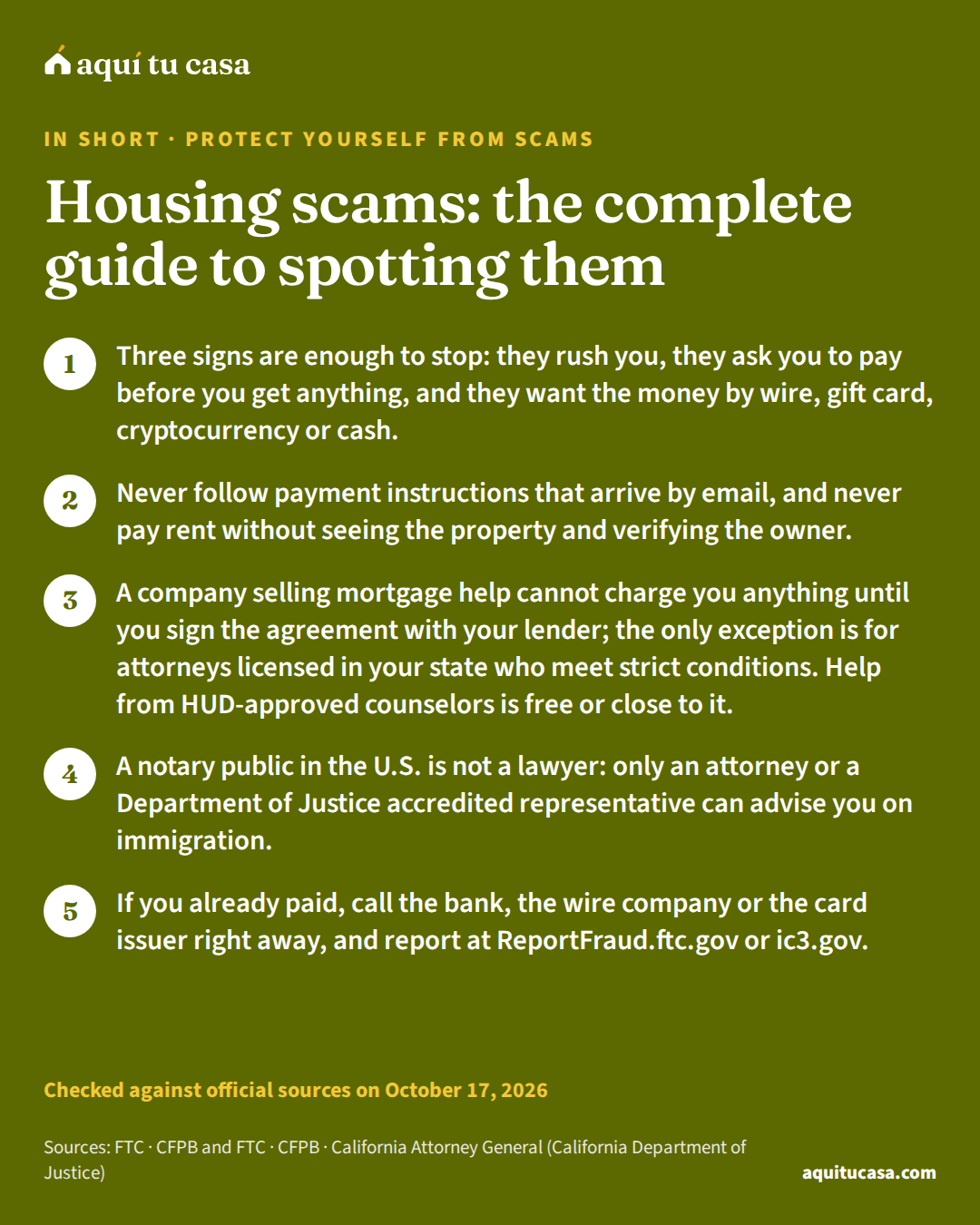
- Protect yourself from scams Housing scams: the complete guide to spotting them The rental, mortgage, title, contractor, credit and moving scams families run into most: how to spot them, what to do and where to report them. 17 minute read
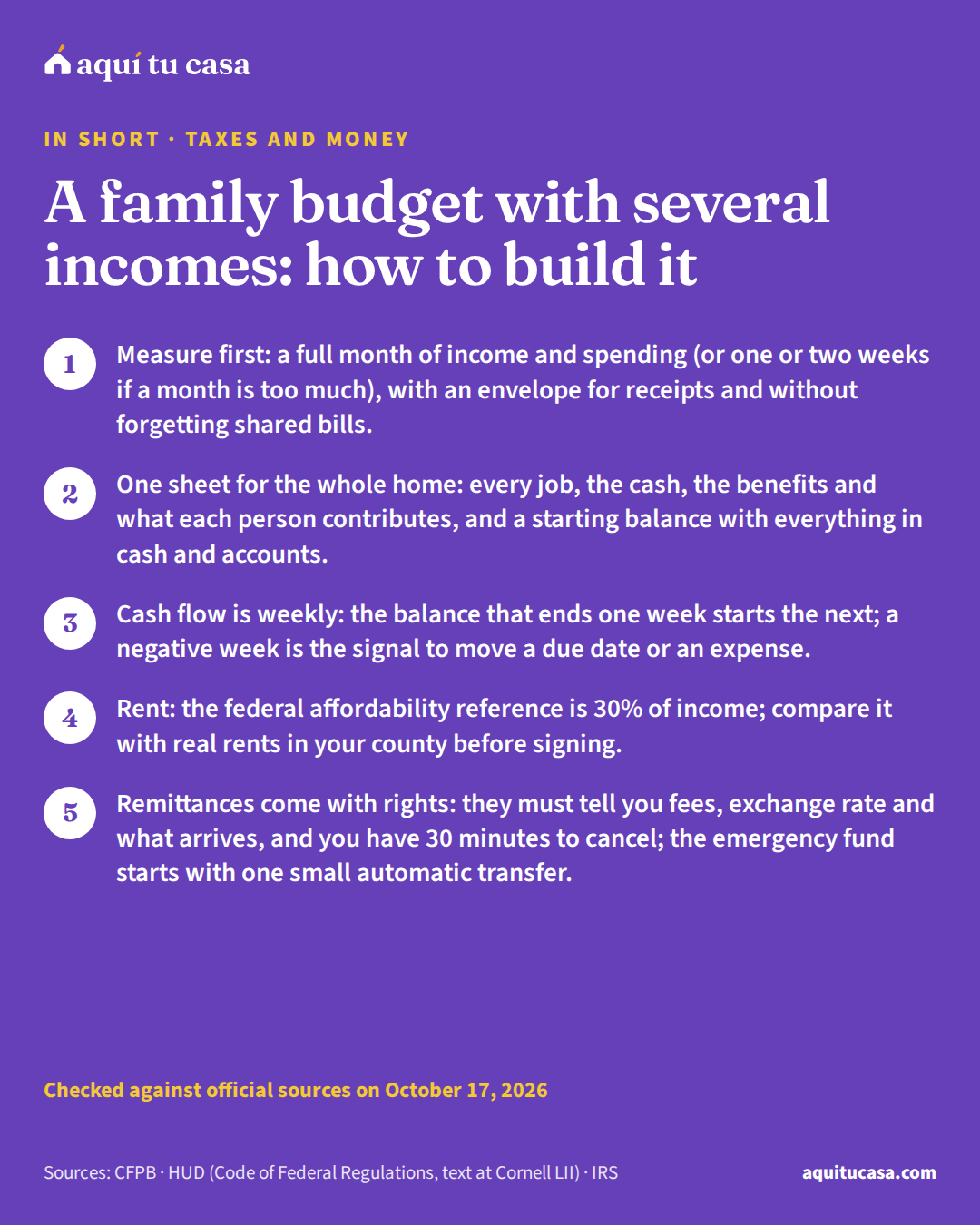
- Taxes and money A family budget with several incomes: how to build it How to budget when several incomes, cash and remittances come into the home: tracking, weekly cash flow, rent and the emergency fund. 11 minute read
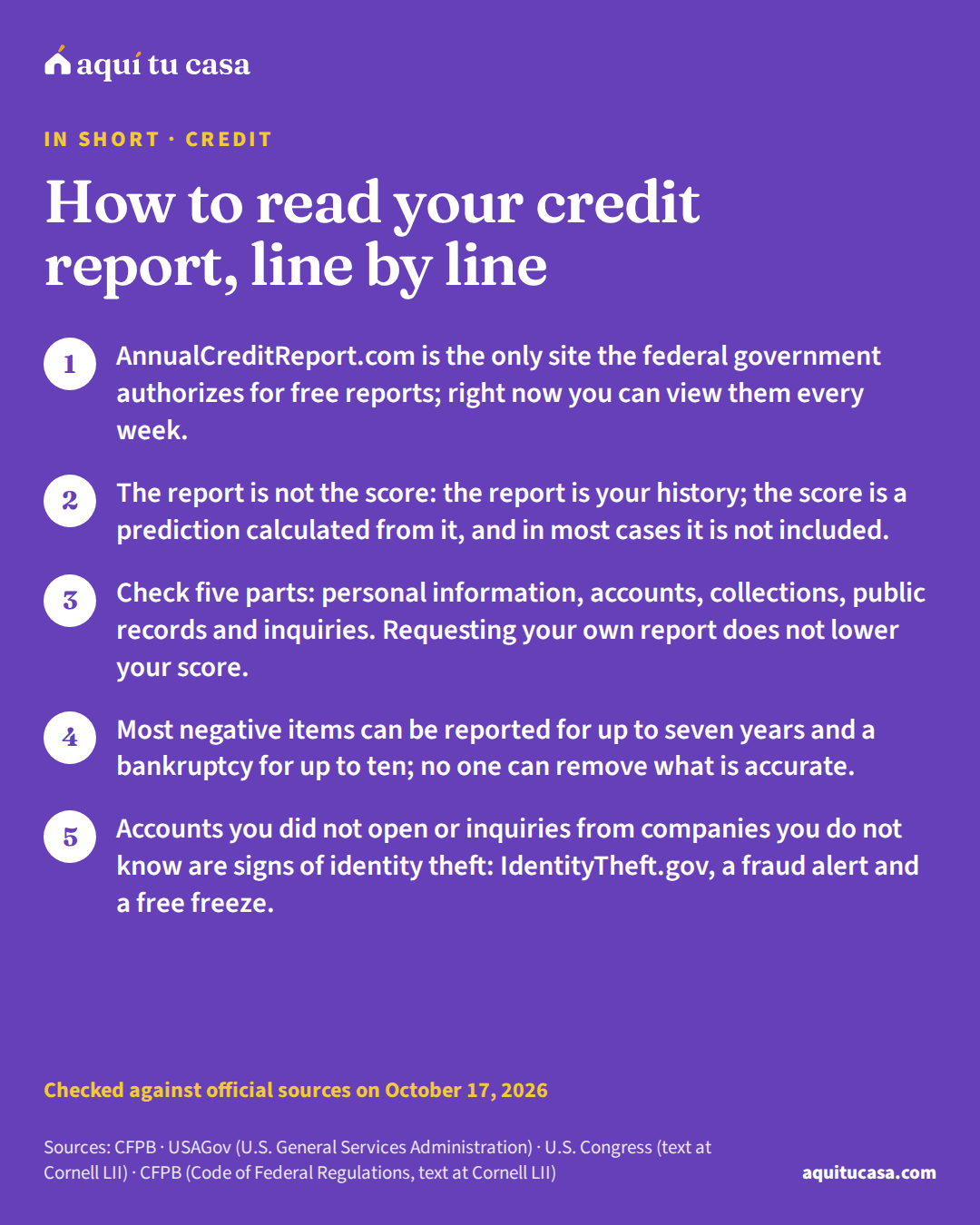
- Credit How to read your credit report, line by line Where to get your free credit reports, what each part says, how long negative items can stay and how to spot errors or identity theft. 13 minute read
Tools for this topic
Was this guide useful?
Thank you. Your answer stays in your browser; nothing is sent.