Condo, townhouse or single-family home: what changes
What you own in each type of home, how the HOA and insurance (HO-6) change, and how to check whether a condo is FHA-approved before you make an offer.
Verified against official sources on October 31, 2026 8 official sources
Show contents
In short
What you need to know
Quick answer
With a single-family home you own the land and the house, and you insure all of it. With a condo you own your unit and a share of the common areas; the association insures the building and you usually insure the interior and your belongings with an HO-6 policy. A townhouse can be a condo or a house on its own lot inside an HOA: the documents tell you which. If you will use an FHA loan for a condo, the project must be FHA-approved, be a site condominium or have Single-Unit Approval; look it up on HUD's website before you make an offer.
What matters most
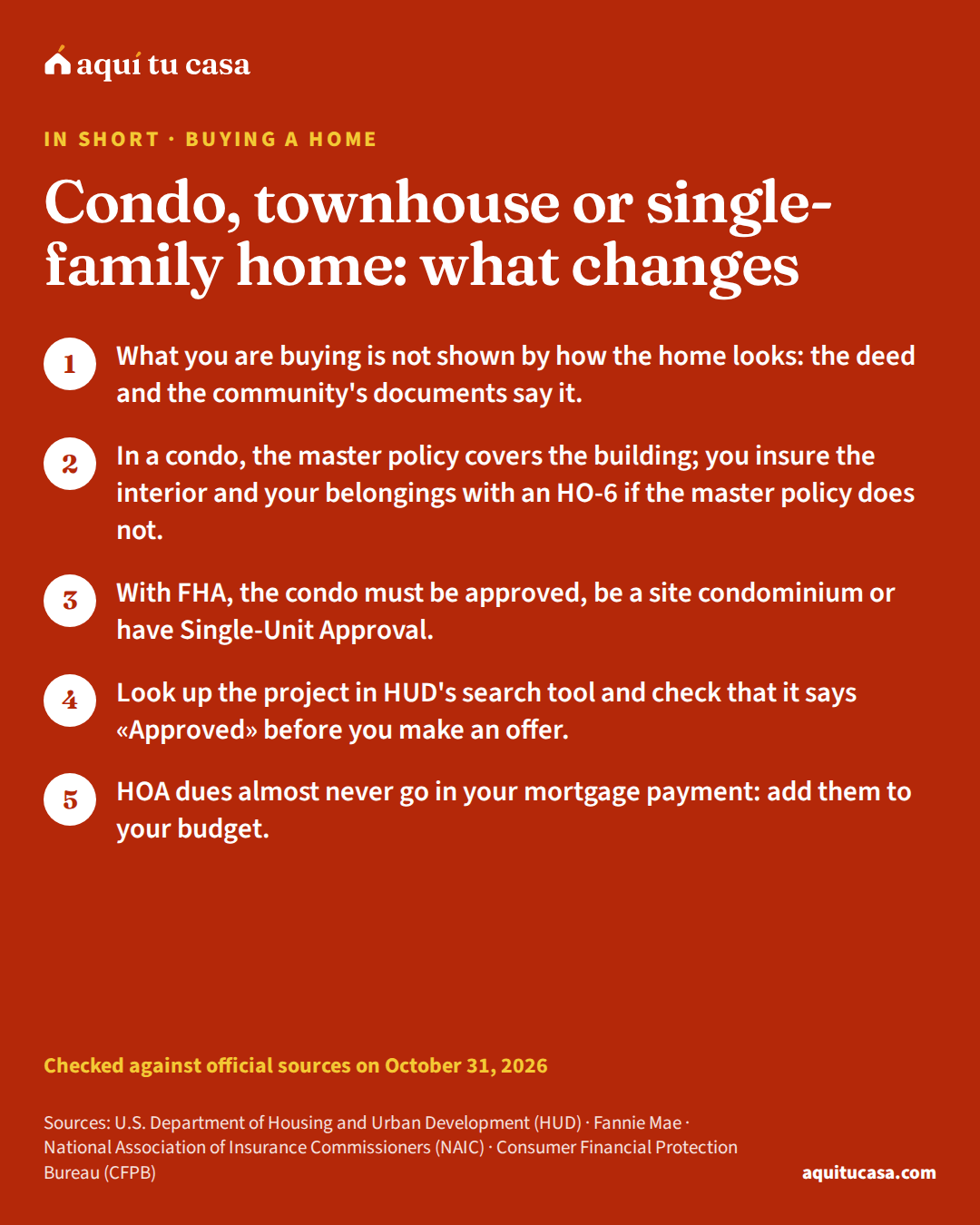
- What you are buying is not shown by how the home looks: the deed and the community's documents say it.
- In a condo, the master policy covers the building; you insure the interior and your belongings with an HO-6 if the master policy does not.
- With FHA, the condo must be approved, be a site condominium or have Single-Unit Approval.
- Look up the project in HUD's search tool and check that it says «Approved» before you make an offer.
Is this for you?
This guide is for you if…
- You are comparing a condo, a townhouse and a single-family home and are not sure what changes.
- You plan to buy a condo with an FHA loan and want to know whether the building is approved.
- You were told you need an HO-6 policy and want to understand what it covers.
Get direct help first if…
- You already own and cannot pay your HOA dues: read «HOA and CDD: dues, special assessments and what happens if you don't pay».
- You are looking at a manufactured home in a park: read «Manufactured homes in a park: lot rent and title».
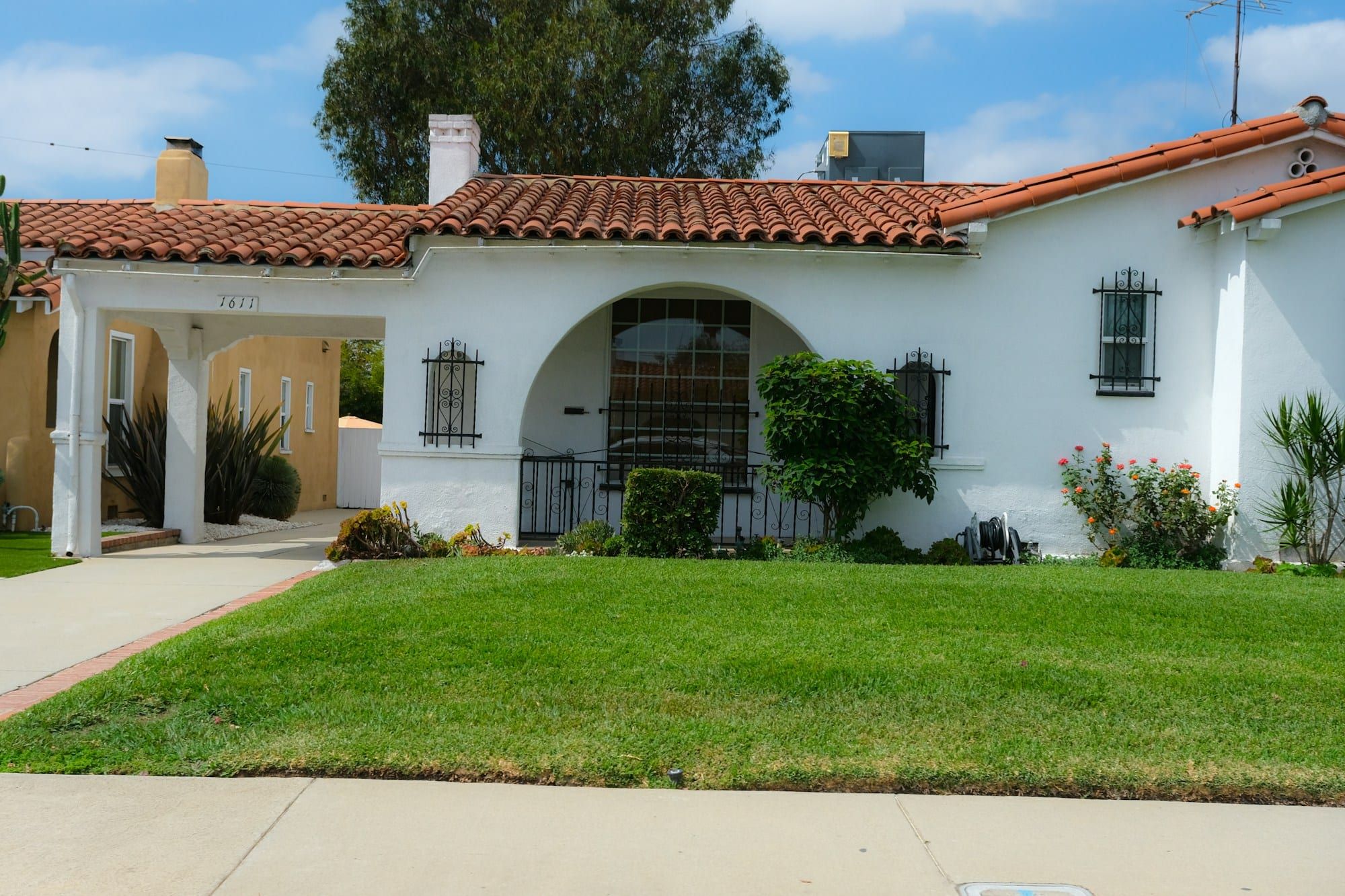
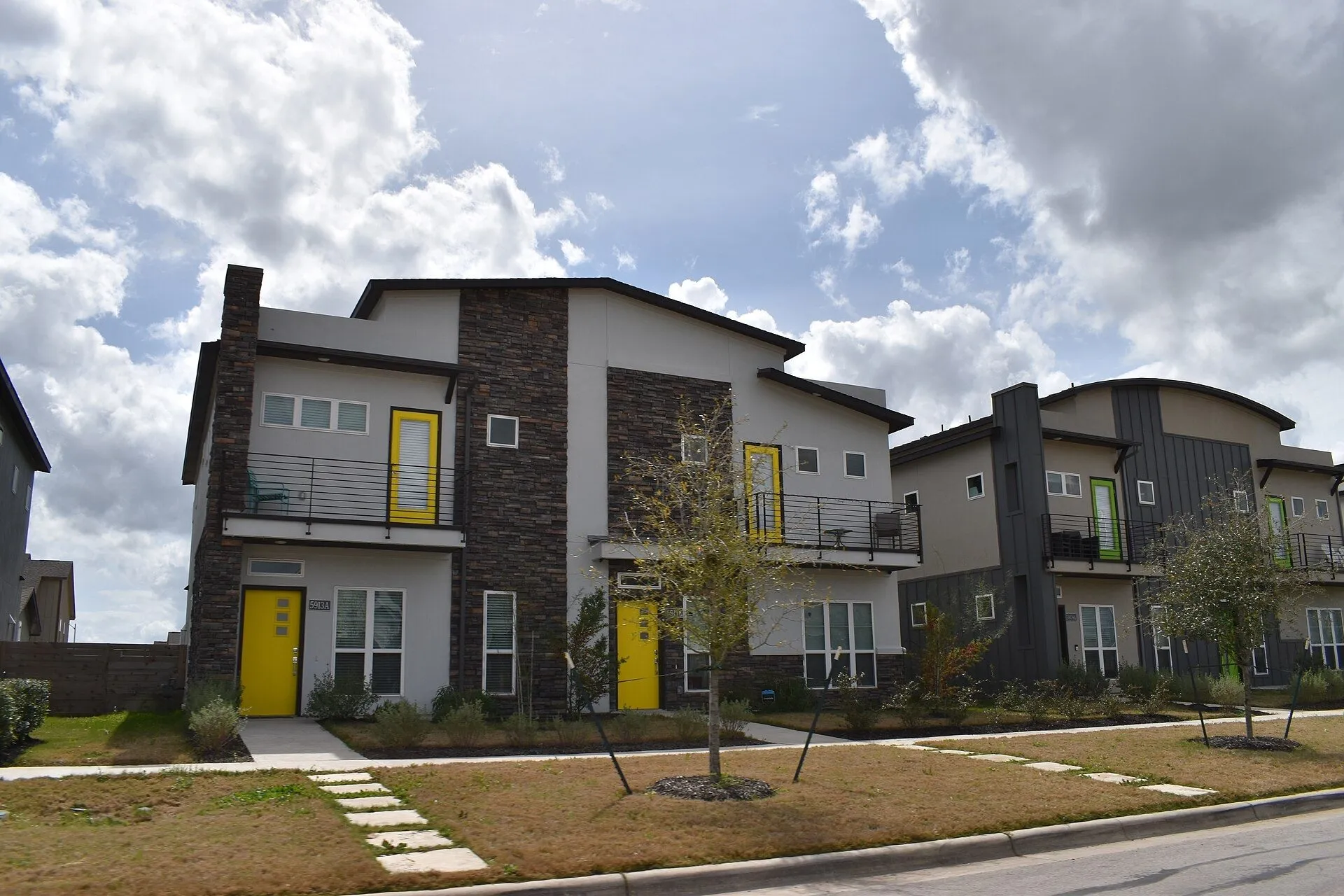
Two homes can look the same from the street and be very different on paper. A row house can be a condocondominium (condo)A condominium (condo) is a one-family home in a project where each owner owns their unit and shares ownership of the common areas with the other owners. Units can be attached, semi-detached or detached. The owners make up an association that manages the money and the common areas, and you usually pay condo or homeowners association (HOA) fees separately from your mortgage payment. If you do not pay them, the association can pursue debt collection and even foreclosure. In Texas, condominium insurance covers your belongings and the interior of your unit.See the full definition or a house on its own lot. That difference changes what you own, what insurance you need, how much you pay each month and which loan you can use. This guide compares the condo, the townhousetownhouseA townhouse is a home joined to the homes next to it by walls. The Census Bureau counts it as a single-family home when a ground-to-roof wall separates it from each neighboring unit and it does not share heating, air-conditioning or utilities with them. FHA's 203(k) program accepts townhomes. In Texas, townhouse insurance can cover the interior and exterior or only the interior, depending on whether the homeowners association (HOA) has a master policy that covers the exterior.See the full definition and the single-family home, and explains how to check whether a condo is FHA-approved.1
What you own in each case
Single-family home. You own the land and the house. You decide on and pay for maintenance, and you insure the whole house. It may or may not be inside a homeowners associationhomeowners association (HOA)A homeowners association (HOA) is the organization formed in many subdivisions and condominium buildings to manage shared expenses such as landscaping, a pool, maintenance of common areas and, in condos, the roof and exteriors. Each owner pays dues, normally monthly, and must follow its rules, which can cover anything from the color of your door to renting the home out. If you do not pay, the association can add charges and, in several states, place a lien on your home. The dues count toward your monthly payment when lenders judge whether you can afford the mortgage.See the full definition (HOA).
Condo. You own your unit and an undivided share of the common areas, such as hallways, the roof or the pool. HUD defines it this way: a project where homes may be attached, detached or manufactured homes, and the owners share the common elements.1 The association manages those areas and charges you dues.
Townhouse. It shares one or two walls with the homes next door. It can be one of two things:
- Inside a planned unit development (PUD). Fannie Mae explains that there you hold title to your property, the lot and the house, and an interest in the HOA that manages the common areas.4
- A condo. You own the unit and a share of the common areas, as in a building. For FHA, if the unit includes the house and the land and there are no manufactured homes, it can be a site condominium.1
Living in a community also means accepting its rules. Fannie Mae says it plainly: in these projects there are limits on your control over decisions and over how you use your unit and the common areas.4 Read the rules on renting out your unit, pets, parking and exterior changes before you buy.
Three ways to own
It is all yours
Single-family home
- You own the land and the house
- You insure the whole house
- You pay for all maintenance
- It may or may not have an HOA
Depends on the papers
Townhouse
- Shares walls with the neighbors
- In a PUD, you hold title to the lot and house
- As a condo, you share the common areas
- Insurance may be yours or the association's
You share the building
Condo
- You own your unit and a share of the common areas
- The master policy covers the building
- You insure the interior with an HO-6 if needed
- You pay dues to the association
Ask for the deed and the community's documents: they tell you which of the three you are buying.
Insurance: master policy, HO-6 or homeowners policy
This is one of the biggest differences for your wallet.
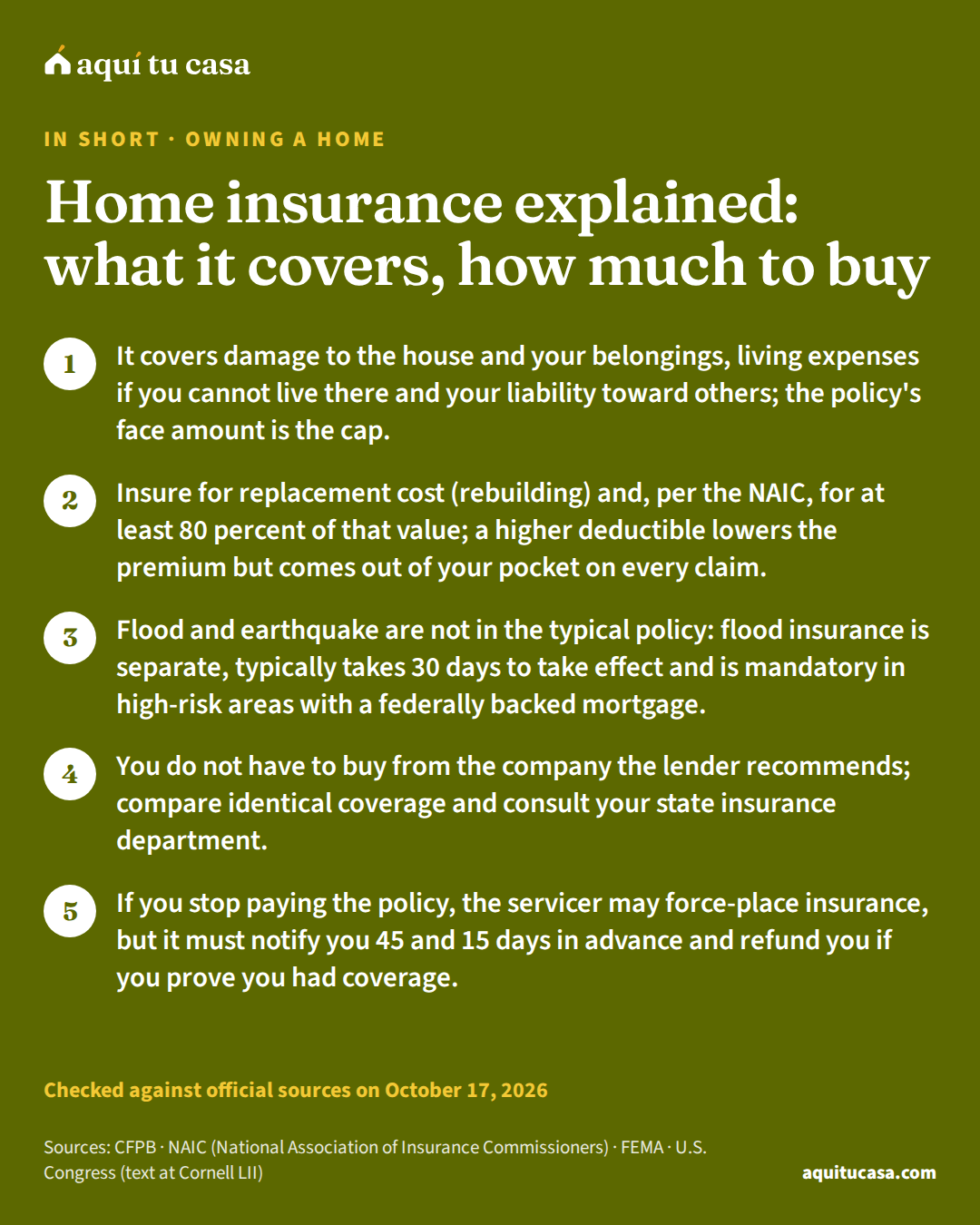
With a single-family home, you buy homeowners insurancehomeowners insuranceHomeowners insurance pays for losses and damage to your property if something unexpected happens, like a fire or a burglary, and usually includes liability coverage if someone is hurt at your home. Lenders require it as long as you have a mortgage, because the home is their collateral, and almost always collect it inside your monthly payment through the escrow account. The price depends on the location, the rebuilding cost, the deductible and your history. A standard policy does not cover floods or, in many states, earthquakes: those risks are insured separately.See the full definition for the whole house. Our guide Home insurance explained covers what it pays for and how much to insure.
With a condo, there are two policies. Fannie Mae requires a master policy covering the common elements and the buildings, unless the project’s documents call for individual policies. To the extent that policy does not cover your unit’s interior or your improvements, you must have your own unit owner policy.5 That is the HO-6 policy. According to the NAIC, it insures your belongings and your walls, floors and ceiling.6
With a townhouse, the NAIC explains you may insure it with an individual homeowners policy or through the association’s master policy.6 In a PUD where each owner carries their own policy, the lender does not have to verify the common-area policy.5 Ask the association which applies to you.
Before you make an offer, ask the association for a copy of the master policy and ask:
- Does it cover only the structure, or also the inside of the units?
- What is the master policy’s deductibledeductibleA deductible is the part of an insurance claim you pay yourself. When you have a covered loss, the insurance company subtracts the deductible from the claim amount and pays you the rest. You may have a different deductible for each type of coverage. You will find it on the first page of your policy, called the declarations page, along with your coverages and limits. In taxes, the word "deductible" means something else: an expense that can lower the taxes you owe.See the full definition? After a big loss, the association could split that cost among owners through a special assessmentspecial assessmentA special assessment is a charge, separate from regular dues, that a homeowners association, a city, a county or a special district can impose, usually to pay for construction, major repairs or the upkeep of facilities. In Florida, the summary you get before buying in a community with a mandatory association warns that you will have to pay any special assessments the association imposes, that you may owe others to the local government or a special district, and that not paying could result in a lien on your property. In Arizona, when you buy you must be told about special assessments the board has approved but not yet charged.See the full definition.
- Do they require owners to carry their own HO-6?
With those answers, get an HO-6 or homeowners quote from your insurer. If you have questions about a policy, you can contact your state insurance department.6

HOA dues and your monthly payment
With a condo and many townhouses you pay dues to the association. Some single-family homes have them too. The CFPB explains that dues are usually not part of the payment to your mortgage servicer; they go directly to the association, and they can range from a few hundred dollars to more than a thousand a month. You need to count them when deciding what you can afford. Although not common, your servicer may agree to include them in your escrowescrow accountAn escrow account is an account set up by your mortgage lender to pay certain property-related expenses on your behalf, mainly property taxes and homeowners insurance. The money comes from a portion of your monthly mortgage payment: each month you contribute a share and the loan servicer pays the bills when they come due. That is why your payment is higher than principal and interest alone, and why it can change when taxes or the insurance premium go up. In some states the word also names the period between the offer and the closing.See the full definition if you ask.7
When you compare, do not look only at price. A cheaper condo with high dues can cost you more each month than a single-family home with no dues, even though with the house you pay for the roof, the yard and full insurance. The mortgage calculator lets you add HOA dues to the payment. Our guide HOA and CDD explained covers special assessments and what happens if you do not pay.
Example with real numbers
Two homes at the same price
An example in words, not a real case, of why the monthly payment is not the same.
- The condo
- Pays the mortgage, taxes, an HO-6 and the monthly association dues
- The single-family home
- Pays the mortgage, taxes and a full homeowners policy, with no dues
- Condo maintenance
- The association pays for common areas from dues; it can charge special assessments
- House maintenance
- The family pays for everything: roof, yard, water heater
- How they compare
- They add up each monthly cost and set money aside for the maintenance that falls on them
HOA dues almost never go in the mortgage payment, according to the CFPB.7 Use the calculator to add the dues to your payment.
Run it with your numbersMortgage calculatorIf you will buy a condo with FHA
FHA insures loans of up to 30 years for a unit in an FHA-approved condo project, or in a non-approved one that meets the Single-Unit Approval requirements.2 For FHA to insure your loan, the unit must meet one of three conditions:1
- Be in an FHA-approved project. To approve a project, HUD looks at its insurance, financial condition, title, pending lawsuits and physical condition.2
- Be a site condominium. Detached homes, or townhouse-style homes where the unit includes the house and the land, with no manufactured homes. The owner pays all insurance and maintenance on the home, except landscaping, and no project approval is needed.1
- Have Single-Unit Approval. The project must be complete and ready for occupancy, have at least five units and not be manufactured housing. It must also meet some of the approved-project requirements, such as FHA insurance concentration, the share of owner-occupants and financial condition.2 Your lender makes the request.
How to look up the condo on HUD’s website
HUD has a public search tool for FHA-approved condos. You can search by state, county, city, ZIP code, project name or approval status. Note: FHA does not sell these properties; the list only says whether the project is approved.3
What each status on the list means:3
| What the list says | What it means |
|---|---|
| Approved | The project is approved; FHA loans can be processed for its units |
| Expired | The approval lapsed |
| Rejected | It was not approved, or it is a Single-Unit Approval project |
| Withdrawn | Approval was withdrawn; FHA loans cannot be processed for now |
If the project does not appear or does not say “Approved”, that does not mean you cannot buy there. Ask your lender whether the unit could get Single-Unit Approval, or whether another loan type fits better. Our FHA loan guide explains the rest of the program.
Before you make an offer on a condo or townhouse
1. Ask for the papers
Before the offer
The declaration of condominium or the rules, the budget and the association's dues.4
2. Find out what type of property it is
Before the offer
Condo, house on a lot in a PUD or site condominium: the deed says which.4
3. Look up the project on HUD
If you will use FHA
Check that the status says «Approved» and note the date.3
4. Ask for the master policy
Before the offer
What it covers, its deductible and whether owners must have an HO-6.5
5. Get an insurance quote
Before you sign the contract
An HO-6 for the interior and your belongings, or a full homeowners policy.6
6. Add the dues to your payment
Before you decide
HOA dues almost never go in your mortgage payment.7
Try it with your numbersMortgage calculator
What the lender reviews in a condo
Even with a conventional loan, the lender reviews the whole project, not just your unit. Fannie Mae explains why: these units carry their own risks, such as the project’s financial stability, its condition and marketability, the limits on what you can decide as an owner and what happens if the project dissolves.4
A new condo raises more questions. For Fannie Mae, a condo project is new if, among other things, fewer than 90% of the units have been sold, it is not complete, phases are still to be added or the HOA is still in the developer’s hands.4 In those cases, ask how many units have been sold and when the association will pass to the owners. Our guide Buying a new construction home covers what to check with a builder.
If this is you
Your first purchase is a condo
Look up the project on HUD's website if you will use FHA, and ask for the master policy before you offer.3
You need room for the family
Compare a condo's HOA dues with the upkeep of a single-family home.7
Your loan is FHA and the building is not approved
Ask about Single-Unit Approval: the project must have at least five units.2
You want less upkeep
In a condo, the association cares for the common areas; check its budget and master policy.4
You like a townhouse
Ask whether it is a condo or a house on a lot in a PUD; it changes who insures it.6

Mistakes that cost you
Mistake: Assuming a townhouse is always a condo, or never is.
Instead: It can be either; the deed and the documents say which.4
Mistake: Making an FHA offer on a condo without checking whether it is approved.
Instead: Look up the project on HUD's website and check that it says «Approved».3
Mistake: Believing the master policy covers everything inside your unit.
Instead: If it does not cover the interior or your improvements, you need your own HO-6.5
Mistake: Comparing only the purchase price.
Instead: Add the HOA dues, which almost never go in your mortgage payment.7
Mistake: Not reading the community's rules.
Instead: In a project there are limits on how you use your unit and the common areas.4
Mistake: Thinking «Rejected» on HUD's list is always bad news.
Instead: It can also mark a Single-Unit Approval project; ask your lender.3
Free help
A HUD-approved housing counselorHUD-approved housing counselorA HUD-approved housing counselor works at an agency HUD has approved to provide housing counseling: independent, expert advice customized to your situation about buying a home, renting, a missed mortgage payment, a foreclosure or credit problems. The agencies usually charge little or nothing; many serve in Spanish and offer the homebuyer education course several assistance programs require. They are not lenders or real estate agents and sell you nothing. Your county page lists the official agencies with phone numbers.See the full definition can help you for free or at low cost to compare options and read the community’s papers; search by ZIP code on the CFPB’s website.8 Our guide HUD-approved housing counselors explains what they do. For questions about a policy, you can contact your state insurance department.6 And before you sign, a home inspection helps you see the condition of your unit.
What to do this week
- Ask for the deed or the legal description of the property to know what type it is.4
- If you will use FHA, look up the project on HUD’s website and note its status.3
- Ask the association for the master policy, the budget and the current dues.5
- Get an HO-6 or homeowners insurance quote.6
- Add the HOA dues to your payment in the mortgage calculator.7
Your numbers
Starts at the typical home value in the United States. Change it to the price you have in mind.
That is $11,645 (3.5% of the price). The usual minimum for this loan is 3.5%.
This week's average ± a quarter or half point.
National average as of November 5, 2026 (Freddie Mac); your rate may be different.
Adjust advanced details
Let's do the math
Estimated monthly payment
National figure$2,759
at 7.18% · 30 years
- Loan amount
- $326,673
- Total interest
- $470,006
- Paid off in
- November 2056
Includes $5,618 FHA upfront mortgage insurance premium.
Does it fit the income?
Comfortable
up to $1,884 a month
Tight
$1,884 to $2,422 a month
Hard
more than $2,422 a month
Your payment · 41%
Compared with the typical household income in the United States ($80,734 a year). Reference: HUD calls paying more than 30% of income for housing a cost burden.
| Principal & interest | $2,213 |
|---|---|
| Property tax | $261 |
| Home insurance | $139 |
| FHA mortgage insurance (MIP) | $147 |
How does it compare with incomes?
For this payment to be 28% of your income, you'd need to earn about $118,260 a year. With your other debts, to stay under 36%: about $91,980 a year.
You need at least $11,645 for the down payment, plus closing costs.
This is an estimate to give you an idea, not a loan offer. Your real payment depends on your rate, your credit, and the insurance and taxes on the home you buy.
Total monthly payment $2,759; principal and interest $2,213.
Ready to see the numbers? Find your county here
See how this applies in your county: its loan limits, prices and rents, from the official data.
Printable checklist
Frequently asked questions
What is the difference between a condo and a townhouse?
The form of ownership, not the design. In a condo you own your unit and an undivided share of the common areas. A townhouse can be a condo or a house on its own lot in a development with an HOA. The deed and the community's documents say which.
What is an HO-6 policy?
It is the policy for owners of a condo unit. According to the NAIC, it insures your belongings and your walls, floors and ceiling. The association's master policy covers the building and common areas; if it does not cover your unit's interior or your improvements, you need your own policy.
How do I know if a condo is FHA-approved?
Look it up in HUD's public search tool by state, city, ZIP code or name. If it shows «Approved», FHA loans can be processed for its units. If it says «Expired», «Rejected» or «Withdrawn», ask your lender about Single-Unit Approval.
Can I buy with FHA in a condo that is not approved?
Sometimes. HUD allows Single-Unit Approval if the project is complete and ready for occupancy, has at least five units, is not manufactured housing and meets other requirements, such as FHA concentration and financial condition. Your lender makes the request.
Do HOA dues go in my mortgage payment?
Usually not. The CFPB explains that they are paid directly to the association and can range from a few hundred to more than a thousand dollars a month. Add them to your budget before deciding how much you can pay.
What is a site condominium?
It is a condo project of detached homes, or of townhouse-style homes where the unit includes the dwelling and land, with no manufactured homes. For FHA, the owner pays all the insurance and maintenance of the dwelling and no project approval is needed.
Why does the lender review the whole building and not just my unit?
Because your unit depends on the project. Fannie Mae explains that the lender reviews the project's financial stability, its condition and what you can decide as an owner, because those risks affect your unit's value.
Sources
Every figure in this guide comes from one of these official sources. The number next to a sentence leads to the source behind it.
Each source on one line: who publishes it, its title, its address and the date we read it.
- 1. U.S. Department of Housing and Urban Development (HUD) · Handbook 4000.1, FHA Single Family Housing Policy Handbook · hud.gov · Accessed October 31, 2026
- 2. U.S. Department of Housing and Urban Development (HUD) · FHA Condominiums · hud.gov · Accessed October 31, 2026
- 3. U.S. Department of Housing and Urban Development (HUD) · Condominiums (FHA-approved condominium search) · entp.hud.gov · Accessed October 31, 2026
- 4. Fannie Mae · Selling Guide B4-2.1-01, General Information on Project Standards · selling-guide.fanniemae.com · Accessed October 31, 2026
- 5. Fannie Mae · Selling Guide B7-3-03, Master Property Insurance Requirements for Project Developments · selling-guide.fanniemae.com · Accessed October 31, 2026
- 6. National Association of Insurance Commissioners (NAIC) · A Consumer's Guide to Home Insurance · content.naic.org · Accessed October 31, 2026
- 7. Consumer Financial Protection Bureau (CFPB) · Are condo/co-op fees or homeowners' association dues included in my monthly mortgage payment? · consumerfinance.gov · Accessed October 31, 2026
- 8. Consumer Financial Protection Bureau (CFPB) · Find a housing counselor · consumerfinance.gov · Accessed October 31, 2026
Keep reading
Related guides
If this guide helped, these follow the same path.

Owning a home 16 minute read
HOA and CDD fees: dues, special assessments and unpaid dues
What an HOA and a Florida CDD are, what they charge, how they show up on your Loan Estimate and what happens if you fall behind, depending on your state.
- An HOA charges regular dues and special assessments under its documents; a Florida CDD is a separate local government with its own charges.
- HOA dues are rarely part of your mortgage payment: the CFPB says they are usually paid directly to the association.
- Your Loan Estimate adds them into 'Taxes, Insurance & Assessments' even without escrow, and the lender counts them when deciding whether you can repay.
- Owning a home Home insurance explained: what it covers, how much to buy What home insurance covers, why the lender requires it, how to choose the amount and the deductible, why flood is separate and what happens if it lapses. 13 minute read
- Mortgage loans FHA loan: down payment, insurance, limits and who qualifies How an FHA loan works: the down payment and credit score HUD requires, MIP mortgage insurance, your county limit, the home and the residency rules. 14 minute read
- Mortgage loans Conventional loan: 3% down, PMI and credit scores How a conventional loan works: HomeReady and Home Possible from 3% down, the credit score Fannie Mae requires, PMI and when the law ends it. 12 minute read


Tools for this topic
Was this guide useful?
Thank you. Your answer stays in your browser; nothing is sent.