Section 202: HUD housing for older adults 62 and up
How HUD's Section 202 housing for low-income older adults works: the age and income rules, the rent, how to apply and what to expect on the waiting list.
Verified against official sources on October 31, 2026 11 official sources

Show contents
In short
What you need to know
Quick answer
Section 202 is a HUD program that funds apartment buildings for low-income older adults, with support services nearby. To live there, at least one adult in the household must be 62 or older, and the household must make less than 50% of the area median income. You typically pay 30% of your adjusted income in rent and the federal government covers the rest. You do not apply to HUD: you contact the owner or manager of each building, which keeps its own waiting list.
What matters most
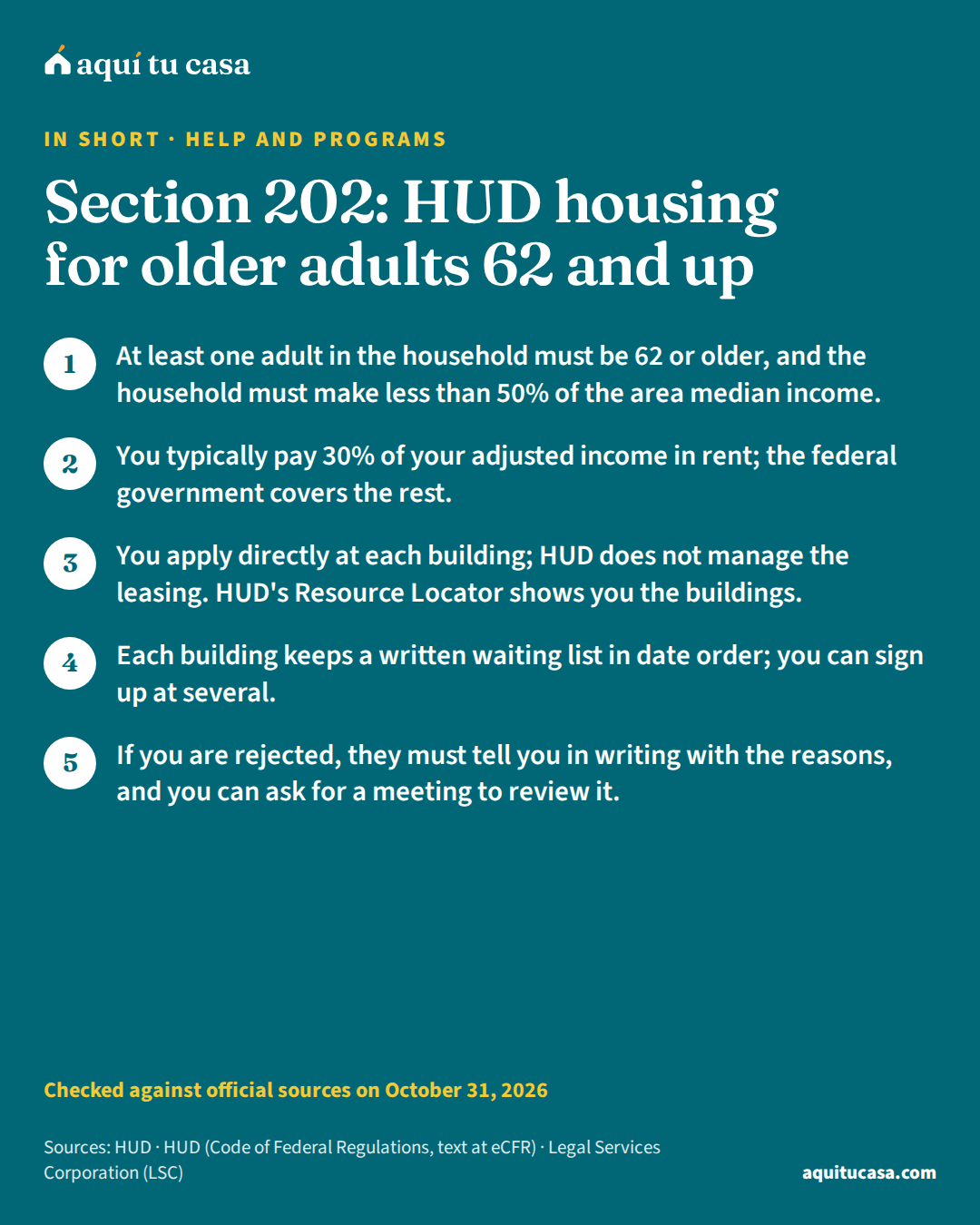
- At least one adult in the household must be 62 or older, and the household must make less than 50% of the area median income.
- You typically pay 30% of your adjusted income in rent; the federal government covers the rest.
- You apply directly at each building; HUD does not manage the leasing. HUD's Resource Locator shows you the buildings.
- Each building keeps a written waiting list in date order; you can sign up at several.
Is this for you?
This guide is for you if…
- You are 62 or older, or live with someone that age, your income is low, and you are looking for an apartment you can afford.
- You want to help your parents or grandparents find housing with support services nearby.
- You are already on a Section 202 waiting list and want to know what to expect.
Get direct help first if…
- You own your home and want to stay in it: our guides on reverse mortgages and the homestead exemption may help you more.
- You need 24-hour medical care: Section 202 buildings do not have infirmaries or overnight care.
As we get older, rent weighs more, especially when you live on a pension or Social Security. This guide is for you if you are 62 or older, or are looking for housing for your parents or grandparents, and the household income is low. It explains what HUDDepartment of Housing and Urban Development (HUD)HUD (the U.S. Department of Housing and Urban Development) is the federal department that runs housing and community development assistance programs and works to ensure fair and equal housing opportunity. The Federal Housing Administration (FHA), which insures mortgages made by private lenders, is part of HUD. HUD funds local public housing agencies (PHAs) that run public housing and Section 8 vouchers. It also approves housing counseling agencies across the country, and you can file a housing discrimination complaint with its Office of Fair Housing and Equal Opportunity (FHEO).See the full definition’s Section 202 housing is, who qualifies by age and income, what you pay, how to apply and how the waiting list works.
What Section 202 is
Section 202 is a HUD program called Supportive Housing for the Elderly. HUD provides funding, called a capital advance, to build, buy or fix up apartment buildings that serve very-low-income people 62 or older.1
Each building also receives a Project Rental Assistance Contract, known as a PRAC. That contract covers operating costs beyond what you pay. It usually includes a service coordinator, who connects you with community supports so you can live on your own: cleaning, meals and transportation. Owners can use up to $15 per unit per month for supportive services.1
Who owns the building? A private nonprofit organization whose purposes include the welfare of older adults and that cannot be controlled by people seeking profit.3 HUD says the program is open to nonprofits with a 501(c)(3) or 501(c)(4) designation and to nonprofit cooperatives.1
Who qualifies: age and income
Age. At least one adult in the applying household must be 62 or older.1 The regulation puts it this way: a household of one or more people in which at least one is 62 or older at the time they move in.3 In other words, other household members can live with you even if they are younger.
Income. The household must make less than 50% of the area median incomearea median income (AMI)The area median income (AMI) is the median family income of an area, which HUD computes every year for each metropolitan area and county. Housing programs use it as the yardstick: under the federal rule, a family is low-income when it earns no more than 80% of its area's median income and very low-income when it earns no more than 50%, adjusted for family size. State down payment assistance programs and Section 8 vouchers publish their limits as a percentage of AMI, so the same salary can qualify in one county and not in the next.See the full definition (AMI) where the building is.1 The regulation uses the federal housing law’s definition of a “very low-income family.”2 That limit depends on where the building is, and HUD publishes what 50% of the median is in each area.1

Some buildings have additional requirements for frail older adults, meaning people who cannot do at least three activities of daily living, such as eating, dressing, bathing, grooming or housework. The regulation lets owners set those requirements if HUD accepts them.3
If you own your home and want to stay in it, other help may suit you better, such as the homestead exemption on your property tax or a reverse mortgage.
What you pay and what is included
According to HUD, residents typically pay 30% of their adjusted income in rent, and the federal government covers the rest.1 Your share is reviewed at least every 12 months, and you must report income changes. You keep getting the assistance until what you pay equals the full rent; and even if you stopped getting it, that would not affect your other rights under the leaseleaseA lease, or rental agreement, is the contract in which the owner or landlord gives you the right to live in and use a property for a set period of time in exchange for payment, usually rent. While the lease lasts you have possession, but the landlord still owns the property. The lease says how much you pay and when, who handles maintenance and how the agreement can end. Your rights as a tenant are usually spelled out in the lease and in your state and local laws. Before complaining to the landlord, it helps to read the lease and make sure you are also following the rules you agreed to.See the full definition.7
The apartments are efficiencies or one-bedroom units. Two-bedroom units are allowed only if part of the units is financed from other sources.4
Support services follow a clear rule. The program pays up to $15 per unit per month for HUD-approved services. The rest comes from other sources and may include a co-payment from you if you receive the service, but that co-payment is not added to your rent.6
Example with real numbers
A 68-year-old who lives alone
An example in words. The figures in your case come from the building's calculation.
- Age
- 68: meets the minimum age of 62
- Household income
- Must be below 50% of the median income in the area
- Their share of the rent
- Typically 30% of adjusted income
- The rest of the rent
- Covered by the federal government through the PRAC
- Type of apartment
- An efficiency or one-bedroom
- Support services
- The coordinator connects them with cleaning, meals or transportation; a co-payment, if any, is not added to their rent
The example's rules come from HUD and the regulation.146 Use the calculator to see how much rent you can afford on your income.
Run it with your numbersHow much rent can I afford?
How to apply, step by step
You do not apply to HUD. HUD does not manage the leasing of these buildings: you contact the owner or manager of each one directly.1 For information about existing buildings, you can also call your local HUD Multifamily Office.1
From the search to the keys
1. Find buildings near you
Today
In HUD's Resource Locator, choose the option for affordable elderly and special needs housing.1
2. Call or visit each building
This week
Ask the owner or manager for the application; HUD does not manage the leasing.1
3. Fill out the application and certification
When you apply
On HUD's form, with your income, the Social Security numbers they ask for and the consents.7
4. Get on the waiting list
If no unit is free
The owner keeps a written list in date order and tells you when a unit opens.7
5. Get an answer in writing
If you are rejected
With the reasons and your right to ask for a meeting to review it.7
6. Sign the lease and move in
When you are assigned a unit
The unit will be your principal residence.8
The application is made on the form HUD prescribes, and in Section 202 the owner must confirm the information you give. To be admitted, the regulation requires that you be an older adult under the program, that the household be very low income, that you meet HUD’s rules on Social Security numbers and that you sign consents to verify your wages. The owner decides who is eligible and who is selected.7
When you call a building, keep a notebook handy. Ask whether the waiting list is open, what documents they need and what support services are nearby, such as rides to medical appointments or meals. Write down the name of the person who helped you and the date of the call. If a family member is helping you, ask them to join the call.
The waiting list
Each building keeps its own waiting listwaiting list (public housing and Section 8)The waiting list is where a public housing agency (PHA) places families who qualify for public housing or a Section 8 voucher when it cannot help them right away. When your name comes up, the PHA contacts you. Because more families need help than there are resources, long waits are common and a PHA may close its list. Each PHA can give preference to certain groups under its written policies. In the voucher program, a PHA may remove you if you do not answer its requests for information, but if that was because of a family member's disability, it must put you back in your place.See the full definition. The owner must have written tenant selection procedures that do not discriminate, and must keep a written list in chronological order with the date of each application.7
If you are eligible and a unit is free, you are assigned one of the right size. If not, you go on the list and are notified when one may open. And if the list is so long that you are not likely to get in within the next 12 months, the owner can tell you it is not taking more applications.7 That is why it helps to apply at several buildings and keep the date of each application.
While you wait, remember one rule: you cannot live in Section 202 housing and at the same time get help from another federal housing program, such as a Section 8 voucher. Once you move in, the unit must be your principal residence.8
If you are rejected or have a problem
If the owner decides you do not qualify, or does not select you for another reason, it must tell you promptly in writing, with the reasons and your right to ask for a meeting to review it. That review cannot be done by the person who rejected you. And if you believe you were discriminated against, you can also use your rights under civil rights laws.7 Our guide on how to report housing discrimination explains how.
If you have a disability and need a change to a rule or to your unit, our guide on reasonable accommodations explains how to ask. And if you face violence at home, Section 202 is covered by VAWA.10 If no safe unit is available right away, the provider must check when one may open and give you a list of nearby HUD-subsidized properties.9 Our guide on VAWA housing protections explains your rights.
For a legal problem with your lease or a rejection, free legal aidlegal aidLegal aid is the free civil legal help that nonprofit organizations and their lawyers provide to low-income people in civil, not criminal, matters. In housing, that includes representing families facing eviction or foreclosure, alongside matters such as custody, child support, protection from domestic violence and access to benefits. In the United States, the Legal Services Corporation, created by Congress, funds a nationwide network of these organizations; its finder points you to the one in your area. Each sets its own income limits.See the full definition is an option; LSC has a search tool for organizations near you.11
If this is you
You are 62 or older and live alone
You qualify by age; check whether your income is below 50% of the area median income.1
You live with a younger daughter or grandson
It is enough that one adult in the household is 62 or older at move-in.3
You were told the list is closed
If the wait is over 12 months, the owner can stop taking applications; ask at other buildings.7
You need help bathing or dressing
Some buildings have requirements for frail older adults; ask about the services.3
Costly mistakes
Mistake: Waiting for HUD to assign you an apartment.
Instead: Apply directly at each building; HUD does not manage the leasing.1
Mistake: Signing up at only one building.
Instead: Each building keeps its own list; a very long list can close.7
Mistake: Expecting medical care in the building.
Instead: Section 202 has no infirmary or overnight care.5
Mistake: Not reporting an income change.
Instead: You must report changes; the owner reviews your income at least every 12 months.7
Mistake: Throwing away the rejection letter.
Instead: Keep it and ask for the review meeting; the letter must state the reasons.7
What to do this week
- Find Section 202 buildings near you in HUD’s Resource Locator.1
- Check whether your household income is below 50% of your area’s median income.1
- Call two or three buildings and ask for the application.1
- Gather proof of age, proof of income and the Social Security numbers they ask for.7
- Write down the date of each application and keep copies of every letter.7
Your income
Let's do the math
Rent that fits your budget (30% of income)
$2,018
With an income of $6,728 a month. Up to $3,364 would already be a severe burden (50% of income).
Compared with HUD’s Fair Market Rent in the United States
- 2 bedrooms$1,750Fits · 26%Needs $33.65 an hour
The wage needed pays that rent without going over 30% of income, working 40 hours a week all year.
The typical rent households actually pay in the United States is $1,413 a month (Census).
A reference to give you an idea. Each landlord and each program sets its own requirements.
Ready to see the numbers? Find your county here
See how this applies in your county: its loan limits, prices and rents, from the official data.
Printable checklist
Frequently asked questions
How old do you have to be to live in Section 202 housing?
At least one adult in the applying household must be 62 or older. The regulation counts age at the time you move in. Other household members can live with you even if they are younger.
How much is the rent?
According to HUD, residents typically pay 30% of their adjusted income, and the federal government covers the rest. If you receive a support service the program does not cover, you may be asked for a co-payment, but it is not added to your rent.
What is the income limit?
The household must make less than 50% of the area median income where the building is. That limit depends on the area, and HUD publishes what 50% of the median is in each one. The building manager does the final calculation with your household income.
Where do I apply?
Directly with the owner or manager of each building, because HUD does not manage the leasing. To find Section 202 buildings near you, use HUD's Resource Locator and choose the option for affordable elderly and special needs housing.
How long is the waiting list?
It depends on each building. The owner must keep a written list in date order and let you know when a unit opens. If the list is so long that you are not likely to get in within 12 months, it can tell you it is not taking more applications. That is why it helps to sign up at several buildings.
Are there nurses or medical care in the building?
No. The regulation bars infirmaries, nursing stations and spaces for overnight care. What there usually is, is a service coordinator who connects you with community supports such as cleaning, meals and transportation.
Can I have Section 202 and a Section 8 voucher at the same time?
No. The regulation bars living in a Section 202 unit or receiving that assistance while living in another federally assisted unit or getting help from another federal housing program, including Section 8.
Sources
Every figure in this guide comes from one of these official sources. The number next to a sentence leads to the source behind it.
Each source on one line: who publishes it, its title, its address and the date we read it.
- 1. HUD · Multifamily Programs (Section 202 Supportive Housing for the Elderly) · hud.gov · Accessed October 31, 2026
- 2. HUD (Code of Federal Regulations, text at eCFR) · 24 CFR §891.105, Definitions · ecfr.gov · Accessed October 31, 2026
- 3. HUD (Code of Federal Regulations, text at eCFR) · 24 CFR §891.205, Definitions (Section 202 Supportive Housing for the Elderly) · ecfr.gov · Accessed October 31, 2026
- 4. HUD (Code of Federal Regulations, text at eCFR) · 24 CFR §891.210, Special project standards · ecfr.gov · Accessed October 31, 2026
- 5. HUD (Code of Federal Regulations, text at eCFR) · 24 CFR §891.220, Prohibited facilities · ecfr.gov · Accessed October 31, 2026
- 6. HUD (Code of Federal Regulations, text at eCFR) · 24 CFR §891.225, Provision of services · ecfr.gov · Accessed October 31, 2026
- 7. HUD (Code of Federal Regulations, text at eCFR) · 24 CFR §891.410, Selection and admission of tenants · ecfr.gov · Accessed October 31, 2026
- 8. HUD (Code of Federal Regulations, text at eCFR) · 24 CFR §891.415, Obligations of the household or family · ecfr.gov · Accessed October 31, 2026
See the other 3 sources
- 9. HUD (Code of Federal Regulations, text at eCFR) · 24 CFR §891.190, Emergency transfers for victims of domestic violence, dating violence, sexual assault, and stalking · ecfr.gov · Accessed October 31, 2026
- 10. HUD (Code of Federal Regulations, text at eCFR) · 24 CFR §5.2003, Definitions (VAWA covered housing programs) · ecfr.gov · Accessed October 31, 2026
- 11. Legal Services Corporation (LSC) · I Need Legal Help · lsc.gov · Accessed October 31, 2026
Keep reading
Related guides
If this guide helped, these follow the same path.

Renting 12 minute read
Section 8 and mixed-status families: how it works
How the Section 8 voucher works, how aid is prorated in a mixed-status family, how to apply through your housing agency and what HUD proposed.
- A mixed family can receive Section 8: assistance is prorated by how many members have citizenship or eligible status.
- A member without eligible status can elect not to contend it, in writing; never misstate your status.
- Everyone's income counts toward the calculation, including the income of a member who does not contend status.
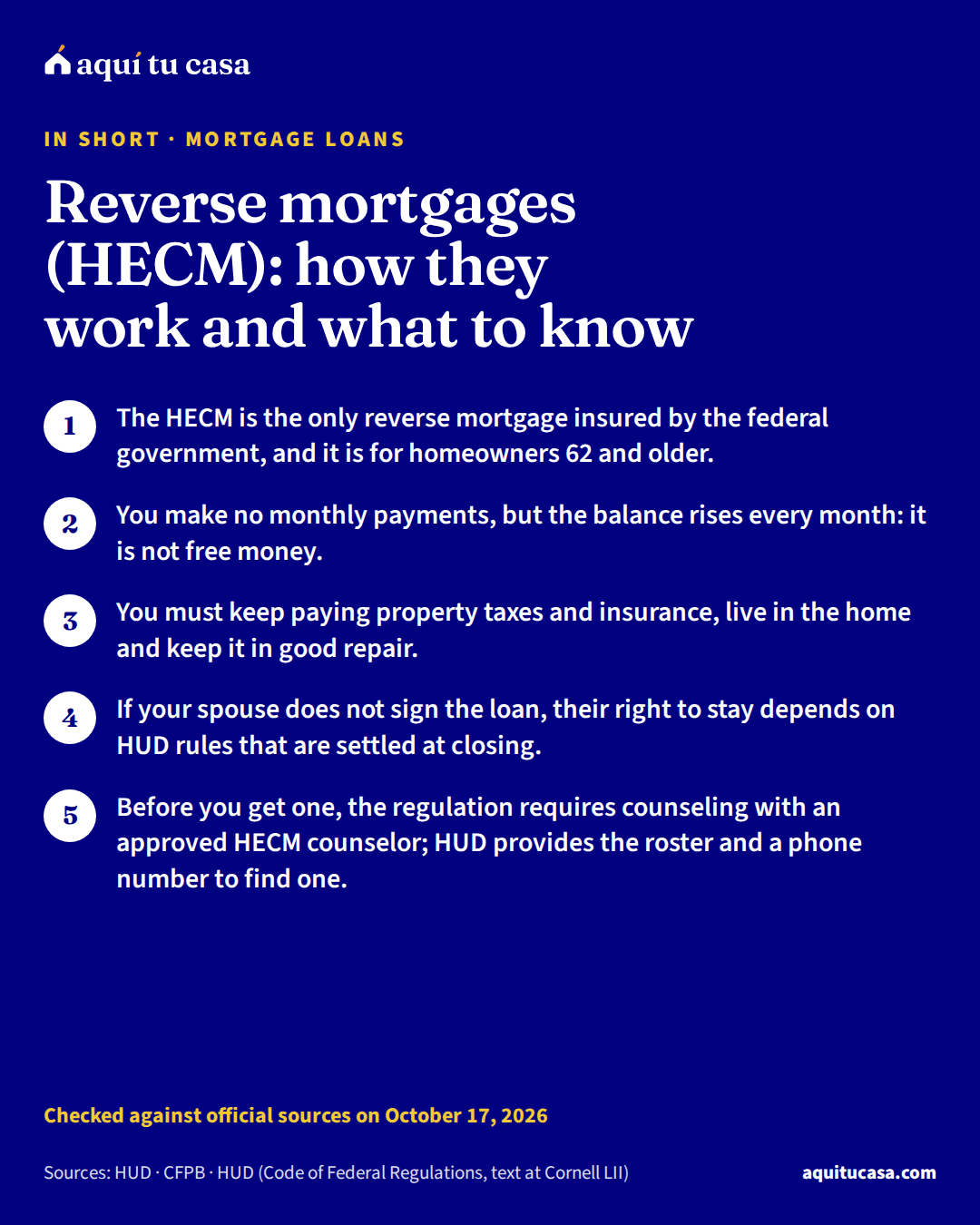
- Mortgage loans Reverse mortgages (HECM): how they work and what to know What a HECM reverse mortgage is, who can get one, the required counseling, what happens to your spouse and heirs, and how to avoid scams. 13 minute read
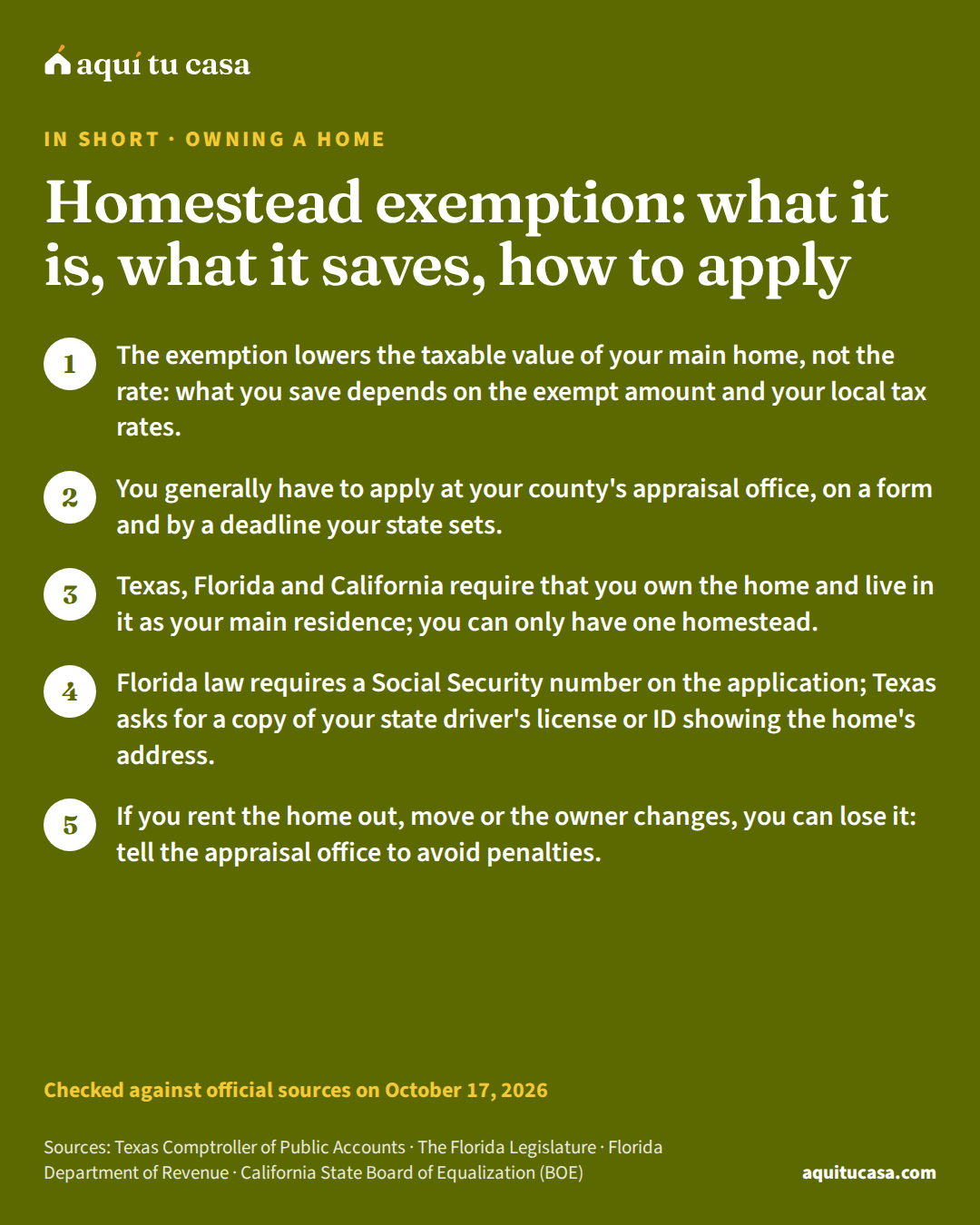
- Owning a home Homestead exemption: what it is, what it saves, how to apply What the homestead exemption is, who qualifies, how much it lowers your home's value in Texas, Florida and California, how to apply and which dates matter. 13 minute read
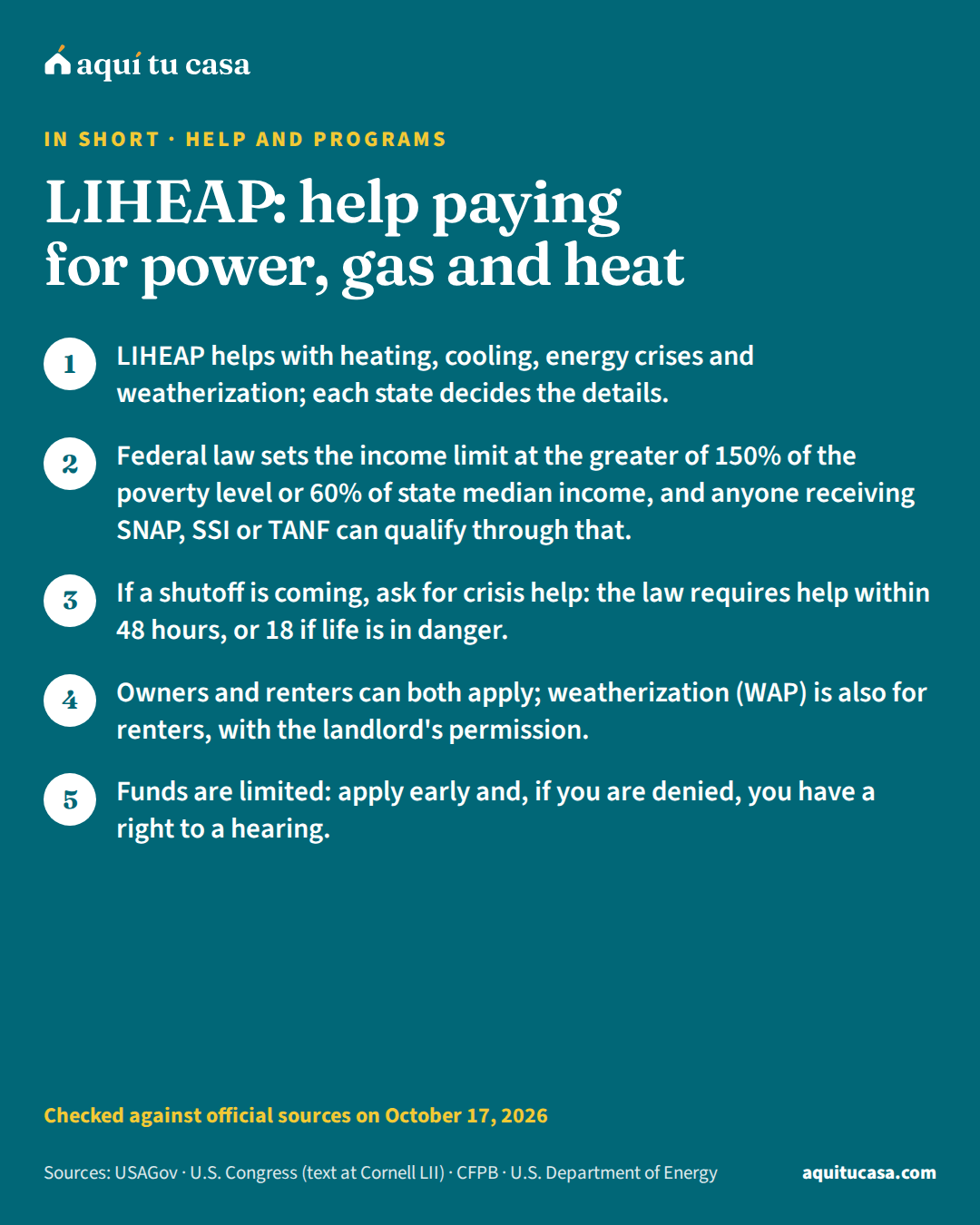
- Help and programs LIHEAP: help paying for power, gas and heat What LIHEAP is, who qualifies, how to apply in your state, crisis help when a shutoff is coming and free weatherization (WAP) to lower your bills. 10 minute read
Tools for this topic
Was this guide useful?
Thank you. Your answer stays in your browser; nothing is sent.