Reverse mortgages (HECM): how they work and what to know
What a HECM reverse mortgage is, who can get one, the required counseling, what happens to your spouse and heirs, and how to avoid scams.
Verified against official sources on October 17, 2026 15 official sources

Show contents
In short
What you need to know
Quick answer
A HECM reverse mortgage is an FHA-insured loan for homeowners 62 and older: you receive money from your home's value and make no monthly mortgage payments, but what you owe rises every month with interest and fees. You must live in the home, maintain it and pay the taxes and insurance. The loan is repaid when you no longer live there, usually by selling the home, and your heirs don't have to pay more than 95% of the appraised value. Before you get one, the regulation requires counseling from a HUD-approved HECM counselor.
What matters most
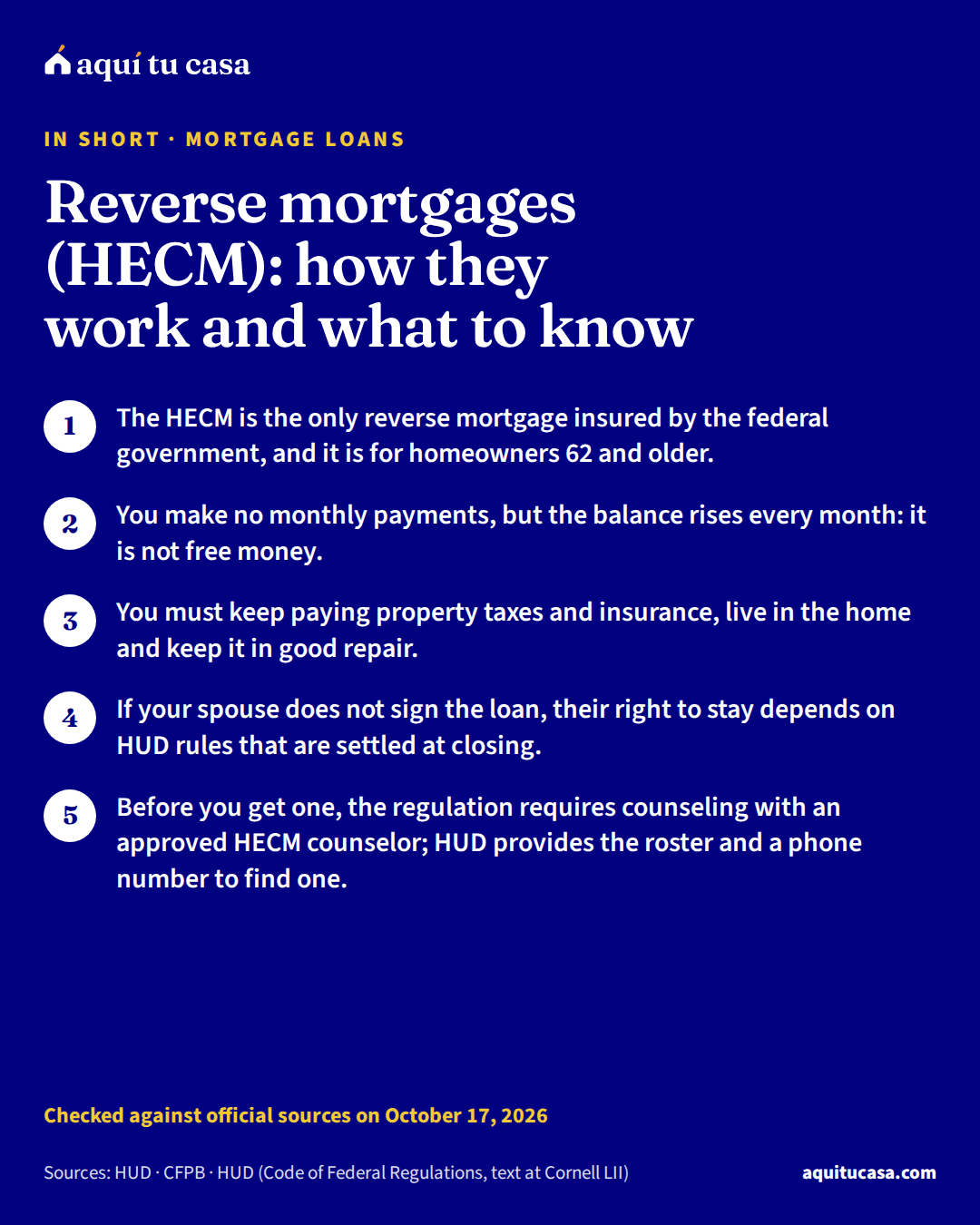
- The HECM is the only reverse mortgage insured by the federal government, and it is for homeowners 62 and older.
- You make no monthly payments, but the balance rises every month: it is not free money.
- You must keep paying property taxes and insurance, live in the home and keep it in good repair.
- If your spouse does not sign the loan, their right to stay depends on HUD rules that are settled at closing.
Is this for you?
This guide is for you if…
- You are 62 or older, own your home and want to know whether a reverse mortgage could work for you.
- Your parents or grandparents are thinking about a reverse mortgage and you want to understand it with them.
- A relative had a reverse mortgage and you want to know what options the heirs have.
Get direct help first if…
- You are under 62: a HECM is not available to you; the HELOC vs cash-out guide compares other options.
- You want to buy a home to rent out: a HECM is only for the home you live in.
- You have already received a default or foreclosure notice: get help right away from a HECM counselor or legal aid.
This guide is for homeowners 62 and older, and their families, who want to understand reverse mortgages before deciding. It explains what a HECM reverse mortgagereverse mortgageA reverse mortgage is a loan secured by your home for older homeowners. In the most common kind, HUD's Home Equity Conversion Mortgage (HECM), the youngest borrower must be 62 or older at closing. Instead of making monthly payments, you receive money; interest and fees are added to the balance each month, so the debt grows and your equity shrinks. The home stays in your name, but you must live in it, pay property taxes and insurance and keep it in good condition. It is repaid when you no longer live there, usually by selling the home. To get a HECM you must receive counseling from a HUD-approved agency.See the full definition is, who can get one, the counseling the regulation requires, what you still have to pay and what happens to your spouse and heirs. No rush: this is a decision to make calmly and with good information.
What a HECM reverse mortgage is
According to HUD, the only reverse mortgage insured by the federal government is the Home Equity Conversion Mortgage, known as a HECM, and it is available only through an FHA-approved lender. It lets you withdraw a portion of your home’s value for maintenance, repairs or everyday living expenses, and you can keep living in your home as long as you stay current on property taxes and insurance.1
It is like a traditional mortgage in that your home secures the loan and the title stays in your name. The big difference: you make no monthly mortgage payments. The loan is repaid when you no longer live in the home.3
That has a cost. Interest and fees are added to your balance every month, so what you owe rises over time and the home equityhome equityHome equity (or equity) is what your home is worth today minus what you still owe on the mortgages on it. You can borrow against that equity: with a home equity loan, which you receive as a lump sum and which usually has a fixed rate; with a HELOC; or with a cash-out refinance. In all of these the home is the collateral and, if you do not repay, the lender could take it. With a reverse mortgage, the balance grows each month and your equity goes down.See the full definition you have left falls. The CFPB puts it simply: it is not free money. You or your heirs will have to repay it, usually by selling the home.3
Example with real numbers
How a reverse mortgage balance grows
The CFPB's calculation, in words: there are no monthly payments, so everything adds up.
- Money you receive from the loan
- A
- Each month's interest
- + added to the balance
- Each month's fees
- + added to the balance
- What you owe
- Rises every month
Borrowed money + interest + fees each month = a rising balance.3 What you can receive depends on your age, the interest rate and your home's value.1 To plan the taxes, insurance and repairs you will keep paying, use the family budget.
Run it with your numbersFamily budgetWho can get a HECM
The youngest borrower must be 62 or older at loan closing.11 The home must be the principal residence of each borrower, and of your spouse if they are an eligible non-borrowing spouse.12 According to the CFPB, in addition:4
- You live there most of the year. It is your principal residence.
- You own it outright, or owe little. If you still owe, you must pay that balance off at closing, with your own money or with reverse mortgage funds.
- You don’t owe federal debt, such as federal income taxes or federal student loans, though you can pay it off with reverse mortgage money.
- You can pay the home’s charges. You have money for taxes, insurance, maintenance and repairs, or you set aside part of the loan at closing for them.
- Your home is in good shape. If it doesn’t meet the standards, the lender tells you what to repair first.
- You receive counseling from a HUD-approved agency.
You can also use a HECM to buy your principal residence, if you pay the difference between the HECM proceeds and the price plus closing costs with your own money.1 In that case, you must move in within 60 days of closing.12
Counseling: a step the regulation requires
Counseling is part of the program, not an extra hurdle. Under HUD’s regulation, at the first contact the lender must give you a list of approved HECM counselors with their names, addresses and phone numbers. You, your spouse even if they don’t sign the loan, and anyone else who owns the home must receive counseling. At the end, the counselor gives you a certificate that you hand to the lender.13
According to the CFPB, counseling covers your eligibility, what the loan means for your finances and other alternatives.4 If your spouse will not sign the loan, the counselor must also explain what they would need in order to stay in the home.13
To find a housing counselorHUD-approved housing counselorA HUD-approved housing counselor works at an agency HUD has approved to provide housing counseling: independent, expert advice customized to your situation about buying a home, renting, a missed mortgage payment, a foreclosure or credit problems. The agencies usually charge little or nothing; many serve in Spanish and offer the homebuyer education course several assistance programs require. They are not lenders or real estate agents and sell you nothing. Your county page lists the official agencies with phone numbers.See the full definition who provides HECM counseling, HUD points to its counselor roster or (800) 569-4287. HUD also warns about scam artists who charge thousands of dollars for information that is free from HUD.1
From the first call to the money
1. You receive the list of counselors
At first contact with the lender
The lender must give you the names, addresses and phone numbers of approved HECM counselors.13
2. You go to counseling
Before moving forward with the loan
You, your spouse even if they don't sign, and any other owner attend; you receive a certificate.13
3. The lender reviews your situation
During the application
Based on the financial assessment, it may require you to set aside part of the loan for taxes and insurance.15
4. You close the loan
Once the youngest borrower is 62
The home must be your principal residence at closing.12
5. Three days to change your mind
After closing
You can cancel in writing, without penalty, on most reverse mortgages.3
6. You receive the money
Under the option you chose
Monthly payments, a line of credit, a combination or, with a fixed rate, a single lump sum.9

How you receive the money
The amount you can withdraw varies from person to person. According to HUD, it depends on the age of the youngest borrower (or the eligible non-borrowing spouse), the interest rate and the lesser of the appraised valuehome appraisalAn appraisal is a written document that gives a professional appraiser's opinion of how much a property is worth. The lender orders it before approving the mortgage, because the home is the loan's collateral and the lender does not want to lend more than it is worth. If the appraisal comes in below the price you agreed, the bank bases the loan on the lower value and you will have to cover the difference, renegotiate the price or walk away if your contract allows it. An appraisal is not an inspection: it measures value, not the home's condition.See the full definition, the HECM FHA limit and the sales price.1
The regulation offers these ways to receive it:9
- Monthly payments for a fixed number of months (term).
- Monthly payments for as long as the loan conditions are met (tenure).
- A line of credit you draw on when and as you choose.
- A combination of monthly payments and a line of credit.
- A single lump sum, available only on fixed-rate HECMs.

What you still have to pay and do
No monthly mortgage payment does not mean no housing costs. The regulation says the borrower must insure the home, keep it in good repair and pay its charges.10 Those charges are property taxesproperty taxProperty tax is the tax the county, city, school district and other local bodies charge real property owners every year to pay for schools, police, fire and other public services. It is computed on the value the assessor's office assigns to your home, at each body's rate, minus the exemptions you qualify for, such as the primary-residence exemption in many states. If you have a mortgage you normally pay it month by month inside your payment, through the escrow account. It is generally deductible on your federal return if you itemize.See the full definition, homeowners insurancehomeowners insuranceHomeowners insurance pays for losses and damage to your property if something unexpected happens, like a fire or a burglary, and usually includes liability coverage if someone is hurt at your home. Lenders require it as long as you have a mortgage, because the home is their collateral, and almost always collect it inside your monthly payment through the escrow account. The price depends on the location, the rebuilding cost, the deductible and your history. A standard policy does not cover floods or, in many states, earthquakes: those risks are insured separately.See the full definition and flood insuranceflood insuranceFlood insurance is a separate policy that can cover a building, its contents, or both, when flood water causes damage. Most homeowners insurance policies do not cover that damage. Most of these policies are backed by FEMA's National Flood Insurance Program (NFIP) and bought through insurers and agents. If your home is in a high-risk flood area and your mortgage is backed by the federal government, the lender is required to demand it; outside those areas it is optional, but floods happen there too.See the full definition where it applies, plus condominium or homeowners’ association fees. Based on the financial assessment, the lender may require you to set aside part of the loan (a reserve called a LESA) to pay them.15
The loan becomes due, meaning it must be repaid, if any of these happens:10
- The borrower dies and the home is not the principal residence of another borrower (except for the deferral for an eligible non-borrowing spouse).
- You transfer all title to the home to someone else.
- The home stops being your principal residence, or you are away for more than 12 consecutive months because of physical or mental illness.
- You don’t pay the property charges or don’t meet another loan obligation.
Your spouse, if they don’t sign the loan
As long as you live in the home, a reverse mortgage does not change who can live with you. If you have a co-borrower, that person can stay in the home even if you die or move out.5
If your spouse does not sign the loan, the regulation gives them a protection, called a deferral, if they are an eligible non-borrowing spouse. To qualify, they must have been married to you at closing and stay married for the rest of your life, be named as an eligible non-borrowing spouse in the loan documents, and live in the home as their principal residence. After your death, they have 90 days to establish legal ownership or another legal right to stay for life, and must keep meeting the loan’s obligations, such as taxes and insurance.14 During the deferral, no more loan payments are made.10
This is settled at closing: a spouse who did not meet the conditions then cannot become eligible later.14 If your spouse is not eligible, the counselor must explain that the loan will become due when the last borrower dies.13 Children or other relatives who are not co-borrowers have the option to pay off the balance with other money to stay in the home.5

What happens with your heirs
When the last borrower dies, the loan must be repaid, and most heirs repay it by selling the home.6 HUD’s fact sheet for heirs explains the timeline: the loan must be satisfied within 30 days of the death, and the lender may approve 90-day extensions if the estate or heirs are actively trying to sell or repay. Taxes and insurance remain the estate’s responsibility until the titletitleTitle is your legal right to own and possess a property. The deed is the document showing that the seller transferred that right to you, and legal title is the title that can be documented in public records. As part of the purchase, a title search is done to see whether anyone else has a claim against the home; common claims come from a previous owner's unpaid taxes or from contractors who say they were not paid for work on the home. Title insurance protects you if such a claim shows up later.See the full definition is transferred.2
Heirs have two paths. If they want to keep the home, they must pay the full balance. If they sell it and the balance is more than the home is worth, they can sell for at least 95 percent of the current appraised value, and the lender accepts the net proceeds as payment.2 Mortgage insurance covers the rest.6 And no one is personally liable for the difference: the regulation says the lender can collect the debt only through sale of the home.10
If this is you
You are thinking about a reverse mortgage
Counseling is part of the program; HUD points to its counselor roster or (800) 569-4287.113
You inherited a home with a HECM
Talk to the lender as soon as possible: there are 30 days, with possible extensions, and a sale at 95% of the appraisal satisfies the loan.2
You need to move into a care facility
If you are away from the home for more than 12 consecutive months because of illness, the loan becomes due.10
You can't afford the taxes or insurance
Look for help right away: local programs, your Area Agency on Aging or a reverse mortgage counselor.7
Before you decide: other options and how to avoid scams
The CFPB suggests looking at other options before a reverse mortgage: waiting, because if you take one out too young you could run out of money when you are older; a home equity loan or line of credit, which might cost less but carry their own risks and usually have monthly payments; refinancing; moving to a more affordable home; or lowering your expenses through state and local programs.4 The HELOC vs cash-out guide compares two of those options.
Reverse mortgage and home equity line of credit
62 and older
Reverse mortgage (HECM)
Both use your home's value: compare calmly and, if you wish, with a counselor.48
Using a reverse mortgage to consolidate debt can be risky, according to the CFPB: you swap one debt for a riskier and perhaps more expensive one, and your home equity shrinks when you might need it most.8
If you already signed and changed your mind, with most reverse mortgages you have three business days after closing to cancel for any reason without penalty. Notify the lender in writing; the CFPB suggests certified mail with a return receipt. The lender has 20 days to return what you paid.3 If you think you were misled, free legal aidlegal aidLegal aid is the free civil legal help that nonprofit organizations and their lawyers provide to low-income people in civil, not criminal, matters. In housing, that includes representing families facing eviction or foreclosure, alongside matters such as custody, child support, protection from domestic violence and access to benefits. In the United States, the Legal Services Corporation, created by Congress, funds a nationwide network of these organizations; its finder points you to the one in your area. Each sets its own income limits.See the full definition in your area can review your case, if you wish. The contractor scams and deed theft guides cover other scams aimed at homeowners.

Costly mistakes
Mistake: Thinking that no monthly payment means no housing costs.
Instead: You keep paying taxes, insurance and repairs; otherwise foreclosure is possible.7
Mistake: Leaving your spouse out of counseling and the documents.
Instead: Their right to stay is settled at closing, and they must be named in the documents.14
Mistake: Taking a reverse mortgage under pressure from a contractor.
Instead: The CFPB warns it may be a scam: don't let yourself be pressured.3
Mistake: Paying someone for “information” about reverse mortgages.
Instead: HUD warns that this information is free; use its counselor roster.1
Mistake: Using it to consolidate debts without looking at other options.
Instead: The CFPB says it can be risky; a counselor can help you compare.8
Mistake: Heirs waiting months without talking to the lender.
Instead: The loan must be satisfied within 30 days, with possible extensions: call early.2
What to do this week
- If you are thinking about a reverse mortgage, find a HECM counselor through HUD’s roster or at (800) 569-4287.1
- List your housing costs: taxes, insurance, flood insurance if it applies, and fees; you will keep paying them.15 The family budget tool helps.
- If you are married and your spouse would not sign the loan, bring your questions to counseling together.13
- Talk with your family about what will happen to the home when you no longer live there.2
- Compare with other options: waiting, a home equity line of credit, refinancing or moving.4
- If someone pressures you or charges you for information, walk away and read the housing scams guide.3
Your household this month
Let's do the math
Left each month
Enter what at least one person takes home to see the result.
What helps
- Pay savings first: set the goal aside the day the money arrives, before flexible spending.
- Add up the bills that come every few months (car insurance, school) and divide by twelve.
- If income changes, plan on a low month and save the extra from good months.
- A HUD-approved housing counselor can go over the budget with you, often for free.
This is a planning tool with your numbers, not a credit evaluation or an approval. The split reference is only a guide.
Ready to see the numbers? Find your county here
See how this applies in your county: its loan limits, prices and rents, from the official data.
Printable checklist
Frequently asked questions
What is a reverse mortgage?
It is a loan for homeowners 62 and older that uses the home as security. You make no monthly payments: interest and fees are added to the balance each month, and the loan is repaid when you no longer live in the home, usually by selling it. The title stays in your name.
Can I lose my home with a reverse mortgage?
The CFPB says that failing to pay property taxes or homeowners insurance may lead to foreclosure. That is why the regulation requires you to pay those charges, maintain the home and live in it. If you are struggling to pay them, the CFPB suggests getting help right away from a reverse mortgage counselor.
Do my children inherit the debt?
Not personally: the regulation says the borrower has no personal liability for the balance and the lender can collect only through sale of the home. If the balance is more than the home's value, your heirs don't have to pay more than 95 percent of the appraised value. If they want to keep the home, they must pay the full balance.
What happens to my spouse if they don't sign the reverse mortgage?
If they meet HUD's conditions (married to you at closing, named as an eligible non-borrowing spouse and living in the home), they can stay after your death without paying the balance, as long as within 90 days they establish a legal right to stay and keep meeting the loan's obligations. If they don't meet those conditions at closing, the loan becomes due when you die.
Is counseling required?
Yes. HUD's regulation says the borrower, any non-borrowing spouse and any other owner must receive counseling from an approved HECM counselor, and the counselor gives you a certificate for the lender. To find one, HUD points to its counselor roster or (800) 569-4287.
How much money can I get?
According to HUD, it depends on the age of the youngest borrower (or eligible non-borrowing spouse), the interest rate and the lesser of the appraised value, the HECM FHA limit and the sales price. You can take it as monthly payments, a line of credit, a combination of both or, with a fixed rate only, a single lump sum.
Can I cancel a reverse mortgage after signing?
With most reverse mortgages, yes: you have three business days after closing to cancel for any reason without penalty, by notifying the lender in writing. The CFPB suggests sending the letter by certified mail with a return receipt. The lender has 20 days to return what you paid.
Sources
Every figure in this guide comes from one of these official sources. The number next to a sentence leads to the source behind it.
Each source on one line: who publishes it, its title, its address and the date we read it.
- 1. HUD · Home Equity Conversion Mortgages for Seniors · hud.gov · Accessed October 17, 2026
- 2. HUD · Inheriting a Home Secured by an FHA-insured Home Equity Conversion Mortgage · hud.gov · Accessed October 17, 2026
- 3. CFPB · What is a reverse mortgage? · consumerfinance.gov · Accessed October 17, 2026
- 4. CFPB · Can anyone take out a reverse mortgage loan? · consumerfinance.gov · Accessed October 17, 2026
- 5. CFPB · Does having a reverse mortgage impact who can live in my home? · consumerfinance.gov · Accessed October 17, 2026
- 6. CFPB · What happens if my reverse mortgage loan balance grows larger than the value of my home? · consumerfinance.gov · Accessed October 17, 2026
- 7. CFPB · What should I do if I have a reverse mortgage loan and I can't pay my property taxes or homeowners insurance? · consumerfinance.gov · Accessed October 17, 2026
- 8. CFPB · Should I use a reverse mortgage to consolidate my debts? · consumerfinance.gov · Accessed October 17, 2026
See the other 7 sources
- 9. HUD (Code of Federal Regulations, text at Cornell LII) · 24 CFR §206.19, Payment options · law.cornell.edu · Accessed October 17, 2026
- 10. HUD (Code of Federal Regulations, text at Cornell LII) · 24 CFR §206.27, Mortgage provisions · law.cornell.edu · Accessed October 17, 2026
- 11. HUD (Code of Federal Regulations, text at Cornell LII) · 24 CFR §206.33, Age of borrower · law.cornell.edu · Accessed October 17, 2026
- 12. HUD (Code of Federal Regulations, text at Cornell LII) · 24 CFR §206.39, Principal residence · law.cornell.edu · Accessed October 17, 2026
- 13. HUD (Code of Federal Regulations, text at Cornell LII) · 24 CFR §206.41, Counseling · law.cornell.edu · Accessed October 17, 2026
- 14. HUD (Code of Federal Regulations, text at Cornell LII) · 24 CFR §206.55, Deferral of due and payable status for Eligible Non-Borrowing Spouses · law.cornell.edu · Accessed October 17, 2026
- 15. HUD (Code of Federal Regulations, text at Cornell LII) · 24 CFR §206.205, Property charges · law.cornell.edu · Accessed October 17, 2026
Keep reading
Related guides
If this guide helped, these follow the same path.

Mortgage loans 11 minute read
HELOC vs cash-out refinance: how they compare
A home equity line of credit (HELOC) or a cash-out refinance: how each works, what it costs, your rights and the risks to your home.
- Both options use your home equity (what it is worth minus what you owe) as collateral: if you don't pay, you could lose your home.
- A HELOC is a line you draw on as needed, almost always at a variable rate; when the draw period ends, payments often rise sharply.
- A cash-out refinance swaps your mortgage for a bigger one: one payment, but usually higher closing costs and more years of debt.
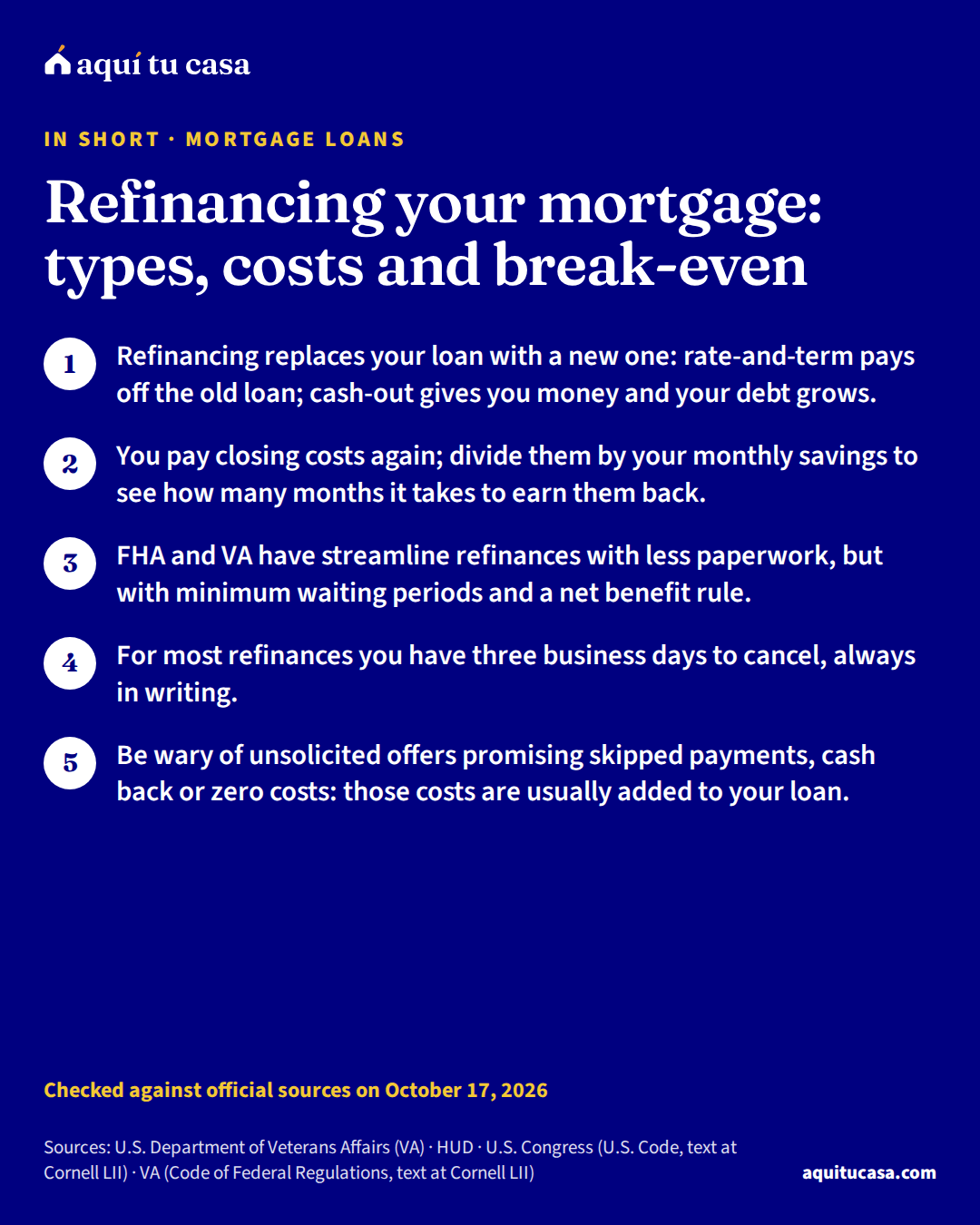
- Mortgage loans Refinancing your mortgage: types, costs and break-even Refinancing explained: rate-and-term vs cash-out, closing costs, the break-even point and FHA and VA streamline refinances. 12 minute read
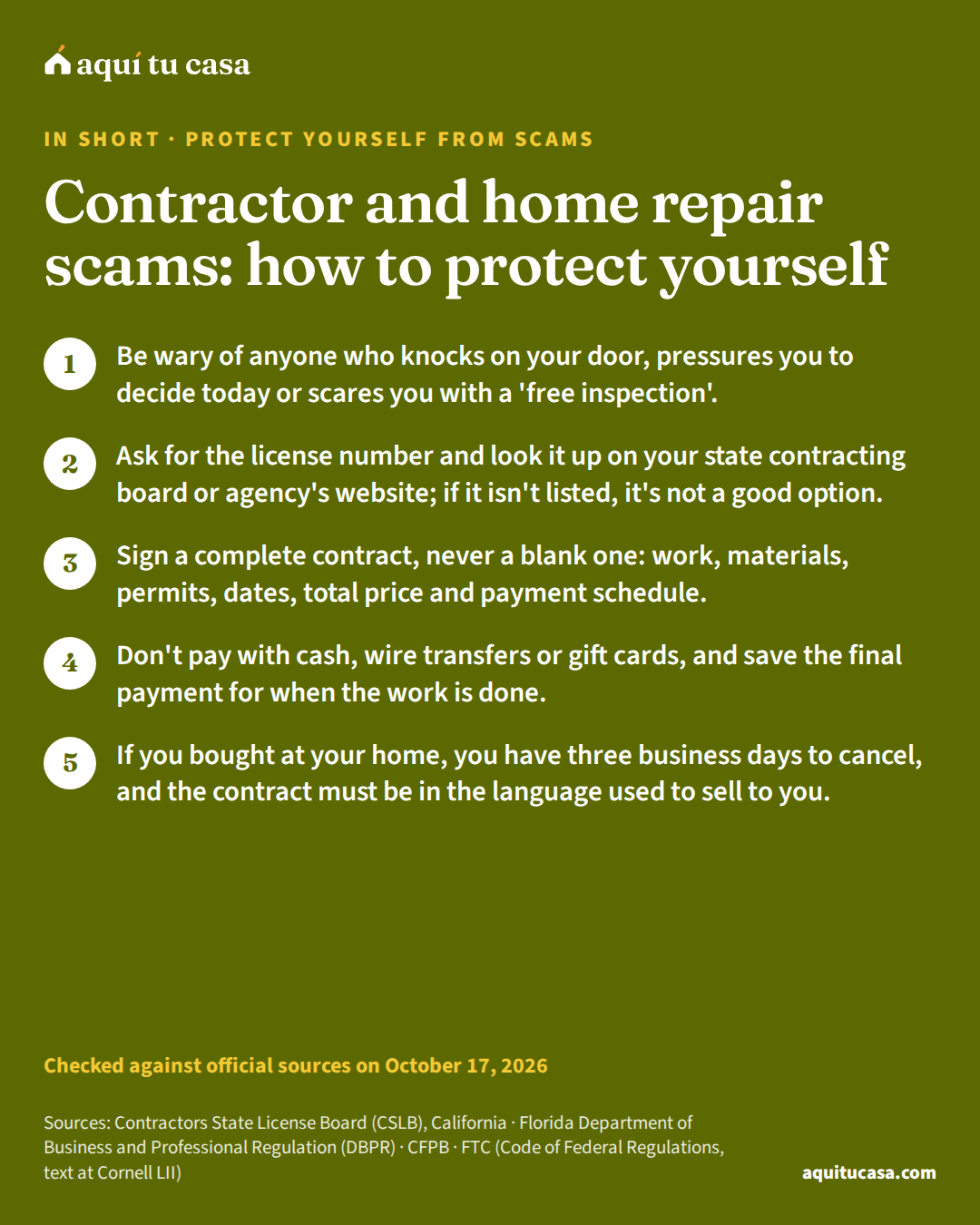
- Protect yourself from scams Contractor and home repair scams: how to protect yourself How to spot a dishonest contractor, check a license, sign a solid contract, pay safely and cancel a sale made at your home. 11 minute read
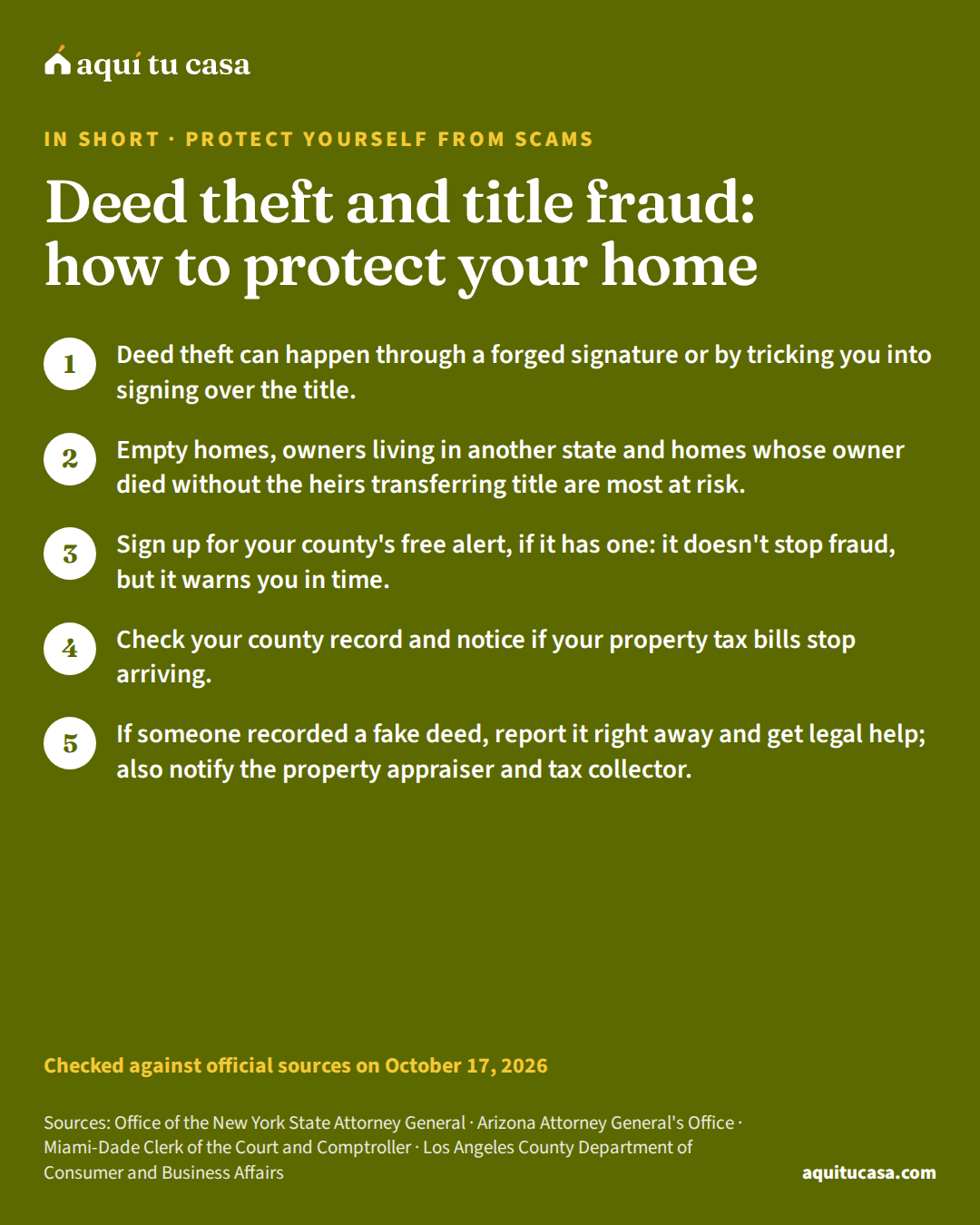
- Protect yourself from scams Deed theft and title fraud: how to protect your home What deed theft is, who is most at risk, the warning signs, your county's property alerts and what to do if someone records a fake deed. 10 minute read
Tools for this topic
Was this guide useful?
Thank you. Your answer stays in your browser; nothing is sent.