Este sitio también está en español. Leer en español

County in Utah

Daggett County, Utah

Daggett County, in Utah, has 783 residents: No. 29 of 29 by population. Daggett County has an FHA limit of $541,287 for one-unit homes. The typical home value here is $282,300. HUD's Fair Market Rent for a 2-bedroom apartment is $1,158 a month; to pay it without spending more than 30% of your income, you need to earn about $22.27 an hour.

Four numbers to start with

  • Typical home price

    $282,300

    −42% vs. Utah −15% vs. U.S.

    Half of owner-occupied homes are worth more and half are worth less.

    • Daggett
    • Utah
    • United States

    Source: U.S. Census Bureau, Average 2020–2024

  • Fair market rent, 2 bedrooms

    $1,158 a month

    −22% vs. Utah −34% vs. U.S.

    HUD's reference rent for a two-bedroom apartment, with basic utilities.

    • Daggett
    • Utah
    • United States

    Source: HUD, Fiscal year 2027

  • FHA limit 2026, 1 unit

    $541,287

    FHA national floor limit

    The most you can borrow with an FHA loan for a one-unit home here.

    • Daggett
    • Floor
    • Ceiling

    Source: HUD, 2026 data

  • Property tax

    0.46% of value per year

    −12% vs. Utah −51% vs. U.S.

    $1,304 a year for the typical owner

    • Daggett
    • Utah
    • United States

    Source: U.S. Census Bureau, Average 2020–2024

Market now, with Zillow data

Zillow data
Typical home value
$366,031
5% more than 12 months ago
Typical home value from Zillow, December 2023 to September 2026: from $321,854 to $366,031.

From Zillow (ZHVI), September 2026. The Census figures above are 5-year averages (2020–2024).

Data from October 2026

In short

What is housing like in Daggett County today?

The monthly payment on a typical home with FHA would be about $2,228, that is, 41% of the typical household income in Daggett County. For that payment to be 28% of income, a household would need to earn about $95,505 a year; the typical income here is $66,000. Homes here are worth 42% less than the average across Utah. Here 82% of households live in a home they own; across Utah it is 70%. The typical property tax is $1,304 a year (about 0.46% of home value), lower than in Utah.

Sources: U.S. Census Bureau (Average 2020–2024).

Only here

What sets Daggett County apart

  1. Among the neighboring counties, Carbon County has the lowest typical home value ($228,500), 19% below the $282,300 in Daggett County.

  2. According to Zillow, in the 12 months to September 2026 the typical home value in Daggett County rose 5%; in Utah, it rose 1.2%.

Sources: U.S. Census Bureau (Average 2020–2024); Zillow (September 2026 data). Zillow data

The homes here

Housing in Daggett County

What homes there are in Daggett County, what they cost, how that changed and how people live, from Census figures (2020–2024).

What homes there are

U.S. Census Bureau, ACS 5-year, 2020–2024

Kind of home
Kind of home: Daggett County and its comparisons
MeasureDaggett CountyUtahUnited States
Detached house 61%67%61%
Attached house Unreliable estimate8%6%
Building of 2 to 4 Unreliable estimate7%8%
Apartments (5 or more) Unreliable estimate16%19%
Mobile home 39%3%6%
Boat, RV and other Unreliable estimate0%0%

Detached houses are the majority in Daggett County (61%), but less so than in Utah (67%).

There are more mobile homes here than in Utah: 39% of homes, against 3%.

Year built
Year built: Daggett County and its comparisons
MeasureDaggett CountyUtahUnited States
Before 1960 9%15%26%
1960–1979 44%20%24%
1980–1999 21%26%25%
2000–2009 17%18%14%
2010 or later 11%21%11%

In Daggett County, half of the homes were built before 1979; in Utah, before 1992.

Much as in Utah, 69% of homes in Daggett County have 3 bedrooms or more.
All homes, occupied or empty. A figure the Census cannot measure precisely enough here is not shown.

Census tables: B25024, B25034, B25035, B25041

What it costs here

U.S. Census Bureau, ACS 5-year, 2020–2024

Value of owner-occupied homes
Value of owner-occupied homes: Daggett County and its comparisons
MeasureDaggett County
Under $100K Unreliable estimate
$100K–$200K Unreliable estimate
$200K–$300K 26%
$300K–$500K 29%
$500K–$750K 11%
$750K–$1M Unreliable estimate
$1M or more Unreliable estimate
Monthly rent with utilities
Monthly rent with utilities: Daggett County and its comparisons
MeasureDaggett County
Under $500 Unreliable estimate
$500–$999 Unreliable estimate
$1,000–$1,499 Unreliable estimate
$1,500–$1,999 Unreliable
$2,000–$2,499 Unreliable
$2,500–$2,999 Unreliable
$3,000 or more Unreliable

With a mortgage

$1,375 a month

Utah: $2,009 a month

Without a mortgage

$565 a month

Utah: $564 a month

Owners with a mortgage

42%

Utah: 69%

Owning costs less in Daggett County: with a mortgage, the typical cost is $1,375 a month; in Utah, $2,009. Without one, $565.

Value: what owners think their home is worth. Rent: rent plus utilities, for homes of every size. The FHA limit is the most an FHA loan (Federal Housing Administration) lends for a one-unit home; the fair market rent (FMR) is the one HUD uses for housing vouchers.

Census tables: B25075, B25063, B25088, B25081

How it changed

U.S. Census Bureau, ACS 5-year, 2015–2019 and 2020–2024

Change since 2015–2019
Change since 2015–2019: Daggett County and its comparisons
MeasureDaggett CountyUtahUnited States
Typical home value +65%+75%+53%
Typical rent +140%+44%+33%
Typical household income No clear change+33%+29%

Homes in Daggett County gained value more slowly than in Utah: 65% since 2015–2019, against 75%.

Since 2015–2019, the typical rent in Daggett County rose 140%, more than in Utah (44%).

Change between two 5-year periods that do not overlap, in each period's dollars, not adjusted for inflation.

Census tables: B25077, B25064, B19013

How people live

U.S. Census Bureau, ACS 5-year, 2020–2024

How people live: Daggett County and its comparisons
MeasureDaggett CountyUtahUnited States
Rental vacancy Unreliable estimate5.5%5.5%
Homeowner vacancy Unreliable estimate0.6%0.9%
More than one person per room Unreliable estimate3.1%3.4%
People per household 2.492.972.53
Drive alone 77%67%69%
Carpool 13%10%9%
Public transit Unreliable estimate2%3%
Walk or bike Unreliable estimate3%3%
Work from home Unreliable estimate18%15%
Other means Unreliable estimate1%2%
Typical commute Unreliable estimateUnreliable estimate20 to 29 minutes

On average, a household in Daggett County has 2.49 people, fewer than in Utah (2.97).

In Daggett County, 77% of workers drive alone to work; in Utah, 67%.

Vacancy: empty homes offered for rent or for sale. Rooms: every room in the home, not only bedrooms. Commute: the minute range of the typical worker.

Census tables: B25004, B25003, B25014, B25010, B08301, B08303

Do the math

What would you pay each month in Daggett County?

A typical home costs more than the typical income allows

We start with a typical home of $282,300, an FHA loan with 3.5% down and the latest average rate (7.18%). That payment would take 41% of the typical household income here, which is $66,000 a year. For that payment to be 28% of income, a household would need to earn about $95,505 a year.

Your numbers

Local data
$

Starts at the typical home value in Daggett County. Change it to the price you have in mind.

Loan type
Your credit score

Your score changes which loans apply and FHA's minimum down payment. Your real rate also depends on your credit.

Down payment
%

That is $9,881 (3.5% of the price). The usual minimum for this loan is 3.5%.

This week's average ± a quarter or half point.

Term

National average as of November 5, 2026 (Freddie Mac); your rate may be different.

Adjust advanced details

Estimated monthly payment

Local data

$2,229

at 7.18% · 30 years

Loan amount
$277,186
Total interest
$398,806
Paid off in
November 2056

Includes $4,767 FHA upfront mortgage insurance premium.

Does it fit the income?

  • Comfortable

    up to $1,540 a month

  • Tight

    $1,540 to $1,980 a month

  • Hard

    more than $1,980 a month

    Your payment · 41%

Compared with the typical household income in Daggett County ($66,000 a year). Reference: HUD calls paying more than 30% of income for housing a cost burden.

Show the result as
per month$2,229
Monthly payment breakdown
Principal & interest$1,878
Property tax$108
Home insurance$118
FHA mortgage insurance (MIP)$125

You need at least $9,881 for the down payment, plus closing costs.

This is an estimate to give you an idea, not a loan offer. Your real payment depends on your rate, your credit, and the insurance and taxes on the home you buy.

Total monthly payment $2,229; principal and interest $1,878.

Buying a home

Buying a home in Daggett County

Here you'll see how prices have changed, how Daggett County compares with Utah and the country, and what you'd pay each month with four kinds of loans.

How have home prices changed?

FHFA does not publish an annual price index in Daggett County. This usually happens when there are too few sales to measure. According to the FHFA House Price Index, home prices in Utah rose 121% in the 10 years through 2025.

Daggett County compared with Utah and the United States

Home value, rent and household income, side by side. "Typical" is the median: half are above it and half below.

Typical home value
  • Daggett $282,300
  • Utah $489,400
  • United States $332,700
Typical rent a month
  • Daggett $900
  • Utah $1,496
  • United States $1,413
Typical household income a year
  • Daggett $66,000
  • Utah $95,166
  • United States $80,734
See the full table
Daggett compared with Utah and the United States
MeasureHereUtahU.S.
Residents7833,392,331334,922,499
Typical home value$282,300$489,400$332,700
Typical household income$66,000$95,166$80,734
Typical rent$900$1,496$1,413
Fair Market Rent (2 bedrooms)$1,158$1,493$1,750
Hourly wage to rent a 2-bedroom$22.27$28.71$33.65
Typical property tax$1,304$2,525$3,119
Effective tax rate0.46%0.52%0.94%
Households that own their home82%70%65%
FHA limit (1 unit)*$541,287$541,287$541,287

FHA limit: Utah shows the median of its counties; the United States, the national floor. Download CSV

Four ways to pay for a typical home in Daggett County

For a typical $282,300 home at Freddie Mac's average rate (7.18% as of November 5, 2026) over 30 years. The monthly payment adds principal and interest, the county's property tax, an example homeowners insurance and mortgage insurance when it applies.

Down payment, loan and monthly payment of four loan types for a typical home in Daggett County
Loan Monthly payment Down payment Loan amount Rate Mortgage insurance Cash to close Minimum score
FHA, 3.5% down $2,228 $9,881 $277,187 7.18% FHA MIP · $125 $18,350 580
Conventional, 5% down $2,177 $14,115 $268,185 7.18% PMI · $134 $22,584 620*
Conventional, 20% down, no PMI $1,756 $56,460 $225,840 7.18% None $64,929 620*
ITIN, 15% down (example) $2,017 $42,345 $239,955 8.18% None $50,814 Set by the lender
  • Cash to close = down payment plus 3% of the price in closing costs (example).
  • Minimum score: FHA requires 580 or higher for the minimum down payment (HUD Handbook 4000.1). * Fannie Mae requires 620 when a loan is underwritten by hand; its automated system has no fixed minimum.
  • The ITIN row is an example with a rate 1 percentage point higher: ITIN loans follow no federal rule and each lender sets its own down payment and rate. Nothing in this table promises an approval.

How much house can I afford? Closing costs

Loan limits

FHA loans in Daggett County use the national floor limit: it isn't a high-cost area. If the loan you need is above these amounts, it doesn't fit FHA or it becomes a "jumbo" loan.

VA loans. If you have full VA entitlement, VA doesn't cap the loan amount. If you've used part of your entitlement, the calculation uses the county limit ($832,750 for one unit). VA loan limits (va.gov)

USDA loans. They're for homes in eligible rural areas and households with incomes within USDA's limit. Check whether the address and your income qualify on the official site. USDA eligibility (usda.gov)

FHA and conforming loan limits in Daggett County, by number of units
Home type FHA limit Conforming limit
1 unit $541,287 $832,750
2 units $693,050 $1,066,250
3 units $837,700 $1,288,800
4 units $1,041,125 $1,601,750

Source: HUD, 2026 data · Source: FHFA, 2026 data

Taxes and risks

Property tax and flooding in Daggett County

Two costs that change a lot from place to place and that a house payment does include: property tax and, in risk zones, flood insurance.

Property tax

In Daggett County, the typical owner pays $1,304 a year: about 0.46% of the home's value. That is less than the rest of Utah and less than the national average.

  • Daggett 0.46%
  • Utah 0.52%
  • United States 0.94%

What Utah publishes Primary residential exemption (45 percent of value) (Utah State Legislature (Utah Code))

Exemptions and deadlines in Utah

Is there a flood risk?

FEMA’s maps count no homes in high-risk flood zones in Daggett County. That does not mean there is no risk: some areas have no map. Check your address.

  • A high-risk zone (Special Flood Hazard Area) has a 1% or greater chance of flooding each year. (44 CFR 59.1)
  • If the home is in that zone and the loan comes from a regulated lender, federal law requires flood insurance for the life of the loan, in communities that take part in the NFIP. (42 U.S.C. 4012a)
  • Most homeowners insurance does not cover flood damage. (FEMA, FloodSmart)

Source: FEMA, As of August 3, 2026

Look up your address on FEMA’s map

Owning a home here

Owning a home in Daggett County

The natural hazards FEMA measures in Daggett County, a maintenance plan for your climate and what the trades earn in your area.

Risks to your home

FEMA, National Risk Index 1.20.0 (December 2025)

In Daggett County, FEMA rates the natural hazard risk as very low.

To rate it, FEMA weighs the expected loss with social vulnerability and community resilience.

In all, FEMA estimates natural hazards cause about $2.5 million in losses a year in Daggett County, across buildings, people and crops.

Of all the hazards, FEMA expects wildfire to do the most damage to buildings: about $298,950 a year.

Loss FEMA expects each year to homes and buildings, by hazard
  1. WildfireFEMA risk rating: Relatively low $298,950 a year
  2. Inland floodingFEMA risk rating: Very low $192,060 a year
  3. EarthquakeFEMA risk rating: Very low $22,023 a year
  4. Winter weatherFEMA risk rating: Relatively low $7,689 a year
  5. TornadoFEMA risk rating: Very low $2,187 a year

What it means for your home

The ratings are FEMA's own. FEMA says its data is meant for planning and does not replace a local study. Drought is not shown: FEMA counts its loss in crops only.

National Risk Index, version 1.20.0 (December 2025), retrieved November 6, 2026

FEMA notice: This product uses the Federal Emergency Management Agency's National Risk Index dataset API or downloadable datasets but is not endorsed by FEMA. The Federal Government or FEMA cannot vouch for the data or analyses derived from these data after the data have been retrieved from the Agency's website(s).

Climate and upkeep

Department of Energy (PNNL), 2021 IECC zones

Daggett County is in climate zone 6B of the home energy code (IECC): cold.

The zone's number says how hot or cold it gets; the letter says how humid: A is moist, B is dry and C is marine.

  • Spring

    • Book the air conditioner's check-up before the heat: ENERGY STAR advises checking the cooling system in the spring, because contractors get busy once summer comes. Source: ENERGY STAR (EPA)
    • Clean and repair the roof gutters. Source: EPA
  • Summer

    • Seal the air ducts that run through the attic, crawlspace, basement or garage with duct mastic or foil tape, then wrap them in insulation. Source: ENERGY STAR (EPA)
    • Check that the ground slopes away from the house, so water does not collect around the foundation. Source: EPA
  • Fall

    • Book the heating check-up in the fall. If it runs on gas or oil, the technician should check the connections: faulty ones are a fire hazard. Source: ENERGY STAR (EPA)
    • Seal air leaks and add insulation in the attic: ENERGY STAR says it lowers the chance of ice dams on the roof in snowy climates. Source: ENERGY STAR (EPA)
  • Winter

    • Get the house ready for the cold with insulation, caulking and weather stripping, and learn how to keep pipes from freezing. Source: Ready.gov (FEMA)
    • Put clear plastic film over the windows: it is inexpensive, cuts drafts, helps the house feel warmer in winter and reduces moisture on the glass. Source: ENERGY STAR (EPA)

All year

  • Check the air filter every month, especially in heavy-use months. If it looks dirty, change it; change it at least every 3 months. Source: ENERGY STAR (EPA)
  • Test the smoke alarms every month and replace their batteries at least once a year. Source: USFA (FEMA)

Each task comes from the official page beside it. The spring air-conditioning and fall heating check-ups are the timing ENERGY STAR advises; the rest is a suggested order.

Climate zones by county, 2021 IECC

What the trades charge here

BLS, wages for May 2025

Hourly wage for each trade in the High Desert Utah nonmetropolitan area area, according to BLS (May 2025)
TradeTypical hourly wage8 in 10 earn between
Electricians$30.05$18.98 and $51.37
Plumbers, pipefitters and steamfitters$28.19$18.49 and $36.22
Heating, air conditioning and refrigeration mechanics$22.21$14.86 and $34.87
Roofers$22.29$16.25 and $30.27
Carpenters$24.63$18.75 and $35.10
Painters, construction and maintenance$18.30$15.22 and $28.22
Maintenance and repair workers, general$23.10$15.14 and $35.58

An electrician earns about $30.05 an hour in the High Desert Utah nonmetropolitan area, and a plumber, about $28.19.

These are workers' hourly wages, not the price of a job.

Renting

Renting in Daggett County

The typical rent in Daggett County is $900 a month. HUD also publishes a “fair market rent” by unit size: it's the one programs like Section 8 use.

Fair market rent by size

To pay the fair market rent without spending more than 30% of income, working full time (40 hours a week).

Fair market rent by size
Size Fair rent a month Hourly wage Income needed per year
Studio $867 $16.67 $34,680
1 bedroom $945 $18.17 $37,800
2 bedrooms $1,158 $22.27 $46,320
3 bedrooms $1,561 $30.02 $62,440
4 bedrooms $1,916 $36.85 $76,640

Includes basic utilities. It isn't the lowest or highest rent: it's a reference point. Source: HUD, Fiscal year 2027

Free help in Daggett County

Programs and counseling in Daggett County

We didn't find counseling agencies near this county.

Official programs for the down payment and loans for buyers. Check which ones you might qualify for with your income and your county.

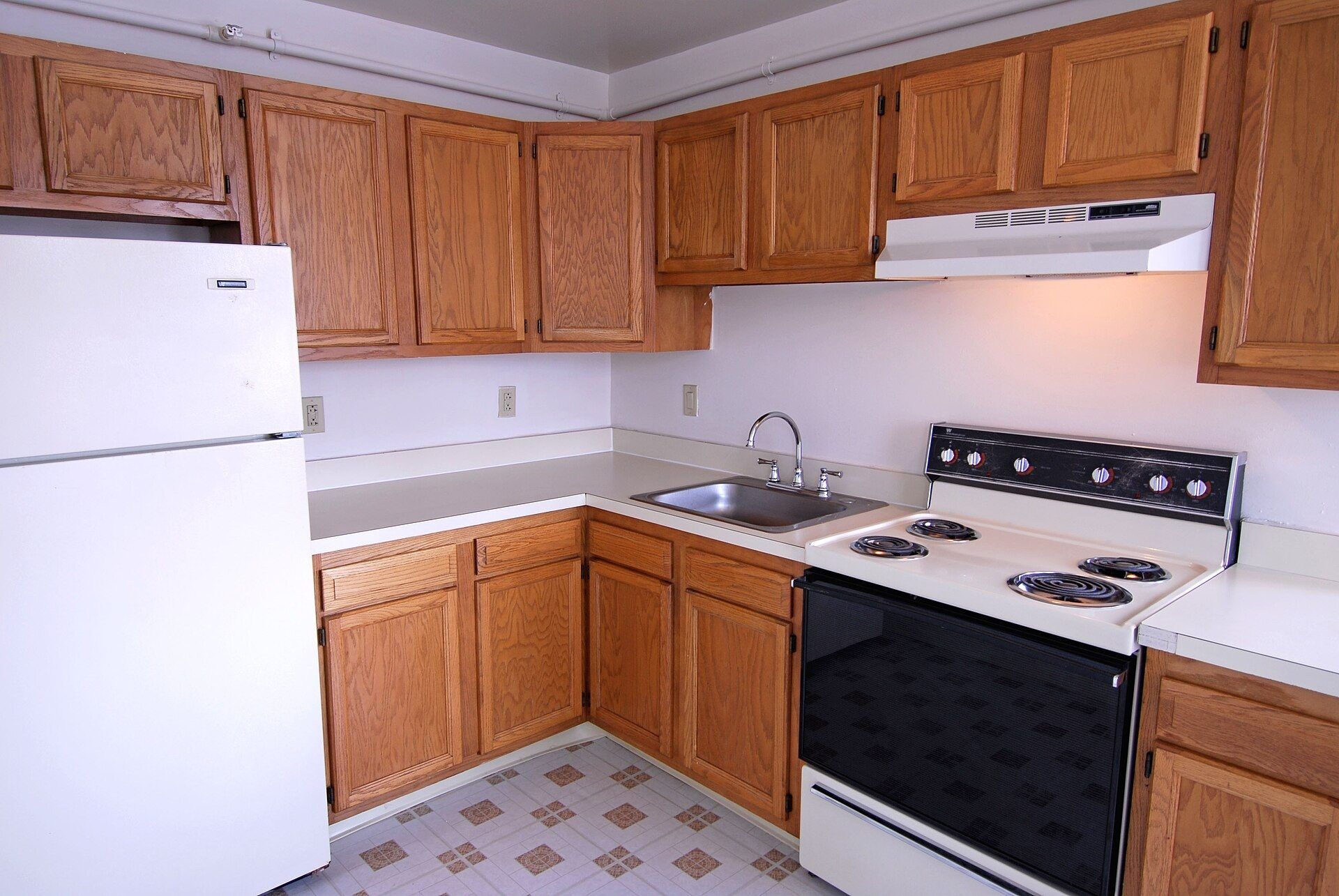
The simple kitchen of an apartment, with an electric stove, a refrigerator and wood cabinets.

HUD counseling is free or low-cost

Utah down payment programs

  1. Utah Housing Down Payment Assistance Second Mortgage

    Utah state agency second mortgage for the down payment or closing costs alongside its first mortgage: up to 6% of the loan with monthly payments, or up to 3.5% at 3.5% with deferred interest and no payments; capped at $27,500

    The source does not say whether you must be a first-time buyer. Run by Utah Housing Corporation (UHC).

    RepayableDeferred Verified November 5, 2026

  2. First-time Homebuyer Assistance Program

    Utah state loan, run by Utah Housing, of up to $20,000 with no interest or monthly payments for the down payment, closing costs or a lower rate; only for first-time buyers of a newly built home with a Utah Housing mortgage

    First-time buyers only. Run by Utah Housing Corporation (UHC).

    Deferred Verified November 5, 2026

Which programs do I qualify for? See all Utah programs

Help in Spanish in Daggett County

None of the 0 agencies on this list say they serve in Spanish.

Ask for service in Spanish

When you call, say “Spanish, please” or ask if someone speaks Spanish. If not, ask whether they offer an interpreter.

Public housing agencies

HUD lists no public housing authority based in Daggett County. The authority of a nearby county or the state may serve this area.

Free legal help

If you have a problem with your landlord, an eviction notice or a scam, the Legal Services Corporation (LSC) search shows the free legal aid offices that serve your area.

Find legal aid (lsc.gov)

Housing counseling nearby

We didn't find counseling agencies near this county.

Places

Cities in Daggett County

This site has no city pages of Daggett County. The neighboring counties are below.

Nearby counties

Each row compares its typical value, typical rent and FHA limit with Daggett County.

Read next

Guides that help here

We picked them by this county's numbers: what weighs most here is what's worth understanding first.

Frequently asked questions

What is the FHA loan limit in Daggett County in 2026?

Daggett County has an FHA limit of $541,287 for a one-unit home. For 2 units it's $693,050, for 3 it's $837,700 and for 4 it's $1,041,125. It's the national floor limit.

What is the conforming loan limit in Daggett County?

Daggett County has a conforming limit of $832,750 for one-unit conventional loans in 2026. A bigger loan is a “jumbo” loan.

How much does a typical home cost in Daggett County?

The typical home value in Daggett County is $282,300 (Average 2020–2024, U.S. Census). Across Utah it's $489,400.

How much does it cost to rent in Daggett County?

Daggett County has a typical rent of $900 a month (Average 2020–2024, U.S. Census). HUD's fair market rent for a 2-bedroom apartment is $1,158 (Fiscal year 2027).

How much do you need to earn to rent a 2-bedroom apartment in Daggett County?

About $22.27 an hour working full time (2,080 hours a year), or $46,320 a year, so the fair market rent of $1,158 stays under 30% of income.

Sources: American Community Survey (Average 2020–2024); FHA mortgage limits (2026 data); Conforming loan limits (2026 data); Fair Market Rents (Fiscal year 2027); Income Limits (Fiscal year 2026); HUD-approved housing counseling agencies (Retrieved November 6, 2026); Public Housing Agencies (Retrieved November 6, 2026); Freddie Mac Primary Mortgage Market Survey (As of November 5, 2026); FHFA House Price Index (2025 data); Homes with flood insurance (As of August 3, 2026); National Risk Index (2025 data); IECC climate zones by county (2021 data); Occupational Employment and Wage Statistics (2025 data); Census Bureau cartographic boundary files (2024 data).