Home warranty or homeowners insurance: the differences
What a home warranty covers and what homeowners insurance covers, why one does not replace the other, what to ask before buying one and who regulates them.
Verified against official sources on October 31, 2026 5 official sources

Show contents
In short
What you need to know
Quick answer
They are not the same and one does not replace the other. Homeowners insurance pays for damage from unexpected events, such as a fire or burglary, and your lender generally requires it. A home warranty is a service contract that pays to repair or replace appliances and systems, such as the air conditioning or plumbing, when they break down from wear. It is optional, costs extra, has a fee per visit and many exclusions. Before you buy one, read what it does not cover, the most it pays and whether the company is licensed in your state.
What matters most
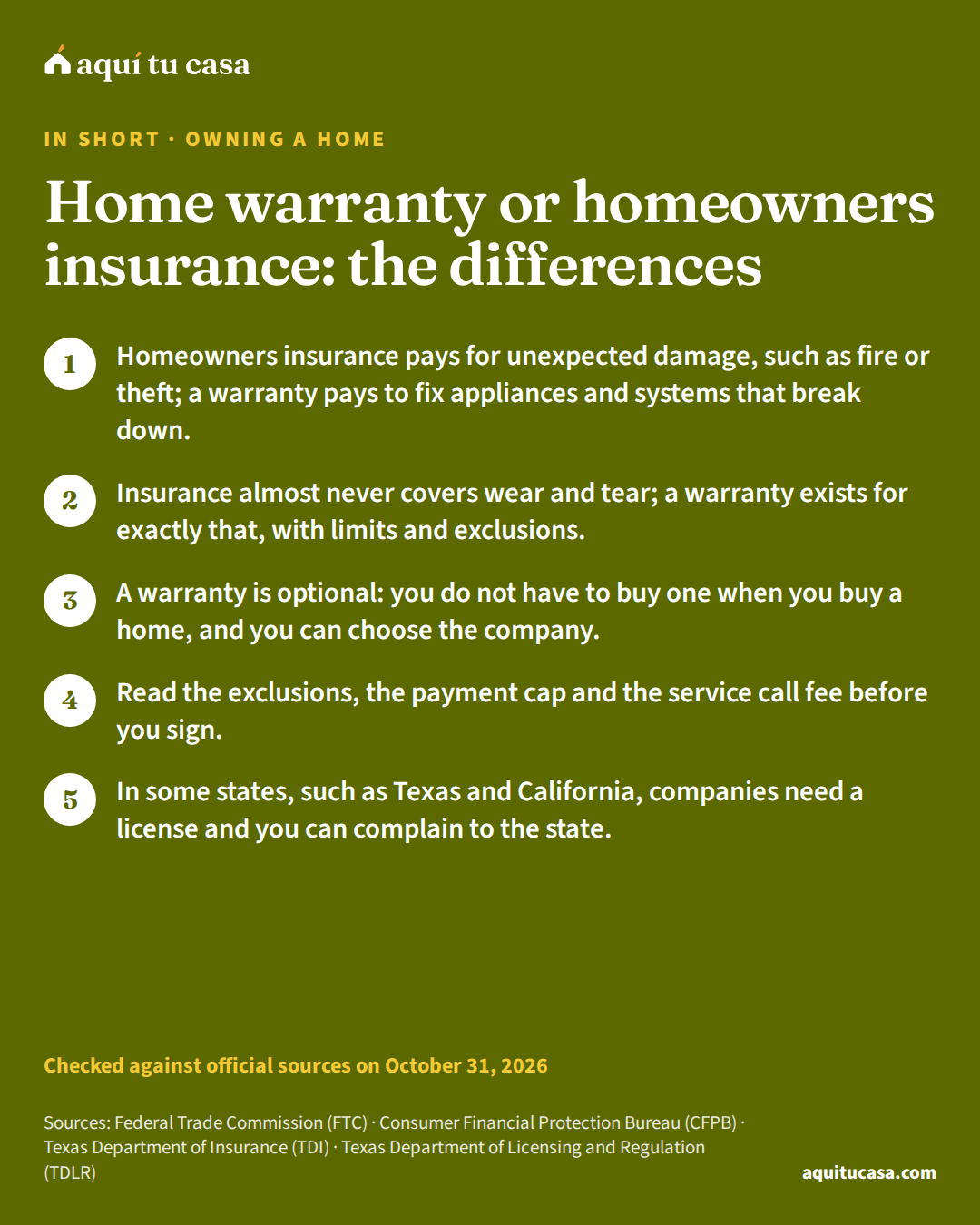
- Homeowners insurance pays for unexpected damage, such as fire or theft; a warranty pays to fix appliances and systems that break down.
- Insurance almost never covers wear and tear; a warranty exists for exactly that, with limits and exclusions.
- A warranty is optional: you do not have to buy one when you buy a home, and you can choose the company.
- Read the exclusions, the payment cap and the service call fee before you sign.
Is this for you?
This guide is for you if…
- The seller or your agent offered you a home warranty when you bought and you do not know what it covers.
- You get letters or calls offering you a protection plan for your home.
- An appliance or the air conditioning broke and you do not know whether to call the warranty or the insurer.
Get direct help first if…
- You want to understand your homeowners policy in depth: read «Home insurance explained».
- Your home was damaged by a storm, fire or flood: read «How to file a home insurance claim».
When you buy a home, you may get two offers that sound alike: homeowners insurance and a home warranty. Both promise to help when something goes wrong, but they cover different things and one does not replace the other. This guide explains what each one pays for, what to ask before you buy a warranty and where to turn if a claim is denied.12
What homeowners insurance is and what it covers
Homeowners insurancehomeowners insuranceHomeowners insurance pays for losses and damage to your property if something unexpected happens, like a fire or a burglary, and usually includes liability coverage if someone is hurt at your home. Lenders require it as long as you have a mortgage, because the home is their collateral, and almost always collect it inside your monthly payment through the escrow account. The price depends on the location, the rebuilding cost, the deductible and your history. A standard policy does not cover floods or, in many states, earthquakes: those risks are insured separately.See the full definition pays for losses and damage to your property if something unexpected happens, such as a fire or a burglary. If you have a mortgage, your lender generally asks for proof of it, and many people pay it with their monthly payment through an escrowescrow accountAn escrow account is an account set up by your mortgage lender to pay certain property-related expenses on your behalf, mainly property taxes and homeowners insurance. The money comes from a portion of your monthly mortgage payment: each month you contribute a share and the loan servicer pays the bills when they come due. That is why your payment is higher than principal and interest alone, and why it can change when taxes or the insurance premium go up. In some states the word also names the period between the offer and the closing.See the full definition account.2
According to the Texas insurance guide, most policies cover fire and lightning, sudden release of water or smoke, explosions, theft, vandalism and vehicle damage. Most do not cover flooding, a continuous water leak, termites or rodents, wear and tear, earthquakes or losses if the home sits empty for a while. Coverage varies by company.3
The deductible. On each claim you pay a part, the deductibledeductibleA deductible is the part of an insurance claim you pay yourself. When you have a covered loss, the insurance company subtracts the deductible from the claim amount and pays you the rest. You may have a different deductible for each type of coverage. You will find it on the first page of your policy, called the declarations page, along with your coverages and limits. In taxes, the word "deductible" means something else: an expense that can lower the taxes you owe.See the full definition. In the Texas example, with a $1,000 claim and a $300 deductible, the company pays $700. You may have different deductibles for each coverage, and the first page of your policy summarizes them.3
If you stop paying it. If you do not keep your insurance, the lender can buy a policy and charge you for it, with advance notice. That force-placed insuranceforce-placed insuranceForce-placed insurance is hazard insurance your loan servicer buys for your home when you do not have the homeowners insurance your mortgage requires, when your policy has lapsed or when it does not cover enough. The servicer charges you for it, it usually costs much more than a policy you buy yourself, and it often protects only the lender. Before charging you, federal law requires the servicer to send you written notices. If you show that you did have insurance, it must cancel the policy and refund what you paid for the time you had both.See the full definition may cover only the lender and cost more.2 The guide Home insurance explained walks through your policy in depth.
What a home warranty is and what it covers
The FTC says “home warranties” are really service contracts. They typically pay to repair or replace things like appliances or the air conditioning. They cost extra and last for a set time.1
The states that regulate them describe them in similar ways:
- Texas calls them residential service contracts. They cover repairing or replacing large appliances and electrical, plumbing, heating or air conditioning systems after a power surge, a defect or normal wear.4
- California calls them home protection contracts. They cover wear and tear, deterioration or defects that existed when you bought or leased the home.5
It is not a builder warranty. In Texas, TDLR explains that a builder warranty, which comes with a new home or a remodel, covers permanent parts of the home, such as floors or plumbing, and is regulated by another agency.4 If you are buying a new home, the guide on buying a new construction home explains that warranty.
Homeowners insurance and a home warranty, side by side
Unexpected damage
Homeowners insurance
- Fire, theft, vandalism and other risks in the policy
- The lender generally requires it
- A standard policy does not cover wear, floods or earthquakes
- You pay a deductible on each claim
What breaks down
Home warranty
- Repairs or replaces appliances and systems
- It is optional and costs extra
- Covers wear, with many exclusions and caps
- You pay a fee per visit, if the contract says so
If you have a mortgage, insurance is not optional; a warranty is.

Before you buy a warranty: key questions
A warranty can help if your home has old appliances and systems, but only if you understand the contract. The California Department of Insurance says every one of them has dozens of exclusions, and that many people find them only when a claim is denied.5
These are questions the FTC and TDLR recommend:14
- Is it likely to save me money, compared with paying for repairs myself?
- How much does the plan cost, how long does it last and how does it renew?
- What exactly does it cover, and which appliances or systems does it leave out?
- Is there a cap on what the company pays, per repair or per year?
- How much is the fee for each technician visit?
- Does a pre-existing condition void coverage?
- Does it cover accidental damage?
- Who picks the technician and how fast do they come?
- Do they replace what cannot be repaired?
- Are there fees or restrictions to cancel?
Time costs money too. The FTC warns that waiting a long time to get paid back reduces the value of having coverage.1 In California, the law requires that service be requested by phone, with no forms first, and that the company start within 48 hours.5
The company matters. The FTC says a warranty is only as good as the company behind it, and suggests searching its name with words like “review” or “complaint.”11 In Texas and California, also check that it is licensed.45
Example with real numbers
A water heater that stops working
An example in words, not a real case, of whom to call.
- If it broke from years of use
- You call the warranty, if you have one and it covers the heater
- If it broke and suddenly flooded the floor
- The floor damage from a sudden release of water may be the insurer's
- If it dripped slowly for months
- Most policies do not cover a continuous leak
- Either way
- You pay the service fee or deductible your contract states
- What makes sense
- Read both contracts before calling and keep photos and receipts
The sample coverages come from the Texas insurance guide and TDLR's sheet.34 Your contract may say otherwise. Set up a repair fund with the family budget.
Run it with your numbersFamily budgetIf you are offered one when you buy a home
The warranty often comes with the purchase, paid for by the seller or the agent. In California, the Department of Insurance says you can choose the company, and that it makes sense to look into it and read the exclusions and caps before you accept.5 In Texas, TDLR makes clear that you are not required to buy one to buy a home.4
A warranty does not replace the home inspectionhome inspectionA home inspection is a review of the property's physical condition by an inspector before you finish buying: roof, foundation, plumbing, electrical, heating and cooling, signs of moisture or pests. It is often part of the home buying process and you pay for it, not the lender; unlike the appraisal, it does not say what the home is worth but what problems it has. With the report you can ask for repairs, negotiate the price or walk away if your contract includes an inspection contingency. Some assistance programs require one.See the full definition. If the inspector finds a problem before closing, negotiate it then; many warranties do not cover what was already failing. The home inspection guide explains how to use the report.
What to do when something breaks in your home
1. Figure out what happened
The same day
Did it break from use, or was there sudden damage, like a fire or a burst leak?3
2. Read both contracts
Before you call
Check the warranty's exclusions and the risks your policy covers.5
3. Take photos and keep receipts
Before any repair
They help with both the warranty and the insurer.
5. If you are denied, get it in writing
After the answer
Check the exclusion they cite and find your state's agency.4
If this is you
The seller gives you a warranty
In California you can choose the company; read the exclusions before you accept.5
Your appliances are many years old
A warranty covers wear, but with caps; compare with what repairs would cost you.1
Someone calls to sell you a plan
It may be someone after your money or your data; do not give information over the phone.1
How to do the math before you decide
A warranty is not good or bad for everyone. It depends on your home, your appliances and your budget. Before you pay, do this simple math:
- Add up what you would pay in a year: the price of the plan plus the service fees you might pay.
- Compare it with what it would cost to repair yourself the appliances or systems that worry you most, given their age.
- Subtract what it does not cover: if the appliance you worry about most is on the exclusions list, the warranty does not help with it.
- Check the cap: if the company pays at most a set amount per repair, you pay the rest.
The FTC sums it up with one question: is it likely to save you money?1 If you are not sure, another option is to set aside an amount for repairs each month. That way the money is yours even if you do not use it. The home maintenance budget guide explains how to figure it out.

Costly mistakes
Mistake: Canceling your insurance because you have a warranty.
Instead: They do not replace each other; insurance covers major damage and your lender generally requires it.52
Mistake: Buying a warranty for its long list of what it covers.
Instead: Read the exclusions and the payment cap first.5
Mistake: Thinking insurance pays for an air conditioner that wore out.
Instead: Most policies do not cover wear and tear.3
Mistake: Hiring a company without a license.
Instead: In Texas and California, check the license before you pay.45
Mistake: Giving your details to someone who calls to sell you a plan.
Instead: The FTC warns they may be after your money or your information.1
Where to get help
If you have problems with a warranty, you can report it to the FTC at ReportFraud.ftc.gov.1 In Texas, TDLR has an ombudsman for claim delays and denials and takes complaints on its site.4 In California, the Department of Insurance posts information and complaints on each company and helps if your appeal is denied.5 In other states, ask the state insurance or consumer protection office who regulates them.
For a homeowners insurance claim, read How to file a home insurance claim. And so you do not depend on either one, set money aside for repairs; the home maintenance budget guide and the family budget tool can help.

What to do this week
- Find your policy’s declarations page and write down your deductibles.3
- If you have a warranty, read the exclusions list and the payment cap.5
- Make a list of your major appliances and their age.4
- If you are offered a warranty, ask the questions in this guide in writing.14
- Check whether the company is licensed in your state.45
Your household this month
Let's do the math
Left each month
Enter what at least one person takes home to see the result.
What helps
- Pay savings first: set the goal aside the day the money arrives, before flexible spending.
- Add up the bills that come every few months (car insurance, school) and divide by twelve.
- If income changes, plan on a low month and save the extra from good months.
- A HUD-approved housing counselor can go over the budget with you, often for free.
This is a planning tool with your numbers, not a credit evaluation or an approval. The split reference is only a guide.
Ready to see the numbers? Find your county here
See how this applies in your county: its loan limits, prices and rents, from the official data.
Printable checklist
Frequently asked questions
Does a home warranty replace homeowners insurance?
No. The California Department of Insurance says they do not overlap or replace each other. Insurance covers damage from major events, such as fires; a warranty covers repairs to appliances and systems from wear. If you have a mortgage, the lender generally requires insurance.
Do I have to buy a warranty when I buy a home?
No. In Texas, TDLR says you are not required to buy a residential service contract when you buy a new or existing home. If the seller pays for one, the California Department of Insurance says you can choose the company.
What does homeowners insurance usually not cover?
According to the Texas guide, most policies do not cover flooding, continuous water leaks, termites or rodents, wear and tear, earthquakes or losses when the home is vacant for a while. Flood coverage is a separate policy.
What should I ask before buying a warranty?
How much it costs and how long it lasts, what it covers and what it does not, whether there is a payment cap, whether there is a service call fee, whether a pre-existing condition voids coverage, who picks the technician, how fast repairs happen and whether they replace what cannot be repaired.
Does the warranty cover something that was already failing when I bought?
It depends on the contract. In California, warranties cover defects that existed when you bought or leased, but all of them have exclusions. In Texas, TDLR suggests asking whether a pre-existing condition voids coverage. Get the answer in writing before you sign.
The warranty company denied my claim. What do I do?
Ask for the denial in writing and check the exclusion they cite. In Texas, TDLR has an ombudsman for delays and denials and takes complaints; in California, the Department of Insurance helps if your appeal is denied. You can also report to the FTC at ReportFraud.ftc.gov.
Someone calls to sell me a home protection plan. Is it real?
It may not be. The FTC warns those calls might be telemarketers looking for your money or personal information. Do not give out details over the phone; look up the company yourself and check whether it is licensed in your state.
Sources
Every figure in this guide comes from one of these official sources. The number next to a sentence leads to the source behind it.
Each source on one line: who publishes it, its title, its address and the date we read it.
- 1. Federal Trade Commission (FTC) · So what's the deal with "home warranties"? · consumer.ftc.gov · Accessed October 31, 2026
- 2. Consumer Financial Protection Bureau (CFPB) · What is homeowner's insurance? Why is homeowner's insurance required? · consumerfinance.gov · Accessed October 31, 2026
- 3. Texas Department of Insurance (TDI) · Homeowners insurance guide · tdi.texas.gov · Accessed October 31, 2026
- 4. Texas Department of Licensing and Regulation (TDLR) · What Should I Know About Residential Service Contracts? · tdlr.texas.gov · Accessed October 31, 2026
- 5. California Department of Insurance · Home Protection Contracts · insurance.ca.gov · Accessed October 31, 2026
Keep reading
Related guides
If this guide helped, these follow the same path.

Owning a home 11 minute read
Home insurance claims: adjusters, denials and complaints
How to file and document a home insurance claim, what each kind of adjuster does, the check with your lender and what to do if you are denied or underpaid.
- Protect the home from more damage and keep receipts: the company reimburses reasonable costs.
- Do not make major permanent repairs until the adjuster sees the damage.
- Note every call and keep copies of everything; ask for what you are told in writing.
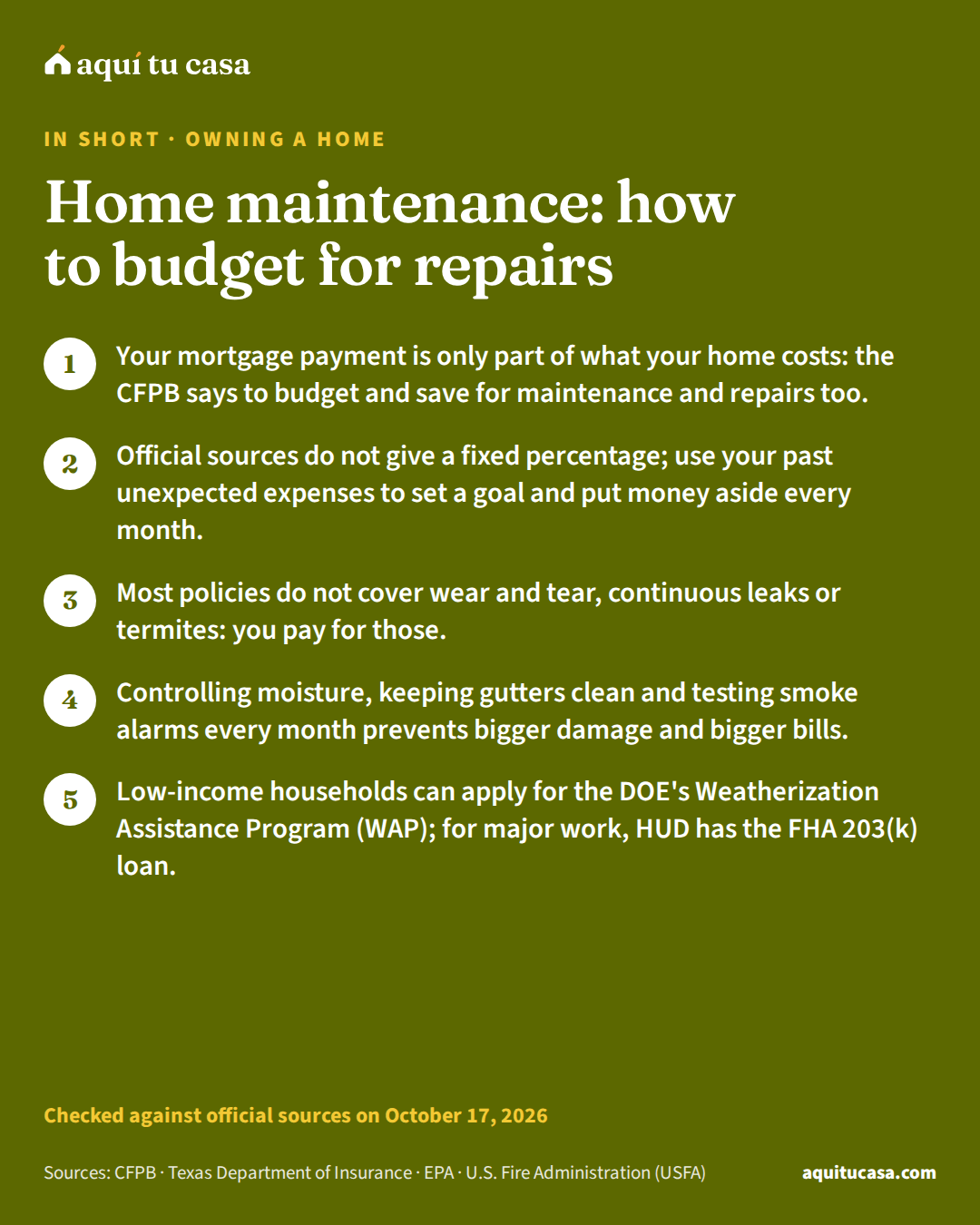
- Owning a home Home maintenance: how to budget for repairs How to plan and save for home maintenance and repairs: what insurance does not cover, what the IRS says and what help exists to fix up your home. 13 minute read
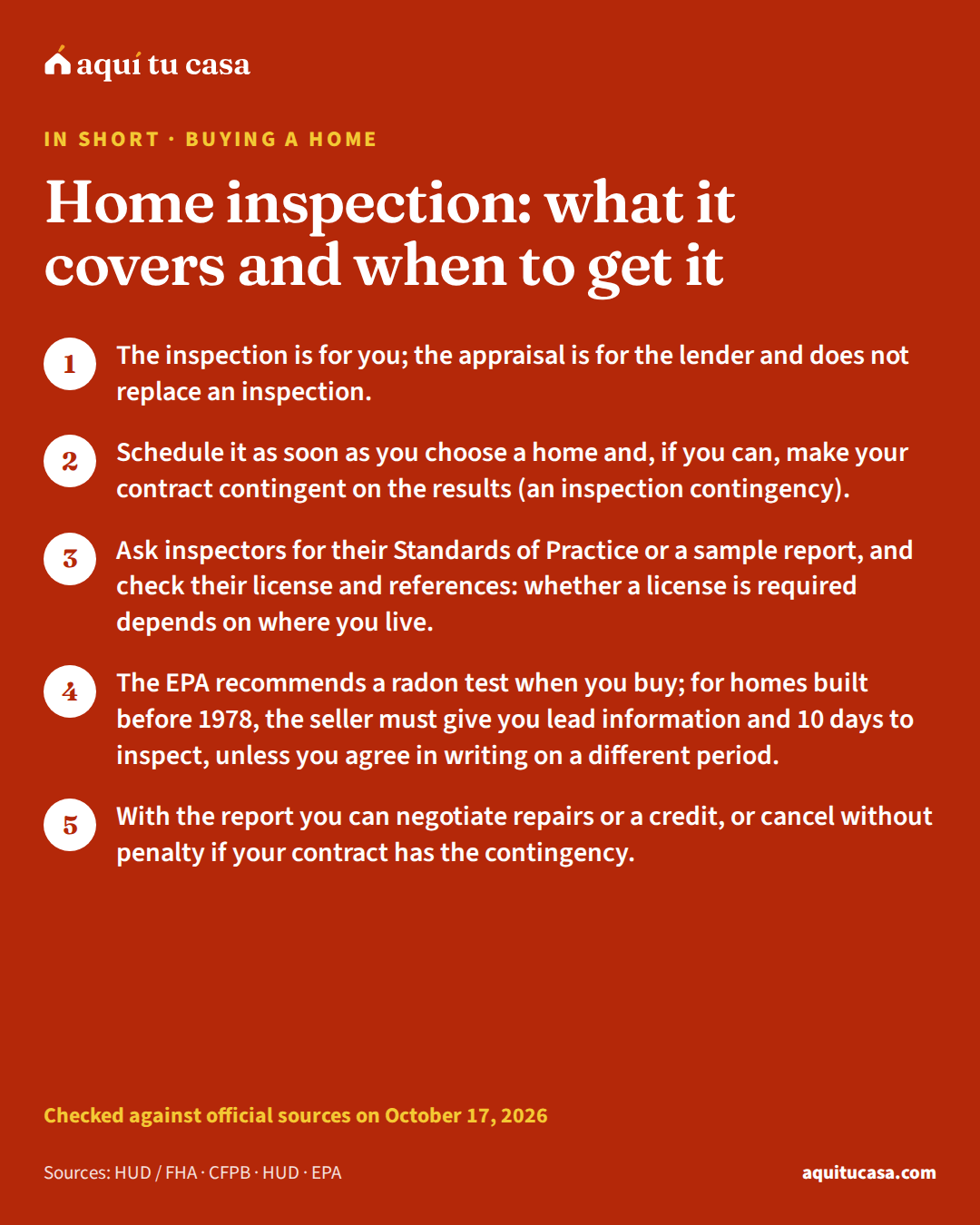
- Buying a home Home inspection: what it covers and when to get it What a home inspection is, how it differs from the appraisal, when to get it under a contingency, radon and lead tests, and what to do with the report. 12 minute read
Tools for this topic
Was this guide useful?
Thank you. Your answer stays in your browser; nothing is sent.